Google’s $90B AI Capex: A Network Infrastructure Arms Race with Major Implications for Telcos
📰Original Source: IEEE Communications Society Technology BlogSource: An analysis published by the IEEE Communications Society Technology Blog on April 25, 2026, examines Google’s massive artificial intelligence capital expenditures and the strategic implications for its cloud and hardware divisions. The original article, titled “Will Google Cloud’s…
Source: An analysis published by the IEEE Communications Society Technology Blog on April 25, 2026, examines Google’s massive artificial intelligence capital expenditures and the strategic implications for its cloud and hardware divisions. The original article, titled “Will Google Cloud’s AI and data analytics revenue +TPU IP licensing income offset huge AI CAPEX to produce a decent ROI?” provides a detailed financial and technical breakdown of Google’s investments. For telecom operators and infrastructure providers, the core insight is the creation of a new, hyperscale-driven tier of network demand that is reshaping global bandwidth economics, data center interconnection, and the competitive landscape for network services.
The Scale of Hyperscale AI Investment: $90 Billion and Counting
The defining characteristic of the current telecom infrastructure cycle is the unprecedented capital expenditure (CAPEX) by hyperscalers, led by Google. According to the IEEE ComSoc analysis, Google’s parent company Alphabet has signaled it will spend over $90 billion in capital expenditures for 2026, a figure that dwarfs the annual infrastructure budgets of the world’s largest telecom operators. The majority of this spend is directed towards AI-specific data centers, Tensor Processing Unit (TPU) clusters, and the global network fabric required to interconnect them. This is not a one-off surge; it represents a structural shift in spending. For context, Google’s Q1 2026 CAPEX alone hit $22.6 billion, a 91% year-over-year increase, with the company explicitly stating these levels will continue for the “next several years.”
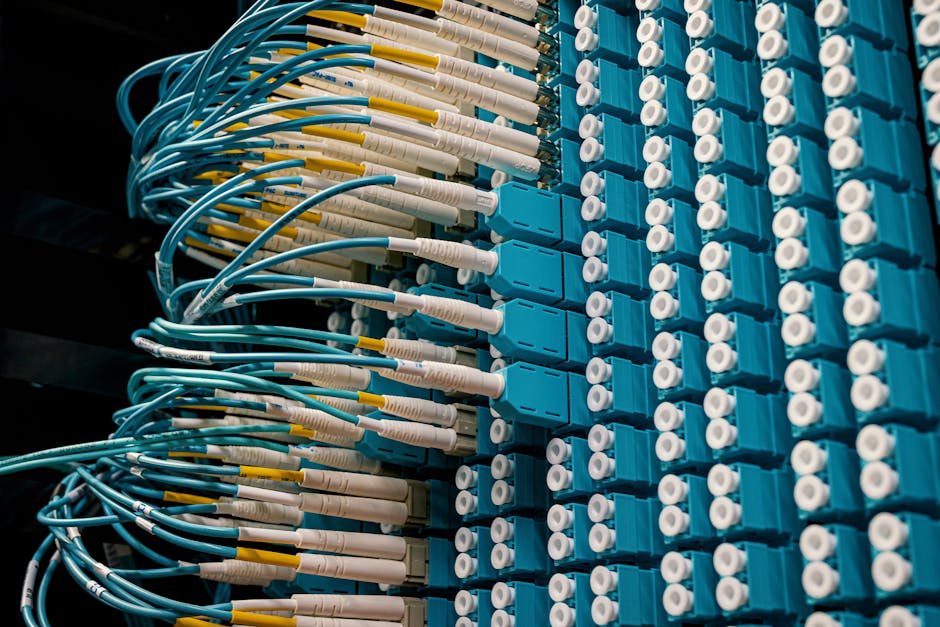
This spending has a direct and tangible impact on network infrastructure. Each new AI data center is a bandwidth sink of a different magnitude than traditional cloud facilities. The IEEE analysis highlights that AI training and inference workloads generate immense east-west traffic within data center campuses and require ultra-low-latency, high-capacity links between regions for model synchronization and distributed training. Google’s investment in its private subsea cable network (like Curie, Equiano, and Grace Hopper) and its global edge and backbone networks is a core component of this CAPEX. The technical requirement is for networks that can handle terabit-scale bursts and provide deterministic performance, pushing the boundaries of optical transport technology, routing, and software-defined networking.
Industry Impact: Redefining the Wholesale and Interconnection Market
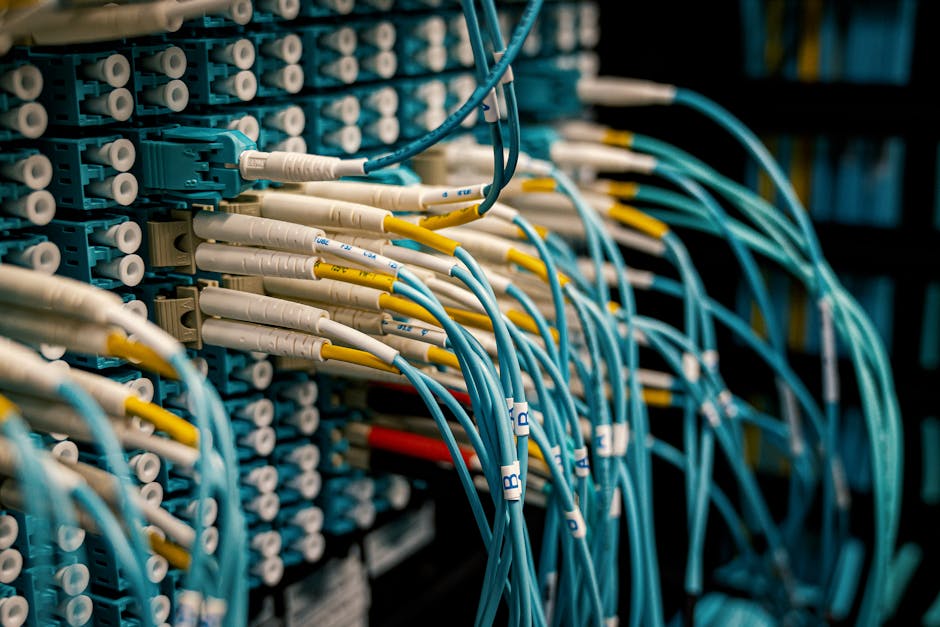
Google’s $90B+ CAPEX strategy creates both immense pressure and new opportunities for telecom operators, carriers, and infrastructure players.
For incumbent telcos and wholesale carriers, the hyperscale demand is a double-edged sword. On one hand, it represents the most significant source of new wholesale bandwidth demand in a decade, filling long-haul and subsea cables and driving upgrades to 400G and 800G wavelengths. Carriers with assets on key routes between major AI hub regions (e.g., US East-West, US-EMEA, US-Asia) are seeing record utilization. However, the threat of infrastructure bypass is acute. Google’s continued investment in its own subsea cables and global backbone reduces its reliance on traditional carrier services for core routes. The competitive dynamic shifts from selling raw bandwidth to providing unique value in landing station access, metro fiber diversity, edge connectivity, and managed services in underserved regions.
For data center and interconnection providers, the AI capex wave is a bonanza, but with specific technical requirements. AI workloads are driving demand for data centers with power densities exceeding 50kW per rack and dedicated, high-count fiber pathways between buildings on a campus. Providers like Equinix, Digital Realty, and emerging regional players must invest heavily in power infrastructure and dense interconnection fabrics to remain relevant. The business model is evolving from colocation to providing the high-performance, low-latency mesh that interconnects hyperscale AI clouds with enterprise networks. The value of an interconnection hub is now measured by its proximity to these AI clusters and the richness of its ecosystem.
Strategic Implications: The Global AI Infrastructure Race and Emerging Markets

The geographic distribution of Google’s AI CAPEX has profound implications for global telecom markets. Investment is heavily concentrated in established hubs like Northern Virginia, Silicon Valley, London, Frankfurt, and Singapore. This reinforces these regions as the world’s primary internet and cloud exchange points, demanding ever-greater fiber density and resilient power grids from local authorities and utility providers.
For Africa and the MENA region, the situation is strategically nuanced. Hyperscale AI investment is currently focused on core global hubs, potentially widening the digital divide in computational resources. However, the network infrastructure built to serve AI—specifically, new subsea cables like Google’s Equiano—simultaneously delivers massive, low-cost international bandwidth to African shores. This creates a foundational opportunity for local telecom operators. The challenge and opportunity for operators like MTN, Vodacom, Safaricom, and stc is to leverage this cheap bandwidth to build out robust national and metro networks, develop in-country data center capacity, and position themselves as the local edge partners for global AI clouds. The race is on to build the terrestrial fiber and edge compute infrastructure that can capture the value of AI-driven applications—such as generative AI, real-time translation, and agricultural analytics—for local populations and enterprises.
Forward-Looking Analysis: Network as a Differentiator in the AI Stack

The era of AI-defined infrastructure is fundamentally altering the telecom landscape. Network performance is no longer a utility but a core competitive differentiator in the AI service stack. Google’s CAPEX underscores that the winning AI platforms will be those with the most scalable, efficient, and performant underlying networks. For the telecom sector, this signals several key trends:
- Convergence of Compute and Transport: Network planning must now be integrated with compute and GPU cluster placement. We will see more joint ventures between telcos and cloud providers to build AI-ready edge sites.
- Rise of AI-Native Network Protocols: Standard telecom protocols are being stretched by AI workloads. Expect accelerated development and deployment of technologies like APO (Application Performance Optimization) and in-band network telemetry to manage AI traffic flows.
- Financial Model Shifts: The sheer scale of hyperscale CAPEX may drive more operators to form infrastructure spin-offs or TowerCos-style NetCos to attract specialized capital needed to compete in the high-stakes backbone arena.
- Regulatory Reckoning: The concentration of AI infrastructure in the hands of a few US-based hyperscalers will trigger renewed regulatory scrutiny in Europe, Asia, and Africa around data sovereignty, competition, and critical digital infrastructure.
In conclusion, Google’s $90 billion AI CAPEX is not just a line item on an earnings report; it is the engine for the next generation of global telecom infrastructure. It redefines wholesale economics, accelerates the need for network automation and performance guarantees, and sets the stage for a new phase of competition and partnership between hyperscalers and telcos. Operators that can strategically align their fiber, data center, and edge assets with this new AI traffic paradigm will capture disproportionate value. Those that fail to adapt risk being relegated to commoditized access providers in an AI-centric world.