Source: Telecom Green, “I Have No Master Socket – Help! An Engineer’s Advice,” published January 15, 2025. A field engineer’s practical guide underscores a persistent, large-scale operational challenge for UK telecoms: managing the transition from millions of legacy Network Termination Points (NTEs), including pre-NTE5 sockets and concealed wiring, to modern, serviceable demarcation points. This is not merely a consumer support issue but a core infrastructure and OpEx problem affecting service delivery, fault diagnostics, and the rollout of advanced services like FTTP and G.fast.
The Demarcation Point Dilemma: From BT’s NTE5 to Modern Broadband

The master socket, or Network Termination Equipment (NTE), is the critical demarcation point separating the Openreach access network from a customer’s internal wiring. The evolution from the 1980s-era NTE5 (and its predecessors) to the current NTE5C and NTE5D models represents a fundamental shift in network architecture. The original NTE5, while revolutionary for its integrated test socket, was not designed for the demands of xDSL broadband. Its successors incorporate filtered faceplates (NTE5C) and dedicated data ports (NTE5D) to isolate the broadband signal from noisy internal extensions, directly impacting line stability and attainable sync speeds.
For network operators, the presence of a non-standard, hidden, or absent master socket creates a cascade of technical and commercial issues. Fault isolation becomes nearly impossible remotely, forcing costly engineer dispatches. A 2023 Openreach report indicated that a significant percentage of reported line faults were traced to issues on the customer side of a poorly identified or non-existent demarcation point. The engineer’s advice to “look under the stairs, in a cupboard, or behind a bookcase” is a real-world symptom of decades of ad-hoc installation practices and consumer DIY modifications that have left a fragmented and undocumented last-meter infrastructure.
This legacy directly impedes the performance of VDSL2 (FTTC) services, where signal integrity over the final few hundred meters of copper is paramount. It also complicates the migration to full-fiber (FTTP) and SOGEA (Single Order Generic Ethernet Access) services, where a clean, identifiable point for the Optical Network Terminal (ONT) installation is required. Operators face a triage decision: invest in a remediation visit to install a new NTE5C, attempt service over a suboptimal line, or risk customer churn due to poor performance.
Industry Impact: OpEx, Service Assurance, and the FTTP Migration

The hidden cost of legacy demarcation points is substantial for both infrastructure providers like Openreach and retail service providers (RSPs). Each unnecessary engineer visit triggered by a “no master socket” scenario carries a direct cost, estimated by industry analysts to range from £80 to £150 per dispatch. When scaled across the UK’s estimated 25 million fixed lines, many of which are in properties built before the standardization of the NTE5, the aggregate operational expenditure is significant.
For service assurance teams, the lack of a clear demarcation cripples diagnostics. Modern line qualification systems rely on tests performed from the exchange to a known, standardized termination. An unknown or compromised termination point returns unreliable data, leading to incorrect speed estimates and service level agreement (SLA) breaches. This erodes customer trust and increases support call volumes. The strategic response has been the development of advanced line diagnostics (ALD) and the push for operator-installed, intelligent demarcation devices like the latest NTE5D, which can provide remote health status.
The transition to Fibre-to-the-Premises (FTTP) presents both a solution and a new set of challenges. FTTP bypasses the copper pair and its associated master socket entirely, replacing it with an Optical Network Terminal (ONT). However, the physical installation often requires locating the existing network entry point—frequently tied to the old master socket’s location. Engineers report that pre-installation surveys frequently uncover complex internal wiring that must be decommissioned, adding time and complexity to what should be a straightforward fiber drop. The industry is standardizing on new external ONU (Optical Network Unit) boxes and internal ONTs to create a clean, future-proof demarcation, but this rollout must contend with the physical legacy of the past 40 years.
Strategic Implications for the UK and Global Telecom Markets
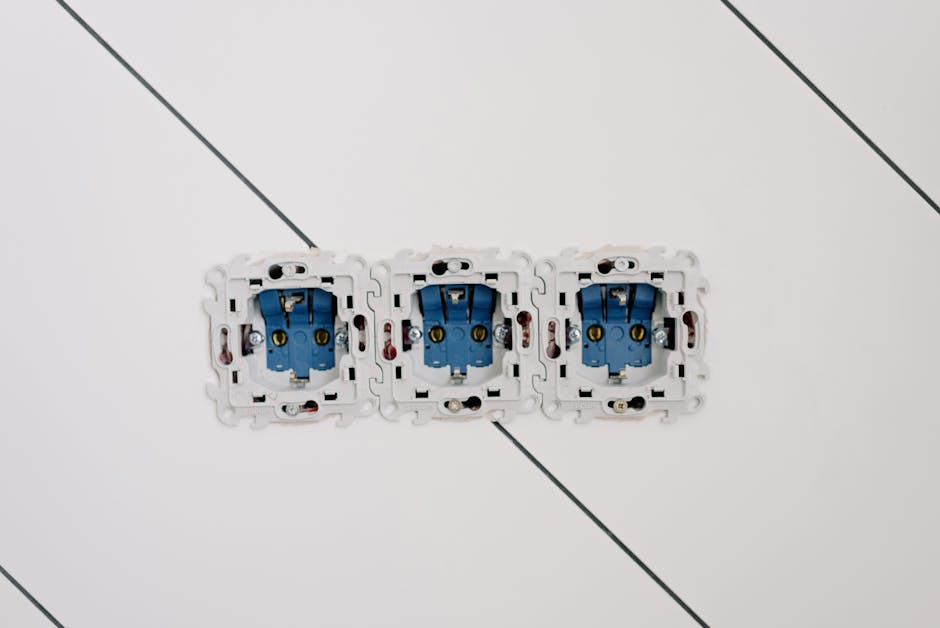
The UK’s master socket issue is a specific case study in a universal telecom challenge: the management of legacy copper access infrastructure during a forced migration to fiber and fixed wireless access (FWA). Similar demarcation and in-home wiring issues plague operators across Europe, North America, and aging telecom markets worldwide. The strategic implication is that the “last meter” is a critical, often overlooked component of network modernization.
For regulators and policymakers, the persistence of substandard customer premises wiring acts as a drag on national broadband goals. Initiatives like the UK’s Project Gigabit aim for nationwide coverage, but performance at the endpoint can be compromised by a £5 length of bell wire installed decades ago. This has spurred discussions about regulatory responsibility for the in-home segment and whether minimum wiring standards should be enforced for new service installations.
Competitively, the issue creates an advantage for alternative network providers (AltNets) and mobile operators. AltNets building FTTP from scratch install standardized, modern termination points, offering a cleaner service experience. Mobile network operators (MNOs) promoting 5G FWA as a fixed-line replacement bypass the in-home copper wiring problem entirely, marketing simplicity and “no engineer visit” installations. This pressures incumbent operators to accelerate their own fiber rollouts and develop efficient, customer-friendly processes for demarcation point remediation.
The solution path involves a multi-pronged approach: continued education for consumers and property managers, streamlined engineer workflows for NTE replacement, and the accelerated decommissioning of the copper network via aggressive FTTP build-outs. Operators are also investing in self-install kits for simple services, but these often still require a functional master socket, highlighting the enduring centrality of this piece of infrastructure.
Forward-Looking Analysis: The Demarcation Point in an All-IP, Multi-Access World

Looking ahead, the concept of the demarcation point is evolving beyond a simple socket. In an all-IP, multi-access world, the termination device is becoming an intelligent, software-defined gateway. The ONT in an FTTP installation is the first step—a demarcation that also provides multiple Ethernet ports and often integrated Wi-Fi. The next evolution is the convergence of fixed and mobile demarcation into a unified customer premises equipment (CPE) that can manage connections over fiber, 5G, and even LEO satellite, using software-defined wide area networking (SD-WAN) principles.
For telecom operators, the strategic lesson from the “missing master socket” era is clear: control and standardization of the network termination are non-negotiable for service quality and operational efficiency. The future demarcation will be a managed, cloud-connected device that provides real-time telemetry, enables zero-touch provisioning, and serves as the anchor point for a suite of smart home and business services. The decades-long struggle with hidden wiring and outdated NTEs will finally be relegated to history, but only through sustained investment in fiber infrastructure and a deliberate migration away from the copper access network that created the problem in the first place. The engineer’s search behind the bookcase is a fading, but poignant, reminder of the physical legacy that the industry must systematically overcome to deliver the next generation of connectivity.
About the Author