Nvidia’s RTX Spark Superchip: A New Frontier for Telecom Edge AI and Private Networks
📰Original Source: ETTelecomBy TelecomObserver StaffNvidia’s aggressive push into the AI PC market with its new RTX Spark superchip platform is more than a consumer hardware play; it represents a significant acceleration in the availability of high-performance, power-efficient AI compute at the network edge, according to…
By TelecomObserver Staff
Nvidia’s aggressive push into the AI PC market with its new RTX Spark superchip platform is more than a consumer hardware play; it represents a significant acceleration in the availability of high-performance, power-efficient AI compute at the network edge, according to an analysis published by ETTelecom on June 8, 2026. The launch, aimed at challenging Apple’s high-end MacBook Pros, introduces a new tier of on-device AI processing that telecom operators must evaluate for its impact on enterprise services, private 5G networks, and the evolving edge computing ecosystem. While analysts cited by ETTelecom question mainstream consumer demand due to high prices, the telecom sector sees a clear vector for deploying these capabilities in managed network solutions and infrastructure.
The core telecom relevance lies in the RTX Spark’s specifications. Built on Nvidia’s next-generation Blackwell architecture, the superchip integrates a CPU, GPU, and a dedicated Neural Processing Unit (NPU) into a single package. Early performance claims suggest it can deliver over 1,000 TOPS (Tera Operations Per Second) of AI inference power while maintaining a thermal design power (TDP) suitable for compact, fanless designs. This power-to-performance ratio is critical for deploying AI at cell sites, in micro-data centers, or within customer-premises equipment (CPE) for services like real-time network traffic optimization, video analytics for smart cities, or low-latency inference for industrial IoT applications on private networks.
Technical Deep Dive: From Consumer Laptops to Network Edge Appliances
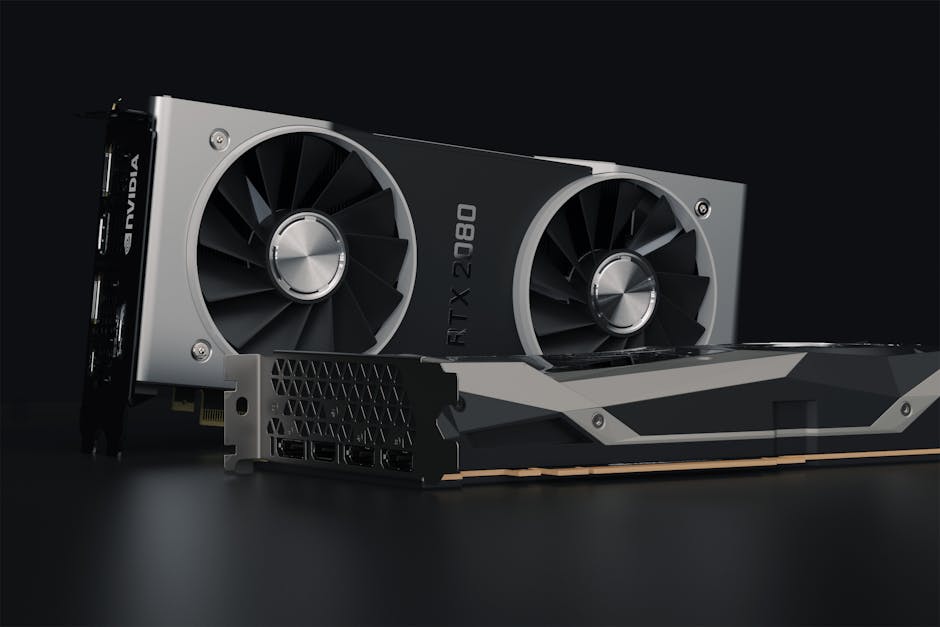
The RTX Spark is not merely a CPU+GPU combo; it is a system-on-chip (SoC) designed for heterogeneous computing. For telecom engineers, the key metrics are INT8 and FP16 performance for inference, memory bandwidth, and power envelope. Nvidia claims the integrated NPU can handle large language model (LLM) inference locally, a capability that shifts the paradigm from cloud-dependent AI to distributed, edge-native AI. In practical terms, this means a ruggedized server based on the Spark architecture could be deployed at a 5G aggregation point to run a localized AI model for predictive maintenance on network equipment, analyze subscriber Quality of Experience (QoE) data in real-time, or provide on-premises AI for a manufacturing plant using a private 5G network, all without backhauling sensitive data to a central cloud.
This technical shift challenges the traditional telecom cloud and edge strategy, which has largely relied on x86 CPUs from Intel and AMD paired with discrete accelerators or generic cloud instances. The Spark platform offers a vertically integrated, performance-optimized stack for AI workloads. For operators building out Multi-access Edge Compute (MEC) platforms, evaluating such integrated AI silicon becomes essential for service differentiation. It also raises questions about interoperability with existing virtualization infrastructures (like OpenStack or Kubernetes) and the role of telecom-specific software partners in harnessing this raw performance for network functions.
Industry Impact: Redefining the Edge Compute Stack for Operators

For Mobile Network Operators (MNOs), TowerCos, and neutral host infrastructure providers, the proliferation of silicon like the RTX Spark creates both opportunities and strategic dilemmas.
Opportunity in Enterprise & Private Networks: The most immediate application is in the booming market for private 4G/5G networks and enterprise edge solutions. Industrial clients in sectors like logistics, mining, and advanced manufacturing are demanding AI-driven analytics—from computer vision for quality control to digital twins for operational efficiency. An edge appliance powered by a chip like the RTX Spark can be offered as a managed “AI-in-a-box” solution, bundled with a private wireless slice. This allows operators to move up the value chain from connectivity providers to full-stack AI and compute service providers, commanding higher average revenue per user (ARPU).
Network Operations & Automation: Internally, this level of on-site AI compute can revolutionize network operations. AI-powered radio access network (RAN) optimization (Near-Real Time RIC applications), fiber fault prediction, and automated customer support via local AI agents become more feasible and cost-effective when high-performance inference is available at the edge, reducing latency and core network load.
Strategic Dilemma & Vendor Landscape: The move forces operators to decide on their edge compute architecture. Do they standardize on a few silicon platforms like Nvidia’s, or maintain a heterogeneous, vendor-agnostic approach? It also intensifies competition with hyperscalers (AWS, Microsoft Azure, Google Cloud), who are pushing their own edge AI stacks and silicon (e.g., AWS Inferentia, Google TPU). Telecom operators must navigate partnerships carefully, ensuring they retain control of the network edge and the customer relationship while leveraging best-in-class hardware.
Regional Implications: Accelerating AI Readiness in Emerging Markets

The implications for telecom markets in Africa, the Middle East, and parts of Asia are particularly pronounced. These regions often face challenges with high latency to centralized cloud regions and variable backhaul quality. The advent of powerful, efficient edge AI silicon changes the calculus for digital transformation.
In Africa, for instance, a mobile operator could deploy solar-powered micro-edge sites equipped with AI-capable silicon in remote areas. These sites could locally process applications for agricultural tech (disease detection in crops via drone imagery), telemedicine (AI-assisted diagnostics), or local language AI assistants, all without requiring constant, high-bandwidth satellite or terrestrial backhaul. This makes advanced AI services economically viable in regions previously underserved by cloud computing.
Furthermore, for nations with data sovereignty regulations, processing data locally on telecom infrastructure equipped with chips like the RTX Spark provides a compliant and efficient pathway. Operators in the MENA region, with strong government and enterprise sectors, can leverage this to offer sovereign AI cloud services, competing directly with international hyperscalers on latency, compliance, and potentially cost.
However, the high cost of the initial hardware, as noted by analysts in the original report, remains a barrier. This will likely lead to phased deployments, starting with high-value enterprise zones and industrial parks before trickling down to wider network infrastructure. It also underscores the need for innovative financing and “as-a-service” models from operators to make the technology accessible.
Forward-Looking Analysis: The Convergence of AI Silicon and Network Fabric
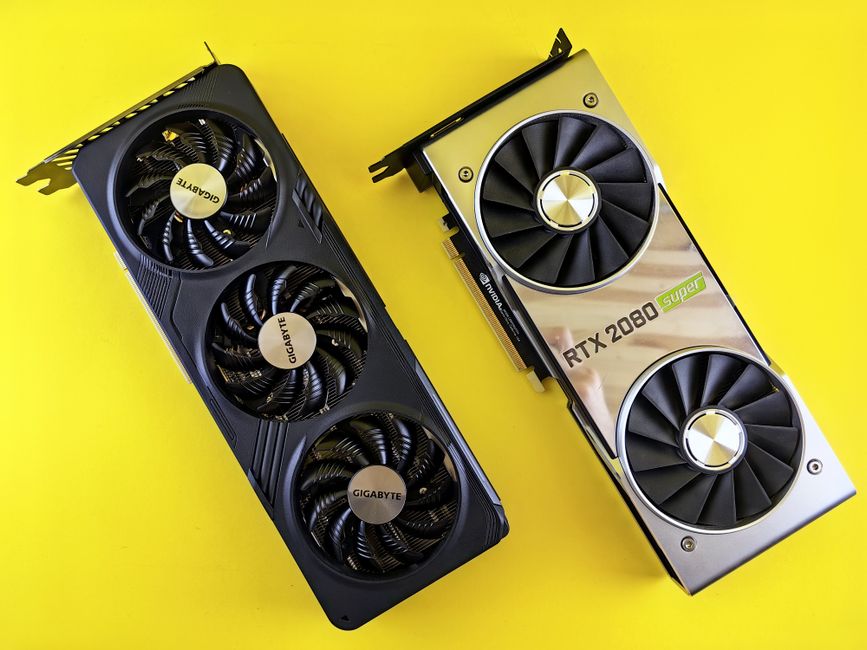
Nvidia’s RTX Spark launch is a bellwether for the broader convergence of advanced AI silicon and telecommunications infrastructure. It signals that the boundary between a “device” and “network node” is blurring. The next generation of cell site routers, MEC servers, and even customer premises equipment will have embedded, dedicated AI accelerators as a standard feature.
For the telecom sector, the strategic takeaway is threefold. First, performance benchmarking of AI silicon must become a core competency for network planning teams, evaluating not just peak TOPS but real-world performance on telecom-specific workloads. Second, software and ecosystem development is critical; hardware is useless without optimized software stacks for network AI applications. Operators should engage with silicon vendors and software partners early to shape these ecosystems. Finally, new business models will emerge. We will see the rise of “Inference-as-a-Service” at the edge, AI-accelerated network slicing, and performance-based SLAs for enterprise AI applications that are fundamentally enabled by this new class of hardware.
While the consumer market debates the RTX Spark’s niche, the telecom industry should see it as a foundational technology shift. It brings data center-grade AI inference to the network perimeter, unlocking new services, optimizing operations, and reshaping competitive dynamics in the race to own the intelligent edge.