SoftBank’s $8.4B Intel Gain Signals Intensifying AI Infrastructure Arms Race for Telecom
📰Original Source: ETTelecomSource: ETTelecom — SoftBank Group Corp. reported a significant $8.4 billion valuation gain on its investment in Intel Corporation for the fiscal first quarter ending June 30, 2026, a move that underscores the strategic financial bets being placed on the silicon powering the…
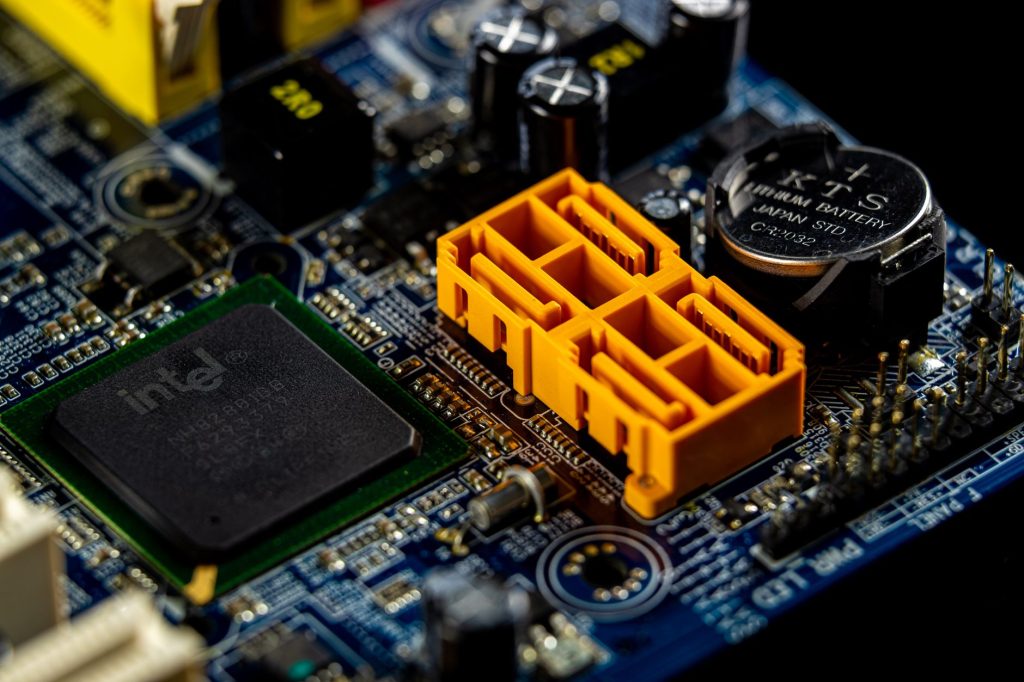
Source: ETTelecom — SoftBank Group Corp. reported a significant $8.4 billion valuation gain on its investment in Intel Corporation for the fiscal first quarter ending June 30, 2026, a move that underscores the strategic financial bets being placed on the silicon powering the next generation of artificial intelligence and telecom networks. Despite a 3% year-on-year decline in net profit to 1.36 trillion yen ($9.5 billion), the massive Intel paper gain highlights SoftBank founder Masayoshi Son’s aggressive pivot towards AI-centric infrastructure, a strategy with profound implications for global telecom operators, data center builders, and network equipment vendors competing for dominance in the AI era.
Deconstructing the Intel Bet: A Strategic Play for AI & Network Silicon Sovereignty
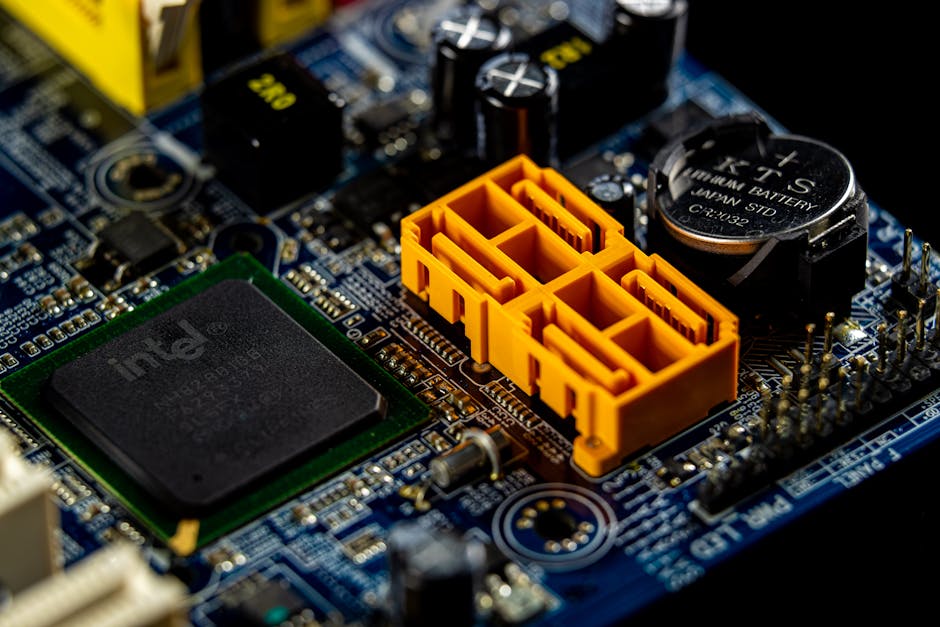
The $8.4 billion unrealized gain on SoftBank’s Intel stake is not merely a financial windfall; it is a direct reflection of the soaring market valuation for companies positioned to supply the foundational hardware for AI compute. Intel, under CEO Pat Gelsinger’s IDM 2.0 strategy, has been aggressively ramping its foundry services and next-generation process nodes (Intel 18A, 20A) aimed at reclaiming leadership in high-performance computing and custom AI accelerators. For telecom observers, this investment is a bellwether for several converging trends:
- AI-Native Silicon Demand: The explosive growth of generative AI, large language model (LLM) training, and real-time inference is creating unprecedented demand for specialized silicon beyond traditional CPUs. Intel’s Gaudi AI accelerators and its push into custom chiplet designs via its foundry arm are direct competitors to Nvidia’s GPUs and AMD’s Instinct line. Telecom network operators building AI-powered network automation, customer service bots, and edge inference platforms are becoming major consumers of this hardware.
- Supply Chain Diversification: SoftBank’s bet aligns with a broader industry imperative to diversify the AI silicon supply chain away from a near-monopoly. For telecom operators and hyperscale cloud providers building AI infrastructure, multiple viable suppliers (Intel, AMD, Nvidia, and custom ASIC providers like Broadcom) are critical for cost negotiation, supply security, and architectural flexibility.
- Foundry Wars and Geopolitics: Intel’s massive $100+ billion investment in new fabrication plants (fabs) in the US, EU, and potentially elsewhere is a cornerstone of Western efforts to re-shore advanced semiconductor manufacturing. This has direct implications for telecom equipment vendors (Ericsson, Nokia, etc.) and network operators seeking secure, geopolitically resilient supply chains for critical network components, from 5G/6G baseband processors to optical DSPs.
Masayoshi Son’s commentary, emphasizing that “the age of artificial general intelligence is just around the corner,” frames this financial gain within a larger, capital-intensive vision. SoftBank, through its Vision Funds and direct holdings, is effectively placing bets across the entire AI stack—from foundational silicon (Arm, Intel) to data center operators, AI software platforms, and downstream applications. The Intel gain provides crucial financial fuel for this strategy.
Impact on Telecom Operators and Network Infrastructure Strategy
For telecom executives and network infrastructure planners, SoftBank’s maneuvering signals a fundamental shift in the competitive landscape and capital allocation priorities.
1. Capex Reallocation Towards AI-Readiness: The financial success of AI infrastructure investments validates the massive capital expenditures (capex) that telecom operators are beginning to allocate towards AI. This is no longer just about software-defined networking (SDN) and network function virtualization (NFV). It now encompasses:
– AI-Optimized Data Centers: Building or retrofitting central offices and edge data centers with liquid cooling, high-power density racks, and ultra-low-latency interconnects to host AI inference workloads.
– Network-as-a-Sensor/Computer: Deploying AI accelerators within the RAN (vDU, vCU) and core network for real-time traffic optimization, predictive maintenance, and security threat detection.
– Strategic Partnerships: Operators like Deutsche Telekom, NTT, and Vodafone are increasingly forming deep partnerships with cloud providers (AWS, Azure, Google Cloud) and silicon vendors to co-design AI-native network architectures.
2. The Rise of the “Intelligent Infrastructure” Provider: SoftBank’s own telecom arm, SoftBank Corp. in Japan, serves as a living lab for deploying AI across its network. The parent company’s financial gains from Intel and Arm (which it took public in a record-breaking 2024 IPO) provide a war chest to fund R&D and aggressive network upgrades. This creates a new class of telecom operator that is vertically integrated with AI silicon and platform development, potentially outpacing rivals who treat AI as a bolt-on software purchase.
3. Valuation Pressure and Investor Expectations: Public market investors are now scrutinizing telecom operators not just on subscriber growth or EBITDA margins, but on their AI strategy and infrastructure readiness. Operators who fail to articulate a clear path to monetizing AI—through enterprise services, network efficiency gains, or new consumer applications—risk being sidelined in capital markets, much like those that were slow to adopt 4G or fiber.
Global and Regional Implications: Asia-Pacific Lead and the MENA/Africa Catch-Up
The SoftBank-Intel dynamic plays out unevenly across global telecom markets, with clear leaders and emerging strategic battlegrounds.
Asia-Pacific as the AI Infrastructure Crucible: Led by SoftBank (Japan), SK Telecom (South Korea), Singtel (Singapore), and Reliance Jio (India), the APAC region is at the forefront of integrating AI into telecom operations. These operators benefit from proximity to major semiconductor fabrication clusters (Taiwan, South Korea, Japan, and soon, India) and have governments aggressively promoting national AI sovereignty. Jio, for instance, is building a cloud-native 5G stack and has announced ambitions in AI model development, requiring massive investments in underlying silicon.
MENA and Africa: The Infrastructure-Dependent Challengers: For operators in the Middle East, North Africa, and Sub-Saharan Africa, the AI infrastructure race presents both a challenge and an opportunity.
– Challenge: High capital costs for AI-ready data centers and imported hardware (servers, accelerators) strain already tight budgets. Limited local AI talent pools and less mature digital ecosystems can slow adoption.
– Opportunity: The “greenfield” advantage. New network builds, such as 5G SA cores and expansive fiber backhaul projects, can be designed from the ground up with AI principles in mind—automation, data-centric architecture, and edge compute. Operators like MTN, Safaricom, and e& (Etisalat) are already partnering with hyperscalers to leapfrog legacy constraints. Furthermore, the massive demand for AI-powered solutions in sectors like agriculture, fintech, and public health in these regions creates a compelling use-case-driven market for telecoms to become AI platform providers.
The financialization of AI infrastructure, as evidenced by SoftBank’s gains, means global investment will flow disproportionately to regions with stable regulation, digital talent, and clear AI roadmaps. Telecom regulators in Africa and MENA must therefore prioritize policies that encourage infrastructure investment, data flow governance, and skills development to avoid being mere consumers of AI technology developed and controlled elsewhere.
Forward Look: The Convergence of Telecom, Silicon, and AI Capital
The $8.4 billion Intel gain is a symptom of a larger transformation: the convergence of telecom networks, semiconductor supply chains, and AI algorithm development into a single, integrated stack. The forward-looking implications for the telecom sector are stark:
- Consolidation and Vertical Integration: Expect increased M&A activity and strategic alliances between telecom operators, tower companies, data center REITs, and silicon design firms. The lines between network operator, cloud provider, and chip designer will continue to blur.
- Rise of “Chip-to-Cloud” Service Bundles: Leading operators will offer enterprise customers not just connectivity, but bundled solutions that include access to optimized AI hardware, proprietary data models, and industry-specific applications, all running on their sovereign network edge.
- New Competitive Fault Lines: The battle for the AI-powered network will not be fought solely between MNOs. Hyperscalers (with their custom silicon like AWS Graviton, Google TPU), traditional equipment vendors (evolving into full-stack AI platform providers), and well-capitalized investment vehicles like SoftBank’s Vision Fund will all be direct competitors for the same enterprise revenue.
- Sustainability Imperative: The enormous power draw of AI compute (a single large LLM training run can consume energy equivalent to hundreds of homes for a year) will force telecom operators to innovate in energy efficiency, renewable power procurement for data centers, and liquid cooling technologies. This will become a core differentiator and regulatory requirement.
In conclusion, SoftBank’s quarterly results are far more than a financial statement; they are a strategic map of the future telecom landscape. The $8.4 billion paper gain on Intel is a massive vote of confidence in the value of controlling the silicon that powers AI. For telecom operators worldwide, the message is clear: the race to build and monetize intelligent networks is on, and it will be won by those who understand and invest in the full stack—from the foundry to the fiber.