Samsung, SK Hynix Test Chinese Chip Equipment in Response to US Export Controls
📰Original Source: ETTelecomBy TelecomObserver Staff | August 6, 2026 In a strategic move that signals a fundamental shift in global semiconductor supply chain resilience, South Korean memory giants Samsung Electronics and SK Hynix have initiated testing of advanced chipmaking equipment from China’s Advanced Micro-Fabrication Equipment…
By TelecomObserver Staff | August 6, 2026
In a strategic move that signals a fundamental shift in global semiconductor supply chain resilience, South Korean memory giants Samsung Electronics and SK Hynix have initiated testing of advanced chipmaking equipment from China’s Advanced Micro-Fabrication Equipment Inc. (AMEC). According to a report from ETTelecom, this development is a direct response to escalating US export controls on semiconductor manufacturing tools, which threaten the operational continuity and expansion plans of their multi-billion-dollar fabrication plants in China. For the global telecom industry, which is critically dependent on a stable supply of memory chips for everything from 5G base stations and smartphones to data center switches and edge computing modules, this hedging strategy underscores a growing imperative to diversify technology sourcing and mitigate geopolitical risk in core infrastructure components.
The testing focuses on AMEC’s etch and chemical vapor deposition (CVD) tools, which are essential for producing NAND flash and DRAM memory chips. Samsung and SK Hynix operate significant production facilities in Xi’an and Dalian, China, respectively, which are pivotal to the global memory supply. The US-led export control regime, aimed at curtailing China’s access to advanced semiconductor technology, has placed these facilities in a precarious position, as they require a steady stream of tools for maintenance, upgrades, and capacity expansion. The exploration of Chinese-sourced alternatives is not merely a contingency plan but a necessary step to safeguard production yields and long-term capital investments, with profound implications for telecom equipment pricing, availability, and technology roadmaps.
Technical Deep Dive: AMEC’s Tools and the Semiconductor Manufacturing Gap

The core of this strategic pivot lies in the technical capabilities of Chinese semiconductor equipment manufacturers like AMEC. For decades, the global semiconductor equipment market has been dominated by a handful of US, Japanese, and European companies, including Applied Materials, Lam Research, and Tokyo Electron. These firms control critical segments of the fabrication process, particularly in advanced etch, deposition, and lithography. AMEC, founded in 2004, has emerged as China’s leading domestic supplier of dielectric etch and metal organic chemical vapor deposition (MOCVD) equipment, primarily for the LED and power semiconductor markets. Its foray into the more demanding realm of memory chip fabrication represents a significant technological ambition.
For Samsung and SK Hynix, the evaluation process is rigorous and multi-faceted. It involves assessing tool performance on key metrics such as:
- Process Uniformity and Yield: The ability of AMEC’s etch tools to achieve consistent critical dimensions across 300mm wafers, directly impacting die yield and cost-per-bit.
- Defect Density: The rate of particle contamination and other defects introduced during the CVD process, which can degrade memory cell reliability and endurance.
- Throughput and Uptime: The tools’ speed (wafers per hour) and mean time between failures (MTBF), which determine fab productivity and overall equipment effectiveness (OEE).
- Integration with Existing Fab Ecosystems: Compatibility with the semiconductor equipment communications standard (SECS/GEM) and the broader tool automation and material handling systems in Samsung and SK Hynix fabs.
Initial industry analysis suggests AMEC’s tools may currently lag behind market leaders by one or more process generations, particularly for the most advanced sub-10nm memory nodes. However, for legacy nodes (e.g., 20nm-40nm planar NAND or 1xnm DRAM) that still constitute a massive volume of production for cost-sensitive applications—including many IoT modules, legacy network cards, and consumer devices—viable Chinese alternatives could provide a crucial supply buffer. The telecom sector’s hunger for memory is bifurcated: cutting-edge 5G RAN and core network functions demand the latest, highest-performance DRAM, while vast deployments of sensors and connected devices can utilize more mature, cost-optimized NAND and DRAM. This diversification in sourcing could, therefore, have a stabilizing effect on the broader supply chain.
Impact on Telecom Operators, Network Equipment Vendors, and Infrastructure Strategy
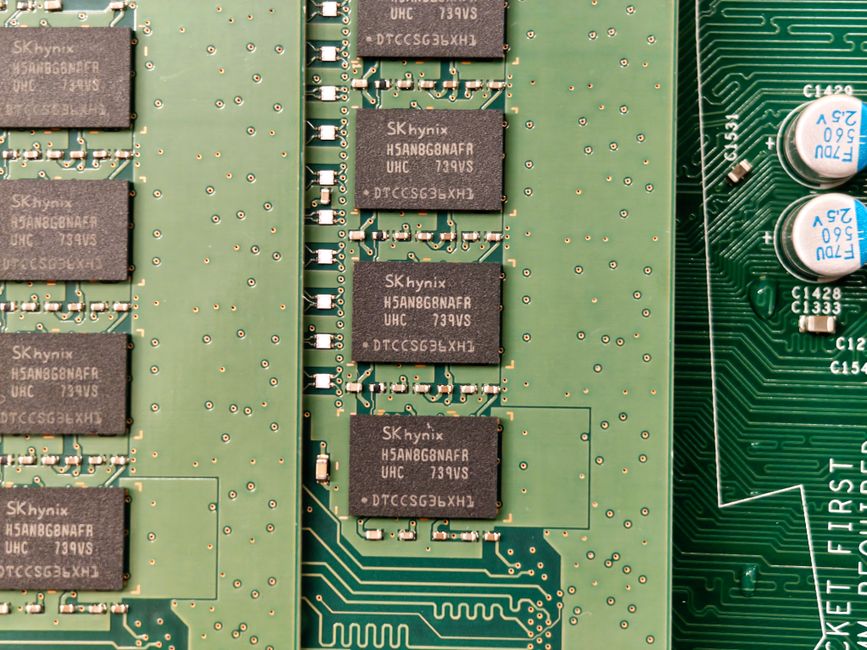
The ramifications of this supply chain evolution extend directly to telecom operators (MNOs), network equipment manufacturers (NEMs), and data center infrastructure providers. Memory is a foundational component in modern telecom networks:
- 5G RAN (O-RAN & Traditional): Distributed Units (DUs) and Centralized Units (CUs) rely on high-bandwidth, low-latency DRAM for baseband processing and fronthaul/backhaul packet buffering.
- Core Network & Edge Computing: 5G core network functions (AMF, SMF, UPF) and Multi-access Edge Computing (MEC) servers are essentially specialized data centers, consuming vast quantities of both DRAM for processing and NAND for storage.
- CPE & Consumer Devices: Routers, set-top boxes, smartphones, and FWA CPEs all integrate memory chips whose cost and availability directly affect operator capex and consumer pricing.
- Optical & Switching Equipment: High-capacity optical transport network (OTN) switches and IP routers use memory for lookup tables, packet buffering, and traffic management.
A sustained disruption or cost inflation in the memory market, driven by geopolitical friction over equipment, would ripple through these sectors. For telecom CFOs and supply chain managers, the actions of Samsung and SK Hynix highlight several strategic imperatives:
- Dual-Sourcing and Supplier Diversification: Just as the chipmakers are diversifying their tool suppliers, operators and NEMs must evaluate dual-sourcing strategies for critical components, even if it involves accepting slightly differentiated specifications or performance profiles for non-critical applications.
- Increased Inventory Buffering: The era of just-in-time inventory for critical network components may be ending. Strategic buffer stocks of essential line cards, server modules, and even finished base stations may become a necessary cost of doing business to ensure network resilience.
- Closer Collaboration with NEMs on Roadmaps: Operators must engage in deeper, more transparent dialogues with vendors like Ericsson, Nokia, Huawei, and Samsung Networks about their component sourcing strategies and the associated geopolitical risk assessments. This will influence procurement decisions and technology adoption timelines.
- Potential for Regionalized Supply Chains: The trend could accelerate the move towards regionalized semiconductor production. Operators in markets like India, Southeast Asia, and the Middle East may find themselves incentivized to source equipment built with chips from “friendly” fabs, potentially influencing vendor selection in government tenders.
Global Telecom Dynamics: Implications for Africa, MENA, and Emerging Markets
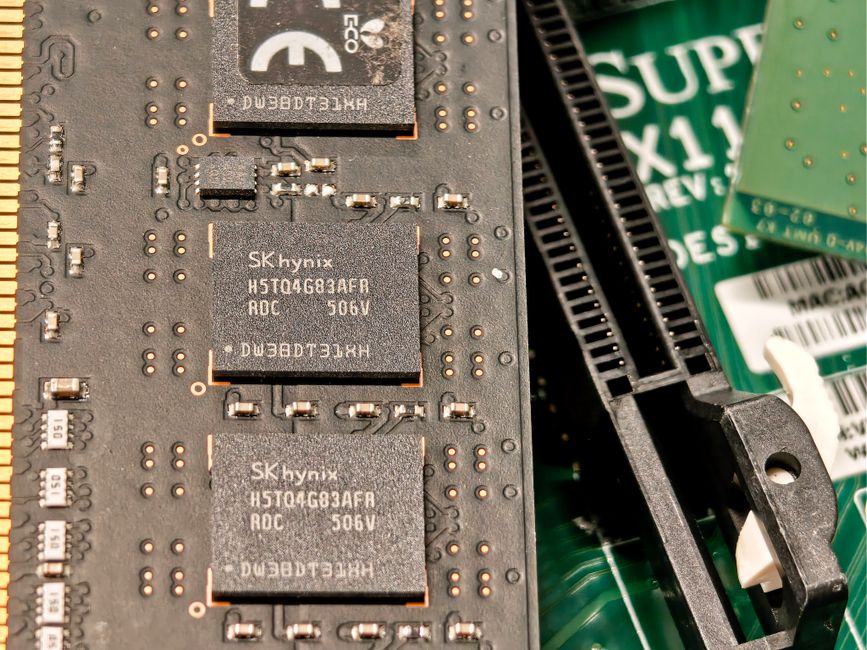
The strategic calculus of Samsung and SK Hynix has distinct implications for telecom development in Africa, the Middle East, and other emerging markets. These regions are in the midst of massive 4G expansions and early 5G deployments, often with constrained budgets and a high sensitivity to equipment costs. Their networks are frequently built on a mix of new and legacy technology.
If the diversification into Chinese equipment helps stabilize or reduce the cost of mature-node semiconductors, it could have a deflationary effect on the price of entry-level and mid-tier network equipment and devices. This would be a net positive for operators in these regions, allowing them to stretch capex further and accelerate coverage goals. Chinese vendors like Huawei and ZTE, which already have deep supply chain relationships with domestic equipment makers like AMEC, could gain an additional cost-structure advantage, potentially strengthening their competitive position in price-sensitive markets.
Conversely, a bifurcation of the technology stack—where “Western-aligned” equipment uses chips from fabs reliant on US/Japanese tools, and “alternative” equipment uses chips from fabs employing Chinese tools—could create complexity. It may introduce concerns about interoperability, long-term software support, and security assurance, factors that are increasingly scrutinized by regulators in Africa and the MENA region. Operators will need to navigate these waters carefully, balancing cost, performance, and geopolitical alignment with key technology partners and host governments.
Forward-Looking Analysis: A New Era of Telecom Hardware Geopolitics
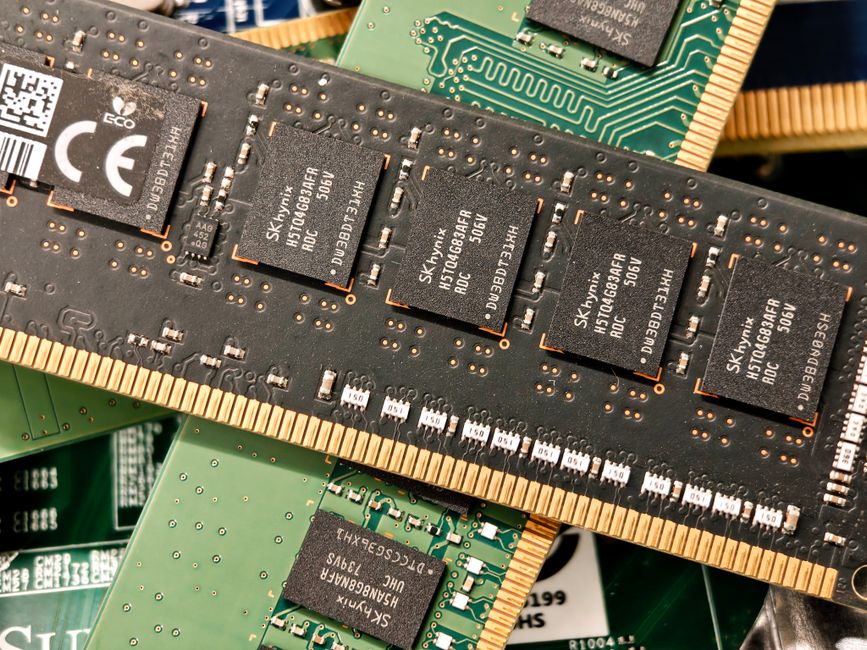
The testing of Chinese chip equipment by Samsung and SK Hynix is not an isolated event but a bellwether for the telecom infrastructure sector. It marks the beginning of a new era where hardware supply chain resilience is as critical a performance metric as throughput or latency. The industry is moving from a paradigm of globalized efficiency to one of regionalized security.
In the coming 3-5 years, we anticipate several developments:
- Accelerated R&D in Chinese Semiconductor Equipment: The demand signal from major memory makers will funnel capital and engineering talent into companies like AMEC, Naura, and SMEE, potentially closing the technology gap faster than anticipated.
- Regulatory Scrutiny on Chip Provenance: National telecom regulators, particularly in allied countries, may begin to require disclosures or impose restrictions on network equipment containing semiconductors produced with certain toolchains, adding a new layer to compliance.
- Innovation in Chip Architectures: Network equipment vendors may invest more heavily in chip designs (e.g., ASICs, DPUs) that are less dependent on the most advanced process nodes, thereby insulating themselves from the cutting-edge tool supply crunch.
- Rise of Memory-as-a-Service Models: To mitigate procurement risk, some operators may explore more flexible purchasing agreements with NEMs that include guaranteed supply or cost ceilings tied to memory market indices.
For telecom executives and network architects, the message is clear: the security and predictability of your network now depend as much on geopolitics and fab tooling as on your RAN vendor selection. Proactive supply chain mapping and risk mitigation have become non-optional components of strategic network planning. The actions in the cleanrooms of Xi’an and Dalian will ultimately resonate in the network operations centers of every major operator worldwide.