Farice Plans AUÐUR: New Subsea Cable to Boost Iceland-Europe Connectivity, Target Data Centers
📰Original Source: Total TelecomIcelandic international connectivity provider Farice has announced plans to build a new submarine cable system, named AUÐUR, to significantly enhance the island nation’s digital links to key European data hubs. According to the initial report by Total Telecom, the project aims to…
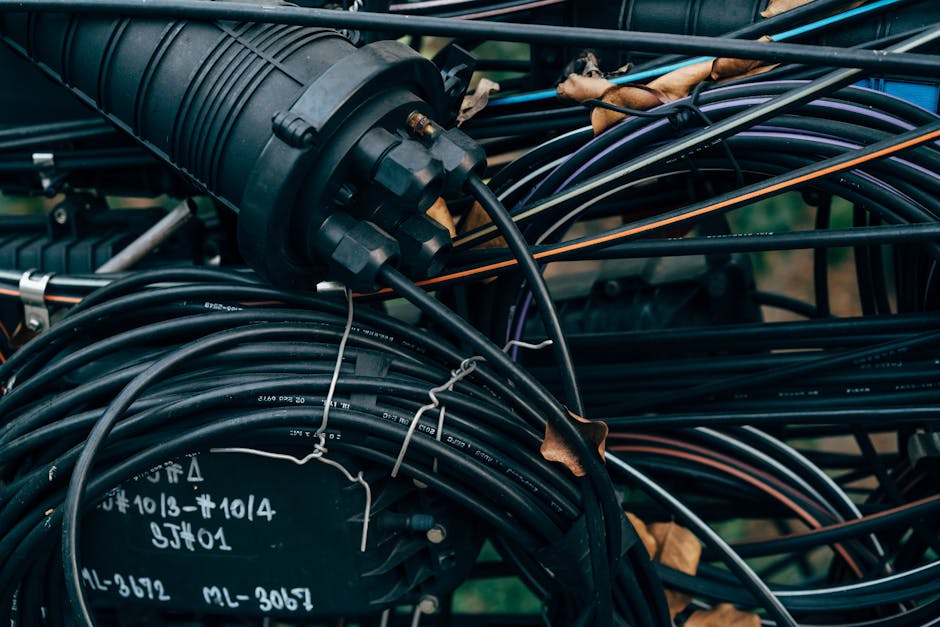
Icelandic international connectivity provider Farice has announced plans to build a new submarine cable system, named AUÐUR, to significantly enhance the island nation’s digital links to key European data hubs. According to the initial report by Total Telecom, the project aims to provide a new, low-latency, high-capacity route between Iceland and mainland Europe, directly supporting the country’s strategic ambition to become a major data center and AI compute hub. For telecom operators and infrastructure investors, AUÐUR represents a critical expansion of North Atlantic backbone infrastructure, adding vital redundancy and capacity to a market defined by renewable energy and growing hyperscale demand.
Technical Specifications and Strategic Rationale for the AUÐUR Cable
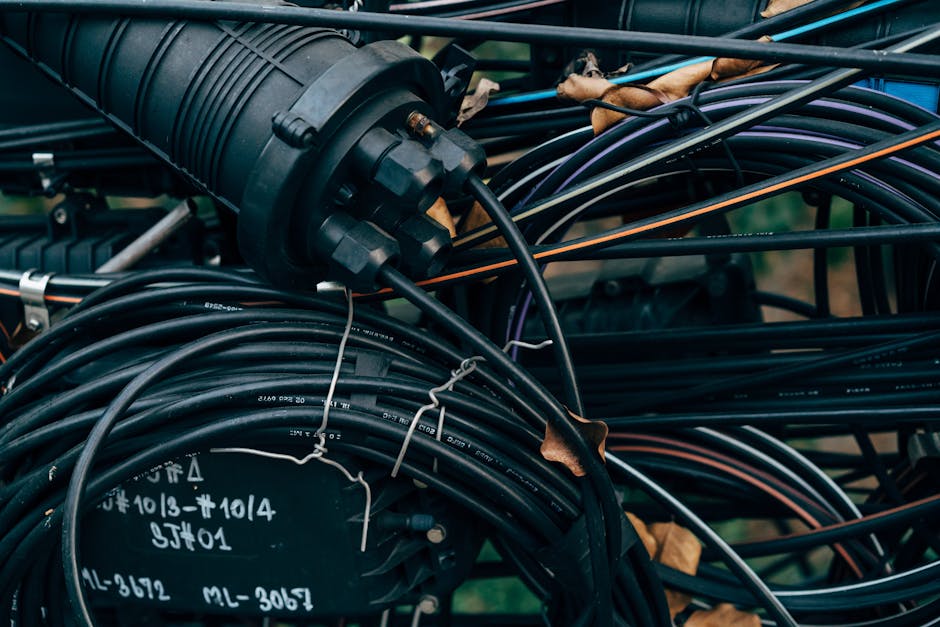
While Farice has not yet released the full technical data sheet for AUÐUR, the project’s strategic outline reveals its core purpose: to future-proof Iceland’s international connectivity. The cable is explicitly designed to cater to the burgeoning data center industry, which is attracted by Iceland’s 100% renewable energy grid (primarily geothermal and hydroelectric), cool climate for natural cooling, and political stability. The existing subsea infrastructure, primarily the FARICE-1 cable to Scotland (operational since 2004) and the DANICE cable to Denmark, provides a foundational link but faces capacity and redundancy limitations as demand surges.
AUÐUR will likely feature a minimum of four fiber pairs, with initial design capacities reaching 20+ Tbps per pair using modern coherent optics, scalable far beyond that. The key technical differentiator will be its landing point selection in Europe. Farice is evaluating multiple potential landings, with Ireland and the United Kingdom as leading candidates due to their established ecosystem of data centers and network interconnection points. A landing in Ireland would provide a direct gateway to the transatlantic cable systems landing there, positioning Iceland as a potential intermediate hub between North America and continental Europe. The system will incorporate the latest subsea technology from suppliers like SubCom or NEC, featuring optical repeaters with high gain and low noise figures to maintain signal integrity over the approximately 1,200–1,500 km route.
The project’s timeline targets a Ready for Service (RFS) date in the 2027-2028 window. This multi-year horizon includes the critical phases of marine route survey, permitting, manufacturing, and the complex installation process in the challenging North Atlantic environment, known for its rough seabed and volatile weather. The total capital expenditure (CAPEX) is estimated to be in the range of $150-200 million, a figure that will be closely watched by the investment community as a benchmark for modern, strategic subsea builds.
Impact on Telecom Operators and the Competitive Infrastructure Landscape

The launch of AUÐUR will fundamentally alter the competitive dynamics for international capacity in and out of Iceland. Farice, which is owned by the Icelandic state (50.5%), Síminn (24.75%), and Míla (24.75%), currently operates as a wholesale carrier’s carrier. The new cable will bolster its position as the primary infrastructure owner, but its strategy will determine market impact.
For Icelandic mobile network operators (MNOs) like Síminn, Nova, and Vodafone Iceland, AUÐUR promises a more robust and competitive wholesale market for international IP transit and leased lines. Increased capacity and a second major cable system (alongside FARICE-1) will drive down latency and unit costs (€/Mbps), enabling them to offer higher-quality enterprise services, improved roaming links, and better support for latency-sensitive applications like cloud gaming and real-time collaboration tools. It also provides essential redundancy; a fault on FARICE-1 would no longer isolate the nation’s digital economy.
For global telecom operators and content delivery networks (CDNs), AUÐUR creates a new, potentially lower-latency path into the Icelandic market and, by extension, a novel network architecture option. Operators with a presence in Dublin or London could peer directly with Icelandic networks via the new cable, bypassing traditional routing through Copenhagen or the UK-Scotland-Faroe Islands path. This could shave milliseconds off round-trip times, a critical factor for financial trading platforms and hyperscale cloud regions looking to serve the Nordic and North American markets from Iceland.
Furthermore, the cable will intensify competition for the landing station and backhaul business in Iceland. It will likely necessitate a new cable landing station (CLS), potentially in a different location from the existing one at Berufjörður, creating opportunities for local construction and facilities management firms. The increased data traffic will also strain domestic backhaul networks, prompting investments in new terrestrial fiber routes from the landing station to major data center campuses around Reykjavik and possibly in the north of the island.
Regional Implications: Cementing Iceland’s Position in the North Atlantic Digital Corridor

AUÐUR is not an isolated project but a calculated move within a broader regional chessboard of subsea cable development. Iceland sits at a crucial midpoint between Europe and North America. This geographic position, combined with its green energy credentials, makes it an attractive location for data centers serving both continents, particularly for compute-intensive, power-hungry workloads like AI model training and high-performance computing (HPC).
The cable directly supports the business case for hyperscale investments already announced and underway. Companies like atNorth, Verne Global, and Borealis Data Center have significant operations in Iceland. For them, AUÐUR mitigates the key perceived risk of the market: reliance on a single major international fiber path. It transforms Iceland from a connectivity-endpoint into a potential connectivity *hub*. With two diverse paths to Europe, the island could attract network-neutral internet exchange points (IXPs), encouraging more local traffic exchange and reducing the need for costly international transit for intra-regional data flows.
This development also places Iceland in direct competition with other Nordic data center hubs like Norway and Sweden, which also tout green energy but have more established, diverse connectivity to central Europe. AUÐUR is Iceland’s answer to that challenge. It also interacts with other North Atlantic cable projects, such as the proposed North Atlantic Connect (NAC) cable from Ireland to Newfoundland, which could, in a future phase, link to Iceland, creating a triangular mesh network that enhances resilience for transatlantic traffic.
For the broader European telecom market, AUÐUR adds a new, resilient edge node to the continental network. In an era of geopolitical tension where subsea cable security is paramount, diversifying landing points away from traditional clusters in southern England and northern France is increasingly seen as a strategic imperative. Iceland’s stable political environment and lack of territorial disputes make it a secure and reliable partner for such infrastructure.
Forward-Looking Analysis: A Blueprint for Energy-Rich, Remote Digital Hubs
The AUÐUR project underscores a broader trend in global telecom infrastructure: the migration of data processing to locations abundant in renewable energy. Iceland’s model—leveraging unique natural resources to attract data centers and then investing in dedicated, high-capacity subsea links to overcome geographic isolation—provides a blueprint for other regions. Similar dynamics are at play in parts of Scandinavia, Scotland, and potentially Greenland.
For the telecom sector, this signals a shift in where international capacity demand will originate. Investment will increasingly follow the data centers, which are themselves following the electricity. Network operators must therefore develop more flexible and dynamic wholesale strategies, forming partnerships with specialized carriers like Farice that own these critical edge links. The financial model for new subsea cables is also evolving, moving from traditional consortium builds to more specialized, purpose-built systems funded by a mix of state investment, private equity, and anchor tenant commitments from hyperscalers.
Looking ahead to 2028, the successful deployment of AUÐUR will likely trigger the next phase of Iceland’s digital evolution: the potential for a direct cable to North America. With robust, low-latency links established to both Europe (via AUÐUR and FARICE-1) and potentially North America, Iceland could truly become a unique transatlantic digital crossroads. This would solidify its position not just as a data center location, but as a strategic telecommunications hub, forcing global carriers to re-evaluate their network maps and routing policies for the North Atlantic region.