STC Group Launches MENA’s Largest Carrier-Neutral Data Center in Riyadh, Boosting Regional Digital Infrastructure
Source: STC Group Press Release, April 2026. STC Group, Saudi Arabia’s integrated telecom and digital enabler, has officially inaugurated its new carrier-neutral data center, the ‘Riyadh 5’ facility, positioning it as the largest of its kind in the MENA region. The facility, located in the…
Source: STC Group Press Release, April 2026. STC Group, Saudi Arabia’s integrated telecom and digital enabler, has officially inaugurated its new carrier-neutral data center, the ‘Riyadh 5’ facility, positioning it as the largest of its kind in the MENA region. The facility, located in the capital’s King Salman Energy Park (SPARK), represents a cornerstone investment in the Kingdom’s digital sovereignty and a major hub for regional and international connectivity. With an initial IT load capacity of 40 MW, expandable to 80 MW, and designed to meet Uptime Institute Tier III standards, the launch signals a strategic pivot for STC’s infrastructure arm and intensifies competition in the regional colocation and cloud adjacency market.
Technical Specifications and Strategic Design of Riyadh 5

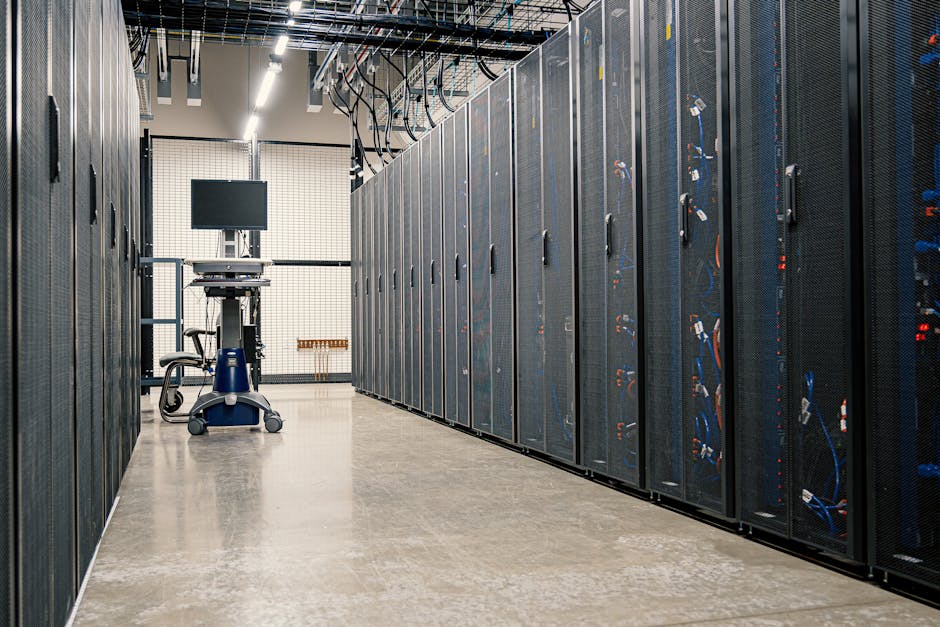
The Riyadh 5 data center is not merely a scale-up but a purpose-built facility designed to meet the stringent demands of hyperscale cloud providers, global carriers, and financial institutions. Its technical specifications underscore its position as a premium interconnection hub. The initial phase delivers 40 MW of critical IT load, with a master plan to double this to 80 MW, translating to approximately 16,000 square meters of white space. The facility is constructed to achieve Uptime Institute Tier III Certification for both Design and Constructed Facility, ensuring concurrent maintainability and 99.982% uptime.
From a connectivity perspective, Riyadh 5 is engineered as a carrier-neutral facility, a critical distinction from STC’s traditional telco-centric data centers. It will host multiple telecom carriers and internet exchanges, including the Saudi Arabian Internet Exchange (SAIX). The design incorporates direct fiber pathways to major cable landing stations on Saudi Arabia’s coasts, such as those in Jeddah and Al Khobar, which host critical submarine cables like the SEA-ME-WE 5, AAE-1, and the upcoming 2Africa cable. Power resilience is achieved through dual independent substations from the national grid, complemented by N+1 configured diesel rotary uninterruptible power supply (DRUPS) systems and N+1 chillers for cooling. The power usage effectiveness (PUE) is targeted below 1.4, aligning with global sustainability benchmarks for modern facilities.
Impact on Telecom Operators and Infrastructure Competition
The launch of Riyadh 5 fundamentally alters the competitive landscape for digital infrastructure in the GCC and wider MENA region. For telecom operators, both regional and international, it provides a neutral, high-capacity hub for interconnecting networks and expanding their points of presence (PoPs) without being locked into a single provider’s ecosystem. This is particularly significant for Middle Eastern operators like e&, Ooredoo, and Zain Group, as well as international carriers such as PCCW Global, Tata Communications, and BICS, seeking to optimize routes between Asia, Africa, and Europe.
For STC itself, the move represents a strategic decoupling of its infrastructure assets from its retail telecom services. By operating a carrier-neutral facility, STC Infrastructure (a subsidiary of STC Group) can monetize its real estate, power, and connectivity assets by serving competitors, including other Saudi telecom operators and global hyperscalers (AWS, Microsoft Azure, Google Cloud) looking for local colocation partners. This transforms STC from a pure-play telecom operator into a hybrid telco-infrastructure player, similar to the models of Digital Realty or Equinix, but with the added advantage of owning the underlying terrestrial and submarine fiber networks feeding into the data center.
The facility will also accelerate the adoption of localized cloud regions. Hyperscale providers can leverage Riyadh 5 as a potential interim or permanent location for cloud availability zones, reducing latency for Saudi and regional enterprises and helping them comply with Saudi Arabia’s evolving data localization regulations under the Saudi Data & AI Authority (SDAIA) and the National Data Management Office (NDMO).
Regional Implications: Cementing Saudi Arabia’s Digital Hub Ambitions

Riyadh 5 is a direct enabler of Saudi Vision 2030’s digital economy goals, specifically aiming to position the Kingdom as a leading hub for data and intelligence in the MENA region. The facility’s scale and neutrality directly challenge the established dominance of the UAE, particularly Dubai and Abu Dhabi, as the region’s primary data center and interconnection nexus. By offering comparable or superior scale, power, and connectivity with the added incentive of a large domestic market, Saudi Arabia is compelling global tech firms to reconsider a “UAE-first” regional deployment strategy.
For African telecom operators and data center players, Riyadh 5 offers a new, high-capacity northern gateway. The facility’s direct access to the 2Africa submarine cable system, which will land at multiple Saudi points, creates a low-latency, high-bandwidth corridor between Africa and the Middle East. This is crucial for content delivery networks (CDNs), pan-African operators like MTN and Airtel, and financial services requiring robust connectivity to Gulf markets. It also provides an alternative routing path for traffic between Europe and Asia, enhancing overall network resilience in the region.
Furthermore, the project stimulates the local ecosystem. It creates demand for high-skilled jobs in data center operations, network engineering, and cloud architecture. It also pressures neighboring GCC states, such as Qatar, Kuwait, and Oman, to accelerate their own carrier-neutral data center investments to avoid being bypassed in the regional digital value chain.
Forward-Looking Analysis: The Convergence of Telco, Cloud, and Neutral Infrastructure

The inauguration of Riyadh 5 is a bellwether for the future of telecom infrastructure in emerging markets. It exemplifies the global trend where leading telcos are spinning off or aggressively expanding their infrastructure units to capture value from the exponential growth in data traffic, cloud adoption, and edge computing. The success of this model for STC will likely inspire similar moves from other integrated operators across Africa and Asia.
Looking ahead, the strategic battleground will extend beyond the data center walls. The value will lie in the seamless integration of this neutral colocation space with STC’s extensive fiber backbone, its investments in international submarine cables, and its potential edge computing nodes. The next phase will involve offering integrated services such as virtual cross-connects, software-defined interconnection, and bundled connectivity+colocation packages, directly competing with global specialists like Equinix and Digital Realty on their own turf.
For network planners and infrastructure investors, the key takeaway is the rapid maturation of the MENA data center market. The entry of a capital-rich, network-rich player like STC into the neutral hosting space raises the bar for technical specifications, scale, and commercial flexibility. It signals a shift from a market driven by basic colocation to one demanding high-performance interconnection, cloud adjacency, and sustainable design. As Saudi Arabia pushes forward with giga-projects like NEOM and the Qiddiya entertainment city, the demand generated will further validate the investment in facilities like Riyadh 5, setting a new benchmark for digital infrastructure in the Global South.