Starlink’s LEO Constellation Reshapes Telecom Strategy: Capacity, Coverage, and Competition
Source: Analysis of SpaceX’s Starlink program, public FCC filings, and industry deployment data. The operational scale and technical trajectory of SpaceX’s Low Earth Orbit (LEO) satellite constellation are forcing a fundamental reassessment of connectivity strategies for terrestrial Mobile Network Operators (MNOs), fiber providers, and governments…

Source: Analysis of SpaceX’s Starlink program, public FCC filings, and industry deployment data. The operational scale and technical trajectory of SpaceX’s Low Earth Orbit (LEO) satellite constellation are forcing a fundamental reassessment of connectivity strategies for terrestrial Mobile Network Operators (MNOs), fiber providers, and governments worldwide. With over 6,400 operational satellites as of April 2026 and regulatory approval for up to 7,500 in its first-generation shell, Starlink has moved from a niche rural service to a core infrastructure component with sub-50ms latency and multi-gigabit-per-second capacity per satellite.
The Technical and Economic Engine: Vertical Integration and Scale

SpaceX’s disruptive impact stems from its unprecedented vertical integration and launch economics. The company designs, manufactures, and launches its own satellites on its reusable Falcon 9 and Starship rockets. This control over the entire supply chain, from silicon to orbit, allows for rapid iteration—moving from V1.0 to V2 Mini satellites with significantly improved throughput (estimated 4-5x capacity increase) and inter-satellite laser links in just a few years. The cost to launch mass to orbit has plummeted to approximately $1,500 per kilogram on Falcon 9, a fraction of traditional launch costs, enabling the deployment of a mega-constellation at a pace and scale that was previously unimaginable.
Technically, the constellation operates in the Ku (12-18 GHz), Ka (26.5-40 GHz), and E-band (71-76 GHz, 81-86 GHz) spectrums. The latest V2 satellites feature advanced phased-array antennas, enabling dynamic beamforming to create thousands of spot beams that can be steered to match demand density on the ground. This spectral efficiency and spatial reuse are critical for supporting high-density user areas, not just remote locations. The deployment of laser inter-satellite links (ISLs) creates a mesh network in space, allowing data to hop between satellites without needing a ground station nearby, drastically reducing latency for long-haul routes and enabling true global coverage, including over oceans and polar regions.
Industry Impact: From Complement to Competitor for Telcos

For telecom operators, Starlink’s evolution presents a dual-edged sword: a powerful new wholesale partner and a formidable retail competitor.
Backhaul and Network Resilience: MNOs and Internet Service Providers (ISPs) are increasingly evaluating Starlink as a primary or diverse backhaul solution for cell towers, especially in geographically challenging or underserved regions. The low latency makes it viable for 4G/5G backhaul, a role traditionally reserved for fiber or microwave. For Tier 1 operators, it provides critical redundancy for disaster recovery and business continuity planning.
Direct-to-Cell Competition: The announced and now initial partnership with T-Mobile (and similar agreements with operators in Canada, Australia, Switzerland, and others) for satellite-to-cell service (Starlink Direct to Cell) marks a strategic incursion into the core MNO domain. This service, initially offering text, then voice and data, effectively turns every compatible smartphone into a satellite phone within the coverage area. For operators, it’s a partnership to fill coverage gaps. For non-partner MNOs, it represents a bypass threat, as a user could theoretically maintain basic connectivity via satellite even when their home network has no terrestrial signal.
Enterprise and Mobility Markets: Starlink Maritime, Aviation, and Mobility services are directly competing with established GEO satellite providers (e.g., Viasat, Intelsat) and terrestrial wireless providers for high-value enterprise contracts in shipping, airlines, and remote industrial sites. The performance advantage in latency and bandwidth is compelling customers to switch, forcing incumbents to accelerate their own LEO plans (e.g., SES’s O3b mPOWER) or slash prices.
Strategic Implications for Africa, MENA, and Emerging Markets

The impact is most profound in regions with significant digital divides. In Africa, where terrestrial fiber backbone penetration is often limited to major corridors and last-mile FTTH rollout is capital-intensive and slow, Starlink has rapidly gained market share. It offers a near-immediate, high-quality broadband solution for peri-urban and rural communities, schools, clinics, and businesses. Countries like Nigeria, Mozambique, and Rwanda have seen rapid adoption.
This presents both a challenge and an opportunity for national operators and regulators:
- Challenge: Starlink operates as an independent, global ISP. It can bypass local licensed operators, potentially undermining national telecom revenue and regulatory frameworks (e.g., universal service funds, local data sovereignty laws). Several countries have temporarily restricted or banned its service pending regulatory alignment.
- Opportunity: Forward-thinking regulators and operators are exploring partnership models. A national operator could wholesale Starlink capacity to rapidly expand its own service footprint without massive capex, using it as the access layer while focusing its investment on core network services and local content. This creates a hybrid network model—satellite for access, local POPs for peering and caching to reduce latency and international bandwidth costs.
- Infrastructure Competition: The viability of LEO backhaul could alter the economics of new submarine cable landings and terrestrial fiber builds in some corridors. While fiber remains supreme for ultra-high-capacity, low-cost-per-bit trunking, the business case for marginal routes may be undermined by satellite, shifting investment priorities.
Forward-Looking Analysis: The Integrated Multi-Orbit, Multi-Layer Network
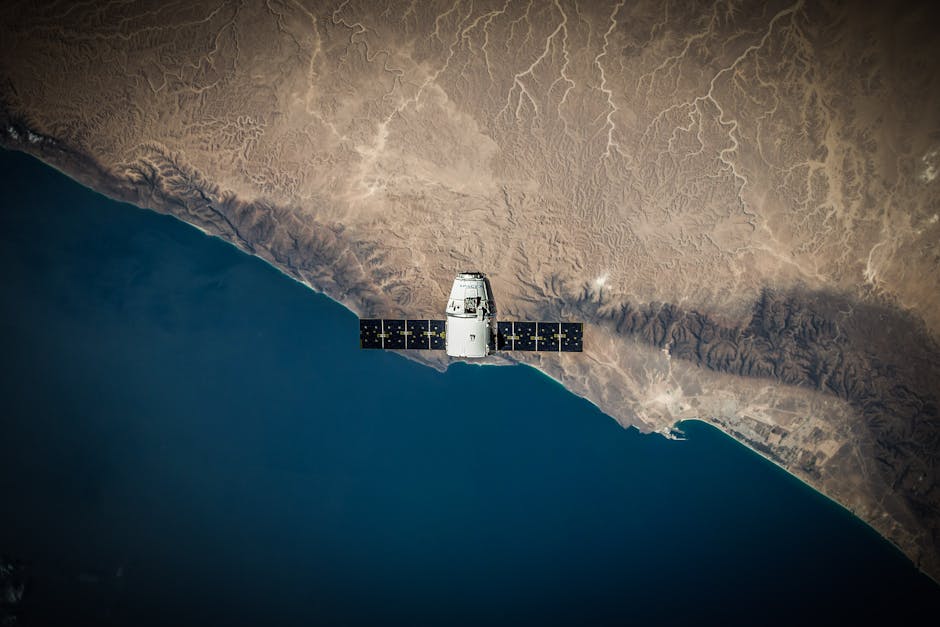
The future telecom landscape will not be a battle of satellite versus fiber versus 5G, but an integrated, software-defined fabric that dynamically routes traffic across the optimal available path. Starlink is the catalyst for this shift. The next phase involves:
- Network Convergence: Deep technical integration between satellite constellations and 5G/6G standards, as defined by 3GPP in Release 17 and beyond, enabling seamless handoffs and unified management.
- Spectrum Coordination: Increased regulatory focus on avoiding interference between dense LEO constellations and terrestrial services, particularly in coveted mid-band spectrum.
- New Business Models: The rise of Neutral Host providers in space, selling wholesale capacity to multiple MNOs and cloud providers. Amazon’s Project Kuiper, once deployed, will intensify this wholesale market.
- Edge Computing Synergy: LEO’s low-lency backbone will be combined with distributed edge compute nodes, enabling latency-sensitive applications (autonomous mining, real-time analytics) in remote locations previously considered off-grid.
For telecom executives and infrastructure investors, the imperative is clear: Starlink and the ensuing LEO ecosystem are not a fringe trend. They represent a new, scalable, and high-performance layer in the global connectivity stack. Strategic planning must now explicitly include satellite as a core component of network architecture, partnership strategy, and competitive threat assessment. The operators and nations that successfully integrate this capability will gain a significant advantage in delivering universal, resilient, and future-proof connectivity.