
Telesat Lightspeed LEO Constellation Secures $2.8B in Debt and Equity, Targets 2028 Service Launch
Source: Telesat press release, April 28, 2026. Telesat Corporation, the Canadian satellite operator, has announced the successful closure of a combined CAD $3.8 billion (approx. USD $2.8 billion) in debt and equity financing for its long-awaited Lightspeed Low Earth Orbit (LEO) constellation. The funding package,…
Source: Telesat press release, April 28, 2026. Telesat Corporation, the Canadian satellite operator, has announced the successful closure of a combined CAD $3.8 billion (approx. USD $2.8 billion) in debt and equity financing for its long-awaited Lightspeed Low Earth Orbit (LEO) constellation. The funding package, secured from a consortium of Canadian pension funds, export credit agencies, and government-backed lenders, clears the primary financial hurdle for the 198-satellite network. The company has now executed a full notice to proceed (NTP) with prime contractor MDA Ltd., targeting initial service launch in 2028 and global service by 2030. This development injects a major new competitor into the global non-geostationary satellite orbit (NGSO) broadband market, directly challenging SpaceX’s Starlink and Amazon’s Project Kuiper, with a specific focus on high-performance, low-latency connectivity for enterprise, government, and telecom backhaul applications.
Technical Architecture and Deployment Roadmap
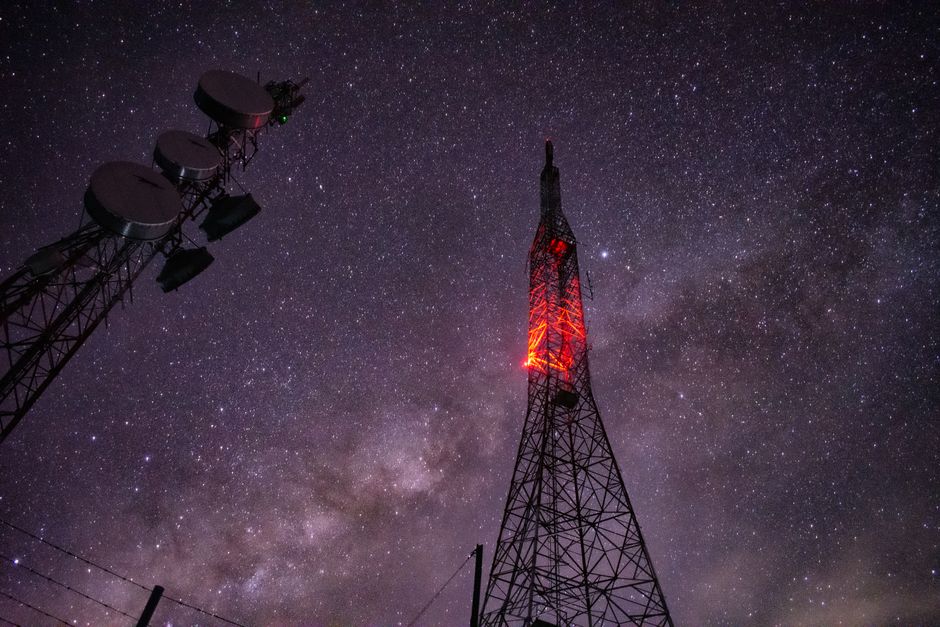
The Telesat Lightspeed constellation is engineered with a distinct architecture optimized for performance over pure subscriber volume. The initial constellation will comprise 198 operational satellites in polar orbits at an altitude of approximately 1,000 kilometers. Unlike many LEO systems, Lightspeed satellites will feature a sophisticated optical inter-satellite link (OISL) mesh network, enabling data routing through space without terrestrial hops, which is critical for latency-sensitive applications and resilient global routing. Each satellite will be equipped with multiple steerable Ka-band beams, allowing dynamic capacity allocation to high-demand areas.
The technical specifications underscore its telecom-grade positioning. Telesat claims each satellite will deliver over 15 Gbps of throughput, with the full constellation offering terabits per second of global capacity. The phased deployment plan calls for the first batch of satellites, built at MDA’s new Montreal facility, to launch in 2027. Initial service offering (ISO) for select government and enterprise customers is slated for 2028, focusing on North America and maritime corridors. Full global operational capability, including coverage over Africa, the Middle East, and Asia-Pacific, is targeted for 2030. The company has secured multiple launch providers, though specifics were not disclosed, likely involving a mix of SpaceX Falcon 9, United Launch Alliance Vulcan, and potentially other vehicles to mitigate launch risk.
Competitive Impact on the Global Satellite Connectivity Market

The arrival of a well-funded, performance-oriented LEO operator like Telesat Lightspeed will significantly reshape the competitive dynamics for satellite connectivity, particularly for telecom operators (telcos) and mobile network operators (MNOs).
For Mobile Network Operators and Backhaul: Lightspeed’s primary value proposition is its suitability for cellular backhaul (backhaul-as-a-service) and network trunking. The low latency (sub-50ms) and high throughput make it a viable alternative or supplement to terrestrial fiber and microwave, especially in remote, rural, and maritime environments. Telcos in regions with challenging geography—such as Canada’s north, parts of Africa, island nations, and mountainous areas—can leverage Lightspeed to extend 4G/LTE and 5G coverage without the prohibitive cost of laying fiber. This creates a new wholesale customer segment for Telesat, competing directly with geostationary satellite (GEO) HTS operators like SES, Intelsat, and Viasat, which offer higher latency services.
For the Enterprise and Government Sector: Telesat is targeting enterprise verticals including aviation (in-flight connectivity), maritime, energy (oil & gas rigs), mining, and government/defense. The OISL network provides inherent security and resilience for government communications, a key differentiator. This positions Lightspeed against specialized GEO providers like Inmarsat (now part of Viasat) and emerging LEO players like OneWeb (now part of Eutelsat Group), which also targets enterprise and government.
Market Structure Shift: The financing success demonstrates institutional investor confidence in the LEO broadband business model beyond SpaceX. It validates the market for multiple NGSO systems. However, it intensifies the race for premium enterprise and government contracts, likely putting downward pressure on capacity pricing in those segments. For end-users, this means more choice and potentially better service level agreements (SLAs) as operators compete on performance metrics beyond mere availability.
Strategic Implications for African and MENA Telecom Markets

The Telesat Lightspeed constellation holds particular strategic importance for telecom development in Africa and the Middle East and North Africa (MENA) region. These markets are characterized by significant fiber gaps, high terrestrial infrastructure costs, and growing demand for digital connectivity.
Bridging the Fiber Gap: Despite numerous submarine cable landings and terrestrial fiber builds, last-mile and middle-mile connectivity remains a major challenge across Africa. Lightspeed’s low-latency backhaul capability can serve as a “fiber-in-the-sky” solution for MNOs looking to connect rural base stations to core networks. This can accelerate national broadband strategies and universal service obligation (USO) projects. For instance, an MNO in a country like Nigeria, Kenya, or South Africa could use Lightspeed to cost-effectively connect towers in remote regions, turning previously uneconomical sites into revenue-generating assets.
Enabling 5G Expansion: As African operators begin 5G deployments in major cities, the need for high-capacity, low-latency backhaul will grow. Lightspeed can provide a scalable solution for 5G network slicing and edge computing applications where ultra-reliable low-latency communication (URLLC) is required, even in areas beyond the fiber footprint.
Competition with Regional Initiatives: The Lightspeed launch will compete with regional satellite initiatives, such as the Arab Satellite Communications Organization (Arabsat) and Egypt’s Nilesat, which primarily provide GEO broadcast and broadband services. It will also compete with other LEO entrants targeting the region, notably Starlink, which has already launched services in several African countries. Telesat’s focus on wholesale and B2B partnerships, rather than direct-to-consumer retail, may make it a more attractive partner for incumbent African telcos wary of disintermediation.
Resilience and Redundancy: For coastal nations reliant on a few submarine cable landing points, Lightspeed’s OISL network offers a diverse, space-based redundancy path for international data traffic. This enhances national security and network resilience against cable cuts or terrestrial failures.
Forward-Looking Analysis: The Evolving Telecom Infrastructure Ecosystem

The full funding and NTP for Telesat Lightspeed marks a pivotal moment in the convergence of terrestrial and non-terrestrial networks (NTN). The telecom infrastructure ecosystem is evolving from a ground-centric model to a hybrid, multi-orbit architecture. For network planners and CTOs, the future strategy will involve seamless integration of fiber, wireless, and multiple satellite assets (GEO, MEO, LEO) into a unified, software-defined network.
The success of Lightspeed will depend on execution—timely satellite manufacturing, successful launch campaigns, and flawless orbital deployment. Its 2028-2030 timeline means it enters a market where Starlink will have significant scale and Kuiper aims to be operational. Telesat’s differentiation must be unwavering on performance, reliability, and its partnership model with telcos.
For the global telecom sector, the message is clear: space-based connectivity is now a core, funded, and credible component of next-generation network infrastructure. Operators must develop NTN integration strategies, test hybrid network architectures, and engage with players like Telesat to understand how LEO capacity can be woven into their network expansion and modernization plans, particularly for reaching the final 10-20% of underserved populations and enabling new, latency-sensitive services globally.