The Telecom Observer Analysis: ANSI/TIA-942 and DCE 9000

The Telecommunications Industry Association (TIA) published a detailed comparison of its ANSI/TIA-942 standard and the newly developed DCE 9000 framework on March 23, 2026. For telecom operators, network infrastructure providers, and hyperscale cloud builders, this represents a critical evolution in how data center reliability, sustainability, and operational efficiency are measured and guaranteed. The TIA article clarifies that while TIA-942 remains the dominant, vendor-neutral, consensus-based standard for data center design, the DCE 9000 framework serves as a complementary, performance-based certification tool focused on sustainability and operational efficiency. This distinction is crucial for telecoms planning massive investments in edge data centers, network core facilities, and colocation partnerships to support 5G, AI workloads, and next-generation services.
Technical Specifications and Market Positioning
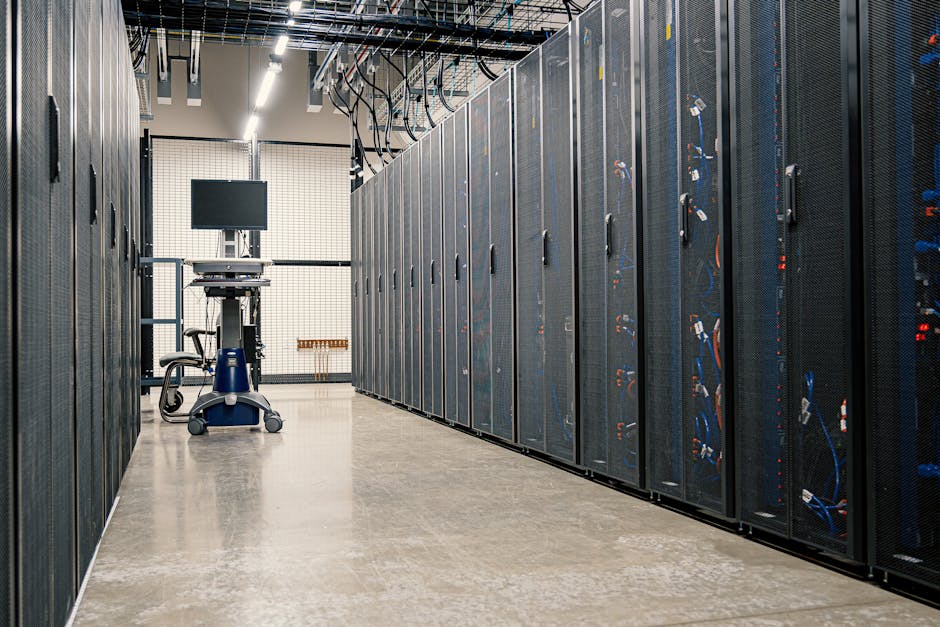
The ANSI/TIA-942 standard, first published in 2005 and regularly updated, provides the foundational technical blueprint for data center infrastructure. It defines four distinct tiers of redundancy and availability (Tier 1 to Tier 4) based on architectural components: site location, building construction, power distribution paths, cooling systems, and telecommunications cabling topology. For telecoms, the cabling and connectivity specifications within TIA-942 are particularly relevant, detailing requirements for fiber and copper pathways, rack layouts, and network port densities that directly impact how operator equipment is integrated. The standard mandates specific redundancy levels for power and cooling; a Tier 4 facility, for example, requires multiple active distribution paths with concurrent maintainability, translating to a theoretical 99.995% availability. This granular, component-level approach allows network operators to precisely engineer facilities to match the uptime requirements of their network functions.
In contrast, the DCE 9000 framework, developed by the Data Center Excellence (DCE) organization, adopts a holistic, performance-oriented model. It does not prescribe specific architectural designs but instead establishes a scoring system across five key performance pillars: Availability, Sustainability, Efficiency, Security, and Management. A facility is evaluated on its actual operational outcomes—such as Power Usage Effectiveness (PUE), carbon footprint, incident response times, and mean time to repair—rather than its theoretical design compliance. DCE 9000 certifications are awarded as Bronze, Silver, Gold, or Platinum based on an aggregate score across these pillars. This shift from design validation to performance verification aligns with the telecom industry’s increasing focus on total cost of ownership, energy consumption, and ESG (Environmental, Social, and Governance) reporting obligations.
The technical divergence is clear: TIA-942 answers “How is it built?” DCE 9000 asks “How does it perform?” For a telecom operator selecting a colocation provider for a critical 5G core network location, TIA-942 Tier 3 certification assures the physical infrastructure has redundant components. A DCE 9000 Gold certification on the same facility would additionally validate that its operational PUE is below 1.5, its water usage is optimized, and its security protocols meet contemporary threat profiles.
Impact on Telecom Operators and Infrastructure Strategy

The coexistence of these two frameworks forces a strategic reevaluation for Mobile Network Operators (MNOs), telecom infrastructure investors, and colocation providers. Historically, TIA-942 has been the de facto language for procurement and contracts. A telecom contracting for space in a facility would specify “TIA-942 Tier 3 compliant” as a baseline requirement. The introduction of DCE 9000 adds a new layer of vendor selection and performance benchmarking.
For telecoms building their own edge data centers to support network function virtualization (NFV) and distributed AI inference, the choice becomes architectural. Adhering strictly to TIA-942 ensures interoperability with global best practices and simplifies equipment procurement. However, incorporating DCE 9000 performance metrics into the design and operational phase can drive long-term reductions in OpEx, particularly energy costs, which are becoming a dominant factor as power densities climb with high-performance computing. Operators like Verizon, AT&T, and Deutsche Telekom, which are deploying thousands of micro-data centers for edge compute, must now decide whether to prioritize the proven design standard or mandate performance outcomes from their suppliers.
Colocation providers, such as Equinix, Digital Realty, and African players like Liquid Intelligent Technologies and Raxio Group, face a dual-certification landscape. To attract telecom anchor tenants, they will likely pursue both TIA-942 accreditation for design credibility and DCE 9000 certification to demonstrate operational excellence and sustainability—a key selling point for telecoms under regulatory pressure to green their networks. This could lead to a bifurcation in the market: facilities with only TIA-942 certification catering to traditional enterprise IT, and dual-certified facilities becoming the preferred hubs for telecom core and cloud-native network functions.
From a financial perspective, infrastructure investors and private equity firms active in the data center sector, such as DigitalBridge and Brookfield, will scrutinize DCE 9000 scores as a proxy for asset efficiency and future resilience. A data center with a DCE 9000 Platinum rating may command higher valuation multiples due to its demonstrated lower operational risk and alignment with sustainability-linked financing.
Regional Implications for Africa and Emerging Telecom Markets

The adoption dynamics of TIA-942 versus DCE 9000 will vary significantly by region, with Africa and other emerging telecom markets presenting a unique case. In these regions, data center development is accelerating rapidly to meet unmet demand for digital services, support mobile money platforms, and host hyperscale cloud regions. Projects like Amazon Web Services’ (AWS) South Africa region, Microsoft’s Azure regions in Kenya and Nigeria, and numerous local builds by Wingu, Teraco, and MTN are transforming the landscape.
For these new builds, TIA-942 provides an essential, internationally recognized blueprint that assures foreign investors and global telecom partners of the facility’s foundational reliability. It offers a clear, tiered roadmap for local developers to progressively upgrade infrastructure. However, the DCE 9000 framework’s focus on sustainability and efficiency tackles two acute challenges in these markets: high energy costs and unreliable grid power. A facility achieving a high DCE 9000 score in “Sustainability” and “Efficiency” pillars would necessarily incorporate advanced on-site power generation (solar, biogas), sophisticated battery storage, and water recycling—critical adaptations for operation in regions with infrastructure constraints.
Telecom operators in Africa, such as Safaricom, Vodacom, and Orange, are increasingly outsourcing IT and network workloads to third-party data centers. Their procurement teams will now have a more nuanced toolset for vendor evaluation: TIA-942 Tier rating for basic redundancy, plus DCE 9000 scoring for operational cost predictability and environmental impact. This could drive a “green premium” in the African colocation market, favoring providers who invest beyond basic redundancy into sustainable design.
Furthermore, national regulators and governments promoting digital economy growth, like Kenya’s ICT Authority or Nigeria’s National Information Technology Development Agency (NITDA), may begin to reference these standards in policy frameworks. TIA-942 could become a recommended or mandatory design code for licensed data center providers, while DCE 9000 performance metrics could be integrated into incentives for renewable energy use or tax breaks for efficient facilities.
Forward-Looking Analysis: The Convergence of Standards and Telecom Demand

The telecom industry’s trajectory towards edge computing, AI-as-a-service, and ultra-low latency applications (like autonomous vehicle support) will intensify the importance of data center standards. We anticipate a gradual convergence, where future revisions of TIA-942 incorporate more performance and sustainability metrics inspired by frameworks like DCE 9000. Conversely, DCE 9000 may evolve to include more granular technical references to ensure its performance goals are achievable through specific designs.
For network operators, the ultimate outcome will be a more rigorous, multi-dimensional procurement process. Selecting a data center for a critical network function will no longer be a simple check of Tier level. It will involve a detailed analysis of design compliance (TIA-942), operational performance history (DCE 9000), and specific telecom-centric metrics such as fiber diversity, cross-connect density, and latency to key network peering points.
The rise of these complementary standards also signals a broader shift in telecom infrastructure from mere “hosting” to “performance-engineered environments.” As the network core becomes software-defined and distributed, the physical data center becomes a performance variable directly impacting service quality. Operators that master this new standard landscape will gain a competitive advantage in network reliability, cost management, and sustainability reporting—key battlegrounds for the next decade of telecom growth.
About the Author