Cadence & IIT Delhi Launch AI-Equipped Semiconductor CoE: Implications for Telecom Hardware Supply Chain
📰Original Source: ETTelecomNEW DELHI, June 4, 2026 – Electronic Design Automation (EDA) leader Cadence Design Systems and the Indian Institute of Technology Delhi (IIT Delhi) have inaugurated an AI-equipped Centre of Excellence (CoE) for semiconductor innovation, according to an ETTelecom report. The facility grants academic…
NEW DELHI, June 4, 2026 – Electronic Design Automation (EDA) leader Cadence Design Systems and the Indian Institute of Technology Delhi (IIT Delhi) have inaugurated an AI-equipped Centre of Excellence (CoE) for semiconductor innovation, according to an ETTelecom report. The facility grants academic and research users access to over 200 industry-grade Cadence tools for chip design verification, digital/analog implementation, and system analysis. This strategic partnership, formalized under Cadence’s “Academic Network” program, is a direct response to the global and Indian telecom industry’s escalating demand for specialized, high-performance, and power-efficient silicon for next-generation networks, including 5G-Advanced, 6G, Open RAN, and edge computing infrastructure.
Technical Deep Dive: AI-Driven EDA Tools for Next-Gen Telecom Silicon

The CoE’s value proposition for the telecom sector lies in its comprehensive suite of Cadence’s most advanced tools, now accessible for R&D and talent development. The lab’s resources are segmented across four critical domains essential for designing the System-on-Chips (SoCs), RFICs, and network processors that power modern telecom infrastructure.
Chip Design & Verification: Telecom-grade silicon, especially for 5G NR baseband units and massive MIMO radios, involves immense complexity. Tools like the Cadence Verisium AI-Driven Verification Platform and the JasperGold formal verification suite will enable researchers to tackle the verification challenges of multi-billion-transistor designs, reducing time-to-market—a critical factor for operators racing to deploy new network capabilities.
Digital Implementation: The performance and power profile of a chip are determined here. The CoE provides access to the Cadence Cerebrus Intelligent Chip Explorer, which uses machine learning to autonomously optimize place-and-route for power, performance, and area (PPA). For telecom equipment vendors, this directly translates to the potential for more capable, cooler-running, and smaller form-factor chips for radios and servers, impacting deployment density and operational expenditure.
Analog/Mixed-Signal & RF Design: This is the heart of radio frequency front-end (RFFE) design for base stations and customer premises equipment (CPE). Access to the Cadence Virtuoso platform and AWR Design Environment allows for the precise design of power amplifiers, low-noise amplifiers, filters, and data converters operating at millimeter-wave (mmWave) frequencies. Mastery of these tools is non-negotiable for developing indigenous 5G/6G radio hardware.
System Design & Analysis: Beyond the chip, the entire package and board must be optimized for signal and power integrity. Tools like Clarity 3D Solver and Sigrity technologies will be used to model and simulate high-speed serial links (crucial for fronthaul/backhaul interfaces like eCPRI) and power delivery networks, ensuring system-level reliability in harsh telecom environments.
Industry Impact: Building a Domestic Talent Pipeline for Telecom OEMs & Operators

The launch of this CoE is not merely an academic exercise; it is a strategic infrastructure investment for the global and Indian telecom hardware ecosystem. Its primary impact will be felt in three key areas:
1. Mitigating the Critical Skills Shortage: The global semiconductor industry faces a severe talent deficit. Telecom network original equipment manufacturers (OEMs) like Nokia, Ericsson, Samsung, and Huawei, as well as emerging Open RAN players, rely on a steady stream of engineers skilled in cutting-edge EDA tools. By training over 1,000 students and researchers annually on the exact software used in commercial fabs and design houses, IIT Delhi becomes a premier pipeline for this specialized talent. This directly benefits telecom vendors setting up R&D centers in India and globally.
2. Accelerating Indigenous R&D for Network Equipment: India’s telecom market, with over 1.1 billion subscribers, is almost entirely dependent on imported network gear. Initiatives like the government’s Production Linked Incentive (PLI) scheme for telecom and networking products aim to change this. This CoE provides the essential R&D bedrock for domestic companies and startups (e.g., Saankhya Labs, Signalchip) to design competitive chips for 4G/5G modems, small cells, and IoT gateways. It lowers the barrier to entry for hardware innovation.
3. Enabling Cost & Performance Optimization for Operators: For Mobile Network Operators (MNOs), the cost, power consumption, and performance of base station hardware are major CapEx and OpEx drivers. Innovations stemming from academic research—such as more efficient power amplifier designs or optimized digital signal processors—can eventually trickle down into commercial products, offering operators better total cost of ownership (TCO). Research into AI/ML-accelerated silicon for RAN Intelligent Controllers (RICs) is a prime example of work that could originate here and redefine network automation.
Strategic Implications for the Global Telecom Supply Chain and Geopolitics

The establishment of this CoE must be viewed within the broader context of global supply chain reconfiguration and technological sovereignty. For the telecom industry, this has profound implications.
De-risking the Hardware Supply Chain: The pandemic and geopolitical tensions exposed the fragility of concentrated semiconductor manufacturing and design. Telecom operators and governments are prioritizing supply chain diversification and resilience. By fostering a robust domestic design capability, India positions itself as a potential alternative or complementary node in the global telecom hardware design chain. This aligns with initiatives in the US (CHIPS Act), EU (European Chips Act), and other regions seeking to reduce over-reliance on a single geography.
The Open RAN Catalyst: The Open RAN movement, which disaggregates hardware and software, inherently creates opportunities for new silicon vendors. The standardized interfaces (e.g., O-RAN fronthaul) allow for innovation at the chip level. A skilled workforce trained on advanced EDA tools is precisely what is needed to fuel a competitive ecosystem of silicon providers for O-RAN-compliant radio units (O-RUs), distributed units (O-DUs), and central units (O-CUs). This CoE can be a crucible for the chips that will power the next decade of open, modular networks.
Preparing for 6G and Terrestrial-NTN Convergence: The research horizon at IIT Delhi will inevitably extend to the foundational technologies for 6G, which will integrate sub-THz communications, advanced MIMO, and joint communication and sensing. Simultaneously, the convergence of terrestrial and non-terrestrial networks (NTN) via satellites demands specialized multi-band, multi-mode RFICs. Access to Cadence’s full portfolio allows Indian researchers to contribute to these global standards from the ground up, ensuring future network architectures can be supported by a diversified supplier base.
Forward-Looking Analysis: A New Node in the Global Telecom R&D Network
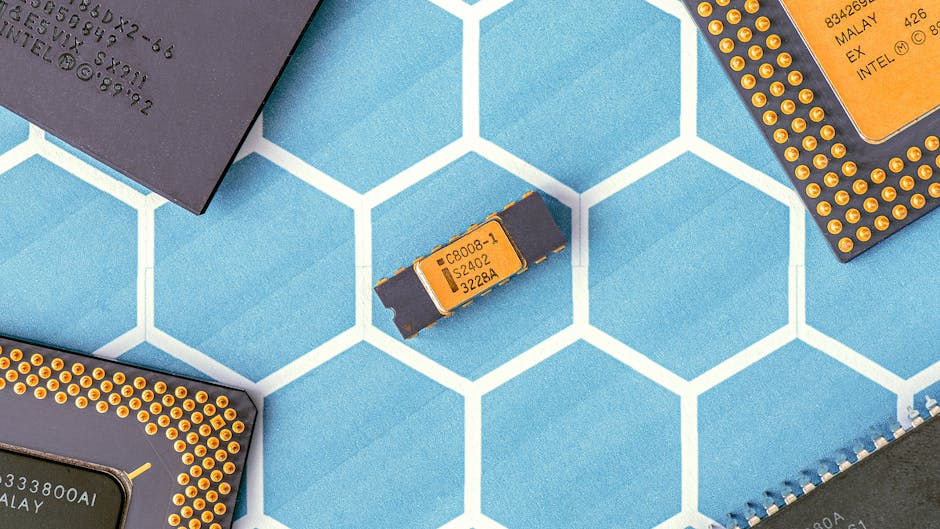
The Cadence-IIT Delhi CoE represents a significant step in the maturation of India’s deep-tech ecosystem with direct consequences for telecom infrastructure worldwide. Its success will be measured not by academic papers alone, but by the flow of skilled engineers into telecom OEMs, the emergence of viable fabless chip startups targeting network applications, and the contribution of its research to lowering the power and cost profile of future network equipment.
For telecom operators, this development is a long-term positive. A more competitive and geographically diverse supplier landscape for network silicon can lead to better pricing, innovation, and supply security. For infrastructure investors, it signals the growth of India’s high-value semiconductor design sector, which may present future opportunities. For regulators, it underscores the importance of coupling spectrum policy with support for underlying hardware innovation to ensure national technological competitiveness.
The ultimate telecom industry impact will hinge on sustained collaboration between academia (IIT Delhi), the tool provider (Cadence), domestic telecom OEMs, and global network vendors to channel this R&D capability into commercializable products. If successful, this CoE will help reshape the geopolitics of telecom hardware, making the global supply chain more resilient and innovative at the most fundamental level—the silicon upon which every bit and byte travels.