Cellecor Gadgets’ ₹300-Crore Liberia Plant Signals Strategic Shift in Africa Telecom Device Supply Chain
According to a report by ETTelecom, Indian consumer electronics firm Cellecor Gadgets Limited has announced a significant strategic investment of ₹300 crore (approximately USD 36 million) to establish a new manufacturing facility in Liberia. This move, as cited by company CEO Ravi Agarwal, is aimed at expanding its footprint across Africa and will create over 200 direct jobs. For telecom operators and infrastructure planners across Africa and the Middle East, this investment represents a tangible step towards diversifying the regional device supply chain, reducing import dependencies, and potentially lowering the total cost of ownership for entry-level and mid-range smartphones and feature phones—a critical factor for driving subscriber growth and data adoption.
Technical and Market Deep Dive: Building Local Assembly Capacity

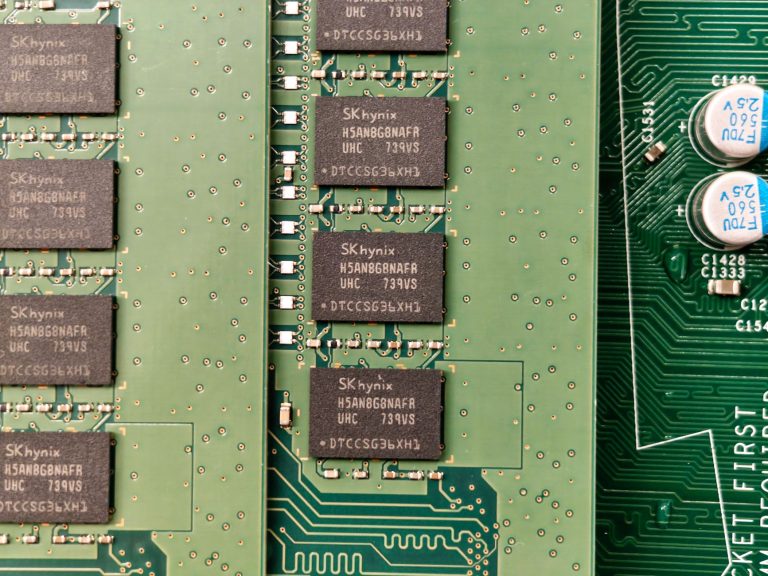
Cellecor’s planned facility in Liberia is more than a simple assembly line; it’s a calculated entry into a market with significant logistical and tariff advantages. Liberia’s status as a major West African port, with direct access to the Atlantic Ocean via the Freeport of Monrovia, provides a strategic hub for distribution across the Economic Community of West African States (ECOWAS) region. The ₹300 crore (USD 36M) investment scale suggests a facility capable of Semi-Knocked-Down (SKD) or Completely-Knocked-Down (CKD) assembly operations, moving beyond mere packaging to include more value-added manufacturing processes like PCB assembly, final device integration, and quality testing.
The company’s product portfolio, which spans budget smartphones, feature phones, tablets, and accessories like TWS earbuds and smartwatches, directly targets the volume-driven, price-sensitive segments that dominate African mobile markets. By localizing production, Cellecor can mitigate risks associated with foreign exchange volatility, long international shipping lead times, and import duties that can add 15-25% to the landed cost of devices in many African countries. This operational model mirrors the successful “Make in India” strategy that propelled several Indian OEMs, including Cellecor, to scale domestically. The creation of 200+ jobs also aligns with local content and job creation priorities of African governments, which can translate into preferential market access or incentives.
Industry Impact on Mobile Network Operators and the Competitive Landscape

For Mobile Network Operators (MNOs) across Africa, the localization of device manufacturing has direct implications for customer acquisition costs, device bundling strategies, and network upgrade cycles.
1. Supply Chain Resilience and Cost: MNOs heavily reliant on importing devices from China, Vietnam, or India face constant supply chain pressures. A local manufacturing base in West Africa can reduce lead times from weeks to days, enabling more agile responses to market demand. This is crucial for operators launching promotional campaigns or managing inventory for seasonal subscriber spikes. Lower landed costs could allow operators to either improve margins on device sales or offer more aggressive subsidies on data plans, directly stimulating data usage and ARPU.
2. Competition with Transsion and Samsung: The African smartphone market is currently dominated by Transsion Group brands (Tecno, Infinix, Itel) and Samsung. These giants have already established varying degrees of local assembly in countries like Ethiopia, Kenya, and Nigeria. Cellecor’s entry as an Indian challenger brand with a localized factory introduces a new competitor, potentially driving down prices and increasing product variety in the sub-$150 segment. For MNOs, this means more bargaining power when negotiating bulk procurement deals for branded or co-branded handsets.
3. Facilitating Network Migration: A key challenge for operators rolling out 4G and 5G is the device ecosystem. Affordable 4G/VoLTE and 5G-ready handsets are essential to migrate subscribers off legacy 2G and 3G networks, freeing up valuable spectrum. Local manufacturers like Cellecor, responding to operator specifications, can accelerate the production of devices that support the latest network technologies at accessible price points. This creates a virtuous cycle: operators can more confidently refarm spectrum knowing a healthy supply of compatible devices is available locally.
Regional and Strategic Implications for African & MENA Telecom Markets

Cellecor’s choice of Liberia is strategically significant for the broader West African and pan-African telecom landscape.
West Africa as a Manufacturing Hub: Liberia joins a growing list of African nations attracting device assembly investments, including Nigeria, Ghana, and Côte d’Ivoire. This trend points to a regionalization of the electronics supply chain within Africa itself. A factory in Liberia can serve not only the domestic market but also export to neighboring Sierra Leone, Guinea, Côte d’Ivoire, and Ghana with reduced trade barriers under regional agreements like the African Continental Free Trade Area (AfCFTA). For telecom groups with operations across multiple West African countries, such as MTN, Orange, or Airtel Africa, this enables centralized procurement from a single regional supplier, simplifying logistics and reducing costs.
MENA Connectivity Corridor: While the initial focus is West Africa, a successful manufacturing base could serve as a springboard for exports to North African markets like Morocco, Algeria, and Tunisia. Furthermore, it underscores a broader strategic shift: Africa is no longer just a consumption market for telecom gear but is becoming an increasingly important production node. This has long-term implications for network infrastructure vendors as well; if device assembly localizes, the next logical step could be increased local assembly or packaging of network elements like antennas, routers, or fiber optic cables to create integrated telecom manufacturing clusters.
Policy and Regulatory Tailwinds: This investment is likely supported by Liberia’s government incentives and aligns with a continent-wide policy push for local manufacturing. Regulators and policymakers observing this trend may double down on policies that favor locally assembled devices, such as tiered import duties or tax breaks for operators that source a percentage of their devices domestically. This could reshape the competitive dynamics, giving an edge to OEMs with local factories over those relying purely on imports.
Forward-Looking Analysis: The Evolving Telecom Device Ecosystem
Cellecor’s ₹300-crore bet is a bellwether for the next phase of Africa’s digital transformation. The move from a pure import model to localized manufacturing indicates market maturity and confidence in long-term growth. We anticipate several developments in the wake of this announcement:
First, we expect other Indian and Chinese OEMs to accelerate plans for similar localized production facilities across different African regions, leading to a more distributed and resilient continental supply chain. Second, successful local assembly of handsets will create a skilled workforce and industrial base that could eventually support the maintenance and repair of higher-value network equipment. Third, for investors in telecom infrastructure, the reduced device cost and increased availability lower one of the key barriers to digital inclusion, thereby strengthening the business case for expanding network coverage into peri-urban and rural areas.
Ultimately, the success of this facility will hinge on consistent power supply, component logistics, and stable trade policies. However, its very announcement signals a pivotal shift: the African telecom market is building its own foundational industrial capacity, moving the continent closer to a self-sustaining digital economy where devices are made locally for local needs, directly enabling the growth strategies of every mobile operator on the continent.
About the Author