Equiano Submarine Cable Lands in Nigeria and St. Helena, Boosting West Africa’s Digital Capacity
According to reports from the Nigerian Communications Commission (NCC) and official announcements from Google, the Equiano submarine cable system has officially landed at its Nigerian branch in Lagos and has achieved a historic first landing on the remote island of St. Helena. The cable, funded…
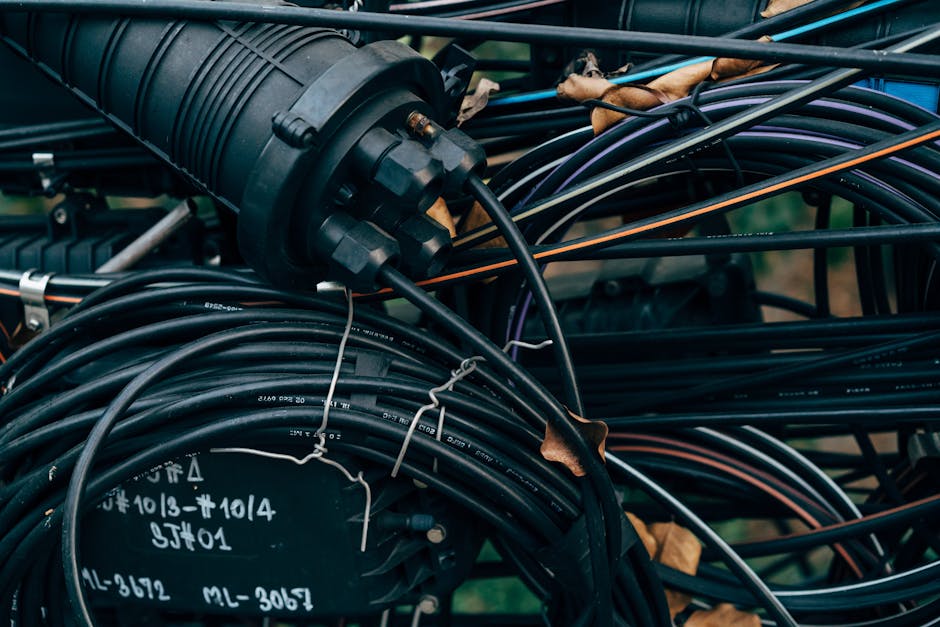
According to reports from the Nigerian Communications Commission (NCC) and official announcements from Google, the Equiano submarine cable system has officially landed at its Nigerian branch in Lagos and has achieved a historic first landing on the remote island of St. Helena. The cable, funded and developed by Google, represents a significant strategic infrastructure investment aimed at transforming West Africa’s internet landscape by providing exponentially greater capacity, lower latency, and reduced broadband costs for the region.
Technical Specifications and Strategic Routing of the Equiano Cable
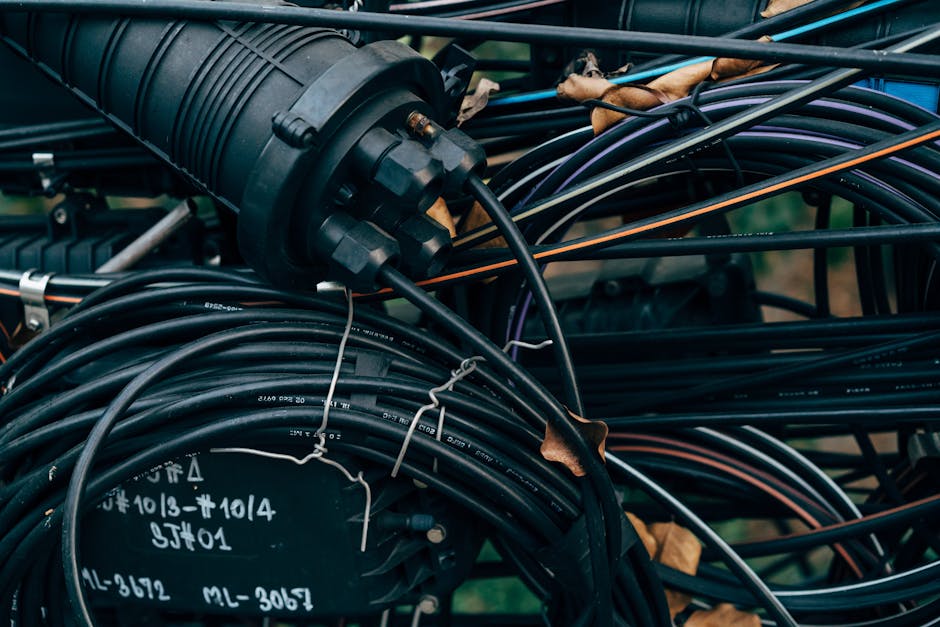
The Equiano cable is a state-of-the-art fiber-optic submarine system that originates in Portugal (Sesimbra) and spans approximately 15,000 kilometers along the west coast of Africa. Its primary design incorporates space-division multiplexing (SDM) and optical switching at the fiber-pair level, a more modern architecture compared to older cables in the region. This design allows for more efficient capacity management and future upgrades. The cable features 12 fiber pairs, each capable of supporting significantly higher data rates than previous generations. Initial lit capacity is expected to be in the range of tens of terabits per second, with a potential design capacity reaching into the petabit-per-second range as technology evolves.
The landing points are strategically chosen to bypass traditional congestion points and directly serve underserved markets. After Portugal, the cable lands in:
- Tema, Ghana: A major hub for the West African Cable System (WACS) and MainOne, enhancing Ghana’s position as a digital gateway.
- Lagos, Nigeria: The continent’s largest economy and a massive consumer and enterprise market with insatiable demand for data.
- Swakopmund, Namibia: Connecting Southern Africa and providing a new path for traffic.
- Melkbosstrand, South Africa: Terminating at a major data center hub near Cape Town.
- St. Helena Island: A historic first, providing the remote British Overseas Territory with its first international submarine cable connection, replacing reliance on expensive satellite connectivity.
The inclusion of St. Helena, while serving a small population, is a landmark in digital inclusion and demonstrates the cable’s dual purpose: serving high-demand commercial markets while also enabling critical connectivity for remote communities. The branching units along the route allow for future connections to other West African nations, providing a flexible backbone for regional expansion.
Industry Impact: Reshaping the Competitive Landscape for African Operators

The activation of Equiano’s Nigerian branch creates immediate competitive pressure and opportunity for telecommunications operators (telcos), internet service providers (ISPs), and infrastructure companies across West Africa.
For incumbent carriers like MTN Nigeria, Airtel Africa, and Glo, the cable provides a new, high-capacity, and potentially lower-cost source of international bandwidth. This will enable them to reduce their operating expenses for bandwidth procurement, which can be passed on to consumers in the form of lower data tariffs or reinvested into expanding 4G/5G networks and fiber-to-the-home (FTTH) deployments. Operators will need to secure capacity on the cable through partnerships or direct investments in the cable landing station (CLS). The presence of Google as the cable owner may lead to novel commercial models, potentially including bundled cloud and connectivity services.
For infrastructure players and wholesale carriers like MainOne (now part of Equinix), WIOCC, and the West African Cable System (WACS) consortium, Equiano represents both a competitor and a catalyst. While it introduces a new source of supply that could pressure wholesale IP transit prices, it also dramatically increases the total capacity available in the region. This growth in the overall addressable market can benefit all wholesale providers. Companies like WIOCC, which specializes in operating open-access cable landing stations and national fiber backbones, are positioned to aggregate demand from multiple service providers and secure bulk capacity on Equiano for resale.
The cable landing station in Lagos will become a critical interconnection point. We expect to see increased activity from data center operators like Rack Centre, MDXi, and the upcoming Google Cloud region in Nigeria, all seeking direct cross-connects to the cable for low-latency access to European and global cloud platforms. This will accelerate the localization of content and services, reducing the need for international traffic exchanges and improving end-user experience.
Regional Implications: Accelerating West Africa’s Digital Economy and Cloud Adoption

The Equiano cable’s impact extends far beyond basic connectivity; it is a foundational piece of infrastructure for West Africa’s burgeoning digital economy. The massive increase in international bandwidth will directly address a key bottleneck that has historically constrained cloud adoption, digital service delivery, and economic growth.
Cloud and Hyperscale Catalyst: The low-latency, high-capacity path to Europe is critical for hyperscale cloud providers (AWS, Microsoft Azure, Google Cloud) and large enterprises. Google’s own investment is a clear signal. The cable will make the planned Google Cloud region in Nigeria more effective and could attract other cloud providers to establish local zones or points of presence (PoPs) in Lagos and Accra. This enables local businesses and startups to leverage cloud-native applications, big data analytics, and AI services without performance penalties.
Driving Down Consumer and Enterprise Costs: Analysis by Africa Practice and Genesis Analytics, commissioned by Google, projected that Equiano could increase Nigeria’s GDP by up to $10.1 billion by 2025 and create 1.6 million jobs by reducing internet prices and stimulating online activity. For telecom operators, the reduced cost of bandwidth is a direct input cost savings that can be reflected in retail pricing. We anticipate a new wave of competitive data bundle offerings from mobile network operators (MNOs) in Nigeria and Ghana within 12-18 months of the cable being fully operational.
Strengthening Digital Resilience: West Africa’s connectivity has historically relied on a few key cables (SAT-3/WASC, MainOne, WACS, ACE). Equiano adds vital diversity to the region’s submarine cable map. This improves resilience against outages caused by cable cuts, which are not uncommon along the West African coast. For regulators, such as the NCC in Nigeria and the National Communications Authority (NCA) in Ghana, the new cable enhances national security and economic stability by ensuring redundant paths for critical international data flows.
Model for Future Investment: The success of Equiano, following the private-led models of MainOne and the 2Africa consortium, reinforces that Africa is a viable and attractive market for major tech infrastructure investment. It sets a benchmark for future cable projects, likely encouraging more content and cloud companies to invest directly in terrestrial and subsea infrastructure across the continent.
Conclusion: Equiano as a Pivot Point for African Telecom Infrastructure

The landing of the Equiano cable in Nigeria and St. Helena is not merely another cable activation; it is a strategic inflection point for West African telecommunications. It brings a quantum leap in capacity underpinned by the latest optical technology, backed by one of the world’s largest drivers of internet traffic. For network engineers, it demands planning for new backbone routes and peering strategies. For operators, it requires reassessing bandwidth procurement contracts and retail product roadmaps. For investors, it signals the maturation of Africa’s digital infrastructure asset class.
The forward-looking challenge for the industry will be effective utilization. The “last mile”—the national fiber backbones and metropolitan networks connecting the cable landing station to end-users—must be expanded in parallel. Governments and regulators must facilitate right-of-way and permit approvals for terrestrial fiber builds to ensure the international capacity can reach population centers. If these domestic networks keep pace, Equiano will fulfill its promise of transforming not just connectivity metrics, but the very fabric of West Africa’s digital economy, enabling a new generation of services, businesses, and innovation.