HCL-Foxconn Appoints Shikhar Malhotra as Chairman to Lead India Semiconductor OSAT Venture
📰Original Source: ETTelecomHCL-Foxconn Appoints Shikhar Malhotra as Chairman to Lead India Semiconductor OSAT Venture Indian IT and telecom giant HCL Group, in partnership with Taiwanese electronics manufacturing titan Foxconn, has appointed Shikhar Malhotra as Chairman of their joint venture to establish a semiconductor assembly and…
HCL-Foxconn Appoints Shikhar Malhotra as Chairman to Lead India Semiconductor OSAT Venture
Indian IT and telecom giant HCL Group, in partnership with Taiwanese electronics manufacturing titan Foxconn, has appointed Shikhar Malhotra as Chairman of their joint venture to establish a semiconductor assembly and test (OSAT) facility in Uttar Pradesh, India. The move, reported by ETTelecom, marks a critical leadership step in the $37.2 million venture, signaling a push to operationalize India’s first major foray into semiconductor packaging and testing, a vital link in the global telecom and electronics supply chain. For telecom operators and network infrastructure providers, the development of a domestic OSAT ecosystem directly impacts the availability, cost, and supply chain resilience of critical components like 5G baseband chips, optical transceivers, and IoT modules, reducing dependence on geopolitically sensitive overseas fabs.
Strategic Mandate and Technical Scope of the HCL-Foxconn OSAT Facility
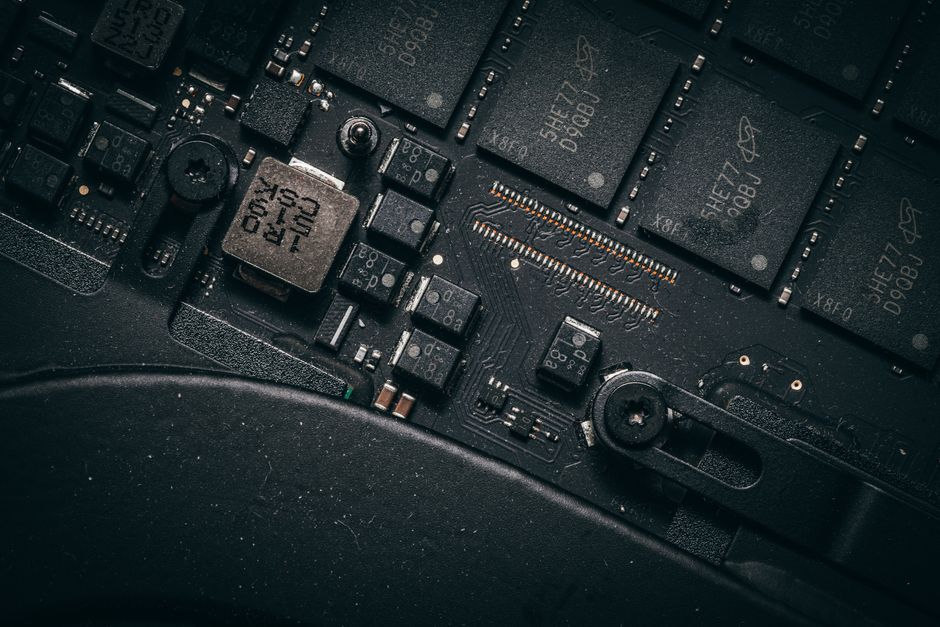
The HCL-Foxconn joint venture, formed in late 2025, is strategically positioned to capitalize on India’s $10 billion Semiconductor Mission and the global push for supply chain diversification. The facility, planned for Uttar Pradesh, will focus on Outsourced Semiconductor Assembly and Testing (OSAT), a crucial back-end process where fabricated silicon wafers are cut into individual dies, packaged, and tested for functionality. This stage is essential for producing the finished chips that power telecom networks, from core routers to end-user devices.
Shikhar Malhotra, Vice Chairman of HCL Healthcare and a senior figure within the HCL Group, brings significant operational and strategic experience to the role. His appointment is not merely ceremonial; it is a directive to navigate complex approvals, secure state and central government incentives under the Modified Programme for Semiconductors and Display Fab Ecosystem, and forge technology partnerships. The venture’s initial investment of $37.2 million (approximately ₹310 crore) is a foundational commitment, with the total project cost expected to escalate significantly as the facility scales to meet advanced packaging requirements for telecom-grade semiconductors.
For the telecom sector, the technical relevance is profound. Modern networks, especially 5G Open RAN and future 6G deployments, rely on highly integrated system-on-chip (SoC) designs, advanced RF components, and dense optical engine modules. These components require sophisticated packaging technologies like flip-chip, wafer-level packaging (WLP), and 2.5D/3D integration to achieve the performance, power efficiency, and thermal management demanded by next-generation infrastructure. A domestic OSAT capability would allow Indian telecom equipment manufacturers and global players with local production to shorten lead times, customize packaging for specific environmental conditions (crucial for India’s diverse climate), and potentially lower costs for components integral to network buildouts.
Impact on Telecom Operators, Infrastructure, and the Competitive Landscape

The establishment of a local OSAT facility creates tangible supply chain advantages for telecom operators (MNOs) and infrastructure vendors. Currently, Indian telcos like Reliance Jio, Bharti Airtel, and Vodafone Idea source network equipment heavily reliant on semiconductors assembled and tested in Taiwan, China, South Korea, and Malaysia. Geopolitical tensions and pandemic-era disruptions have exposed the fragility of this concentrated supply chain, leading to equipment delays and cost inflation.
A functional HCL-Foxconn OSAT plant in Uttar Pradesh would provide a regional hedge. Equipment vendors like Nokia, Ericsson, Samsung, and domestic players like Tejas Networks could source packaged chips locally for equipment assembled in India, potentially qualifying for production-linked incentive (PLI) schemes. This could translate into:
- Improved Supply Chain Resilience: Reduced risk of logistics disruptions for critical network expansion and upgrade projects.
- Cost Optimization: Lower logistics and import duty costs on semi-finished components, potentially making network equipment more affordable for Indian MNOs engaged in massive 5G rollouts and fiber-to-the-home (FTTH) deployments.
- Faster Time-to-Market: Proximity to packaging and testing can accelerate prototyping and production cycles for new equipment tailored to the Indian market.
The competitive landscape will also shift. The HCL-Foxconn JV enters a field where other global OSAT players like ASE Technology Holding (Taiwan), Amkor Technology (US), and JCET (China) dominate. Its success hinges on achieving competitive yield rates, securing advanced packaging technology transfer, and attracting anchor customers from the telecom and consumer electronics sectors. For Foxconn, this venture is a strategic extension of its electronics manufacturing services (EMS) empire, allowing it to offer a more vertically integrated solution to clients like Apple, Xiaomi, and potentially telecom OEMs, moving beyond mere assembly to include semiconductor packaging.
Regional Implications: Positioning India in the Global Semiconductor and Telecom Value Chain

This development is a cornerstone of India’s ambition to move beyond being just a massive consumption market for electronics and telecom gear to becoming a substantive manufacturing and value-add hub. The OSAT segment is often the first step for nations entering semiconductor manufacturing due to its lower capital intensity compared to front-end wafer fabrication (fabs). Success in OSAT can create a foundation for upstream investments in chip design and even fabrication over the long term.
For the broader South Asian and MENA (Middle East and North Africa) telecom markets, a robust Indian semiconductor packaging industry could serve as a regional supply node. Neighboring countries undertaking digital transformations, such as Bangladesh, Sri Lanka, and nations in the GCC, also import vast quantities of network equipment. Having a major OSAT facility in India could encourage multinational OEMs to establish larger regional production hubs in the country, serving both domestic and export markets with shorter, more reliable supply lines.
Furthermore, this aligns with the “China Plus One” strategy adopted by many global technology firms. Telecom operators worldwide are scrutinizing the provenance of their network equipment for both security and continuity reasons. Supply chains that include value-add steps in a stable, democratic jurisdiction like India carry a strategic premium. The HCL-Foxconn venture, therefore, is not just an Indian story; it is a reconfiguration of a critical segment of the global telecom hardware supply chain.
Forward-Looking Analysis: Challenges and the Road Ahead for Telecom Chip Sovereignty

While the leadership appointment signals intent, the path to a world-class, high-volume OSAT facility is fraught with challenges. The venture must secure cutting-edge packaging technology, likely through licensing from established players or partnerships with IDMs (Integrated Device Manufacturers). It must build a skilled workforce in a highly specialized field, competing with global talent pools. Consistent power, ultra-pure water, and chemical supply—critical for semiconductor processes—require significant supporting infrastructure development in Uttar Pradesh.
For the telecom industry, the long-term promise is one of increased sovereignty over a critical technological input. As networks evolve towards AI-native 6G, cloud-native cores, and pervasive IoT, the demand for specialized semiconductors (AI accelerators, mmWave RFICs, optical co-packaged optics) will explode. Having domestic packaging and test capacity provides a platform for innovation, allowing Indian chip designers and telecom R&D centers (like those at C-DOT or within private telcos) to prototype and produce chips faster.
The success of the HCL-Foxconn JV under Shikhar Malhotra’s chairmanship will be measured by its ability to move from announcement to high-volume production of telecom-relevant components. If successful, it will mark a pivotal shift, making India not just a telecom market of a billion connections, but an integral part of the physical infrastructure that makes those connections possible. Telecom operators should monitor this development closely, as it holds the potential to alter cost structures, vendor relationships, and the strategic geography of network infrastructure sourcing for the next decade.