Musk’s Data Center Empire: How Tesla, xAI, and X Reshape Hyperscale Network Demand
According to a report by Dgtl Infra, the data center and supercomputing infrastructure supporting Elon Musk’s portfolio of companies – including Tesla, X (formerly Twitter), and xAI – is emerging as a significant new source of hyperscale demand, with profound implications for the telecommunications industry’s fiber, power, and connectivity supply chains. This multi-pronged build-out, which includes Tesla’s proprietary Dojo supercomputer and xAI’s planned 100,000 GPU cluster, signals a strategic pivot toward vertical integration and private infrastructure that bypasses traditional cloud providers, creating both competitive pressure and partnership opportunities for network operators and colocation providers.
The Technical Specs: From Dojo to 100k GPU Clusters
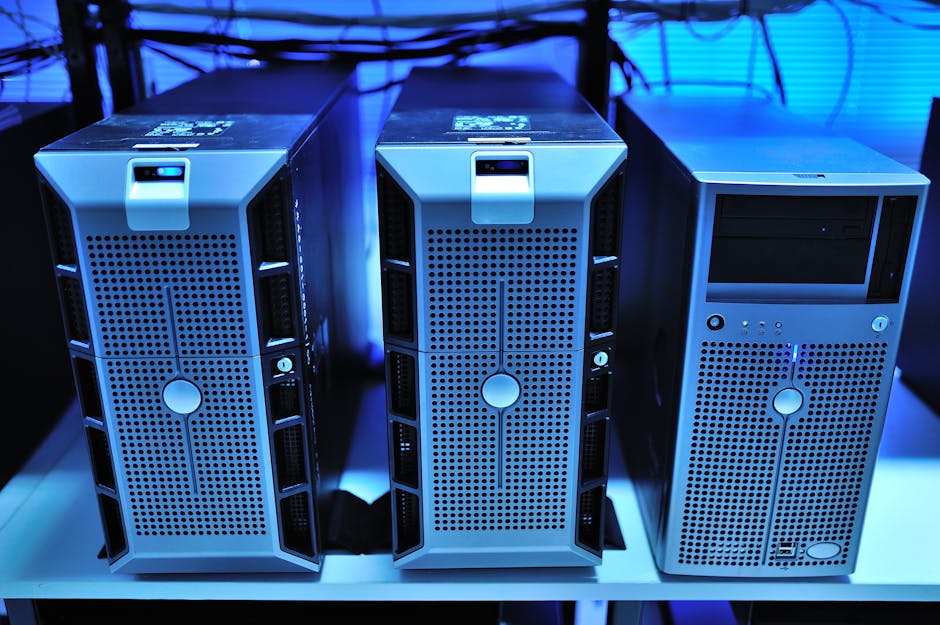
The scale and technical ambition of Musk’s data center initiatives are staggering, representing a new tier of private hyperscale deployment. Tesla’s Dojo supercomputer, a custom-built system for autonomous vehicle AI training, is the flagship project. Based on Tesla’s in-house D1 chip, a 7nm processor with 362 teraflops of BF16 performance, Dojo is architected as a massively scalable system. A single ‘Dojo Training Tile’ integrates 25 D1 chips, while a full ‘Dojo Cabinet’ comprises two tiles, delivering an estimated 9 petaflops of compute. The ultimate vision involves ‘Dojo Exapods’, clusters of ten cabinets, aiming for exascale-level performance. This is not merely a server deployment; it is a purpose-built, high-bandwidth fabric requiring immense internal connectivity, likely leveraging optical interconnects and advanced networking topologies that push the boundaries of data center interconnect (DCI) technology.
Simultaneously, xAI is pursuing a more conventional, yet equally massive, GPU-based approach. The company has publicly stated its goal to build a 100,000 H100 GPU cluster by Fall 2024, which would position it among the world’s largest AI training infrastructures. Procuring this volume of NVIDIA’s flagship AI accelerators in the current supply-constrained market is a feat in itself, underscoring the capital and priority behind the effort. This cluster will demand a correspondingly enormous footprint, power draw (estimated at over 70 megawatts for the GPUs alone), and network fabric. xAI’s infrastructure will likely rely on high-radix switches and ultra-low-latency RoCE (RDMA over Converged Ethernet) networks to efficiently link these GPUs, generating terabits-per-second of east-west traffic within the data center hall.
X (Twitter) adds a third dimension: a global social media and real-time data platform undergoing its own infrastructure transformation. Under Musk, X has reportedly embarked on significant cost-cutting and efficiency drives within its data centers, including exiting some facilities. However, its ongoing operations and ambitions in video, live streaming, and AI-powered features necessitate robust, low-latency points of presence globally. The platform’s reliance on real-time data ingestion and distribution makes it a major consumer of internet bandwidth and a candidate for deep edge deployment strategies.
Industry Impact: Hyperscale Demand, Power, and the Colocation Market

For telecom operators, infrastructure investors, and colocation providers, the rise of Musk’s integrated infrastructure model presents a dual-sided opportunity. On one hand, it represents a massive new source of demand for wholesale data center space, dark fiber, and high-capacity connectivity. A 100,000-GPU cluster requires a data center campus capable of supporting 100+ megawatts of critical IT load. This scale typically necessitates greenfield development or the wholesale leasing of entire buildings from operators like Digital Realty, Equinix, or CyrusOne. The network requirements are equally intense: such a cluster will need multiple 100Gb or 400Gb waves to public cloud providers (for data sourcing), to Tesla’s Dojo facilities, and to internet exchanges. This drives demand for long-haul dark fiber routes and DCI solutions from carriers like Zayo, Lumen, and AT&T, as well as regional fiber providers.
On the other hand, the vertical integration strategy poses a long-term competitive threat to the traditional cloud and colocation ecosystem. By building and controlling its own supercomputing infrastructure, Musk’s companies are effectively insourcing a capability that most enterprises and even other AI startups rent from AWS, Google Cloud, or Microsoft Azure. This reduces their revenue pool. Furthermore, if this model proves successful and cost-effective, it could inspire other large-scale AI players (e.g., Meta, ByteDance) to accelerate their own proprietary builds, further shifting demand from retail colocation and cloud services to build-to-suit and wholesale facilities. For telecom operators with cloud or colocation arms, this necessitates a strategic review: do they compete to provide the underlying fiber and connectivity, or do they partner to offer managed build-to-suit services?
The power challenge is paramount. These projects are coming online amid a well-documented shortage of available hyperscale-grade power, particularly in key markets like Northern Virginia, Phoenix, and Silicon Valley. Tesla and xAI’s deployments will compete directly with traditional hyperscalers for grid capacity and substation build-outs. This will intensify pressure on utilities and accelerate the trend toward data centers acting as quasi-utilities, investing in on-site generation, grid reinforcement, and direct power purchase agreements (PPAs) for renewables. Network operators with edge facilities must also grapple with rising power costs and constraints, which could affect their ability to host demanding AI workloads at the edge.
Strategic & Global Implications: Africa, Starlink, and Network Sovereignty
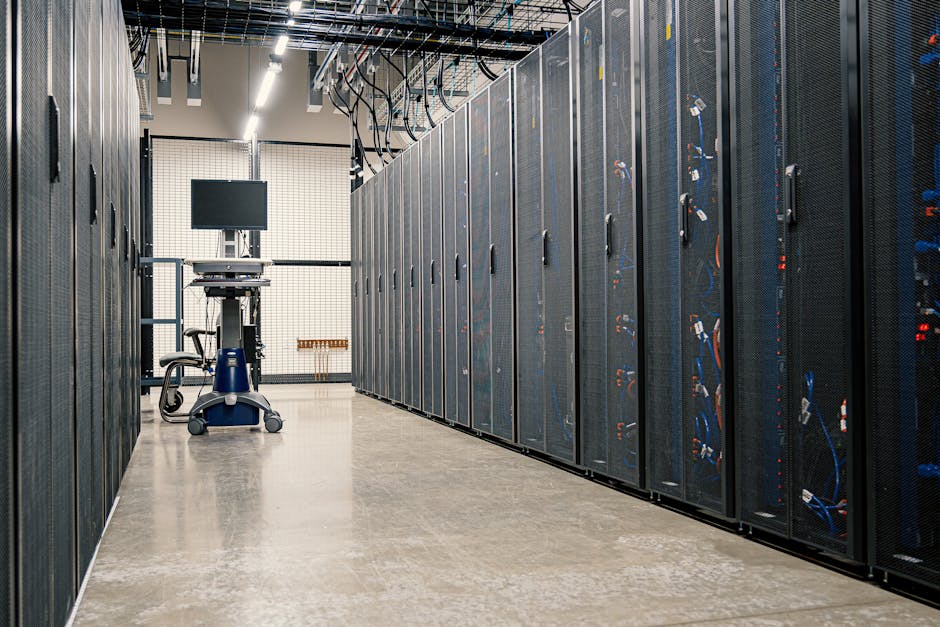
The global ramifications of this infrastructure push are particularly acute in emerging telecom markets like Africa and the MENA region. Musk’s ownership of Starlink (via SpaceX) provides a unique, integrated advantage: the potential to backhaul data center traffic via low-latency LEO satellite links. Imagine an xAI training cluster in a region with cheap renewable power (like North Africa) but underdeveloped terrestrial fiber. Starlink could provide high-throughput, low-latency connectivity to global internet backbones, mitigating the traditional fiber bottleneck. This synergy creates a blueprint for placing compute infrastructure in geographically optimal locations, decoupled from legacy fiber hub constraints.
For African telecom operators and regulators, this represents both a disruption and an opportunity. It undermines the traditional gateway model where international traffic must flow through a few submarine cable landing points. However, it also opens the door for countries with favorable power and policy environments to attract next-generation AI infrastructure investment. Nations like Rwanda, Kenya, or Morocco, which are investing in digital infrastructure and renewable energy, could position themselves as AI-ready hubs, provided they can offer the necessary regulatory stability and fiber connectivity to complement satellite backhaul.
Furthermore, the integration of X’s platform with this compute fabric raises questions about data sovereignty and network architecture. X’s move towards becoming an “everything app” with payments and communications increases its data sensitivity. Hosting its core AI models and user data processing within its own controlled infrastructure, potentially linked via Starlink, could allow it to operate with greater autonomy from local telecom regulations and data localization laws. This challenges national telecom operators and regulators to develop new frameworks for overseeing globally distributed, satellite-connected hyperscale platforms.
Conclusion: The New Hyperscale Frontier Demands Network Agility
The collective data center ambition of Tesla, xAI, and X is not merely a corporate IT story; it is a signal of a structural shift in the infrastructure landscape. A new class of “vertical hyperscaler” is emerging, one that builds AI supercomputers as a core competitive moat rather than renting them. For the telecom industry, this translates into heightened demand for mega-watt scale facilities, ultra-high-bandwidth dedicated fiber, and innovative WAN solutions that can link distributed private clouds.
Network operators must adapt their wholesale and enterprise strategies to serve these entities, who will prioritize low-latency, high-availability private networks over best-effort internet. Colocation providers must evolve their product offerings beyond cabinets and cross-connects to include full-scale campus development and power management partnerships. In regions like Africa, the convergence of LEO backhaul and AI compute could leapfrog traditional infrastructure timelines, demanding that local MNOs and fiber providers accelerate their own high-capacity network builds to participate in the value chain.
Ultimately, Musk’s data center empire underscores a broader trend: the center of gravity in telecom network investment is increasingly pulled by the location and needs of AI compute. The operators and infrastructure players who can most agilely provide the power, fiber, and low-latency connectivity these new giants require will capture the next wave of hyperscale growth.