
PCB Shortage from AI Boom, Geopolitics Threatens Telecom Network Hardware Supply Chain
📰Original Source: ETTelecomAI Boom, Geopolitical Crisis Spark Global PCB Shortage, Impacting Telecom Hardware ProductionPhoto by Nic Wood Analysis based on reporting from ETTelecom, August 3, 2026. A severe shortage of Printed Circuit Boards (PCBs), triggered by a supply-demand perfect storm from the global artificial intelligence…

AI Boom, Geopolitical Crisis Spark Global PCB Shortage, Impacting Telecom Hardware Production

Analysis based on reporting from ETTelecom, August 3, 2026. A severe shortage of Printed Circuit Boards (PCBs), triggered by a supply-demand perfect storm from the global artificial intelligence infrastructure buildout and geopolitical tensions in West Asia, is now cascading into the telecommunications hardware sector, threatening to delay network rollouts and increase capital expenditure for operators worldwide. The crunch, which has already caused price increases of 15-25% for critical PCB components, arrives as the telecom industry is in a critical investment phase for 5G-Advanced, fiber-to-the-premises (FTTP), and next-gen data center interconnect (DCI) equipment. This supply chain disruption highlights the telecom sector’s vulnerability to cross-industry competition for foundational electronic components and underscores the strategic need for greater supply chain diversification and localized manufacturing.
Technical & Market Drivers: AI Servers and Geopolitical Logistics
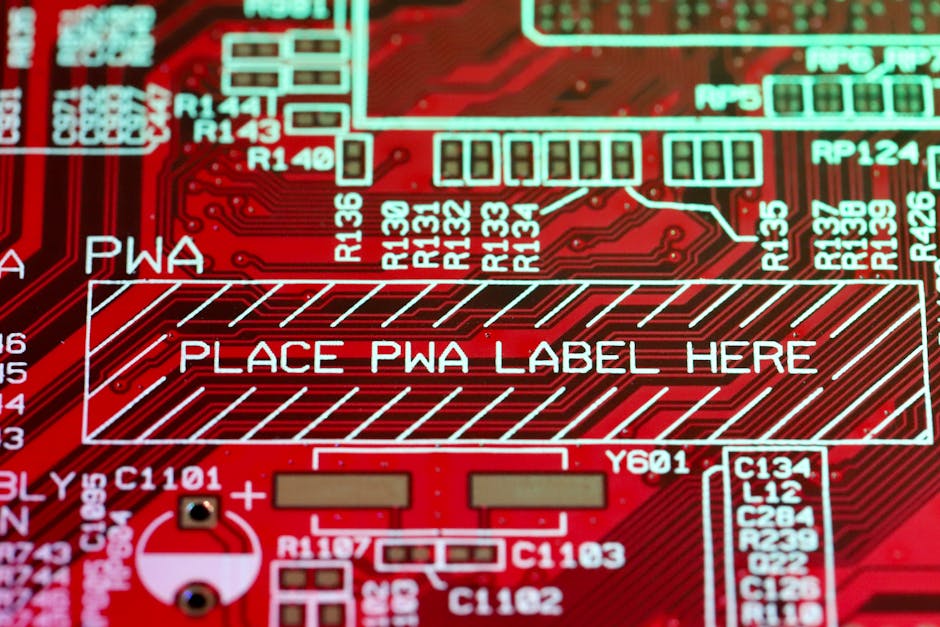
The primary driver of the PCB shortage is the unprecedented demand from hyperscale cloud providers and AI chipmakers building out GPU and AI accelerator clusters. These AI servers utilize highly complex, multi-layer PCBs with high-density interconnect (HDI) technology, which consume a disproportionate share of advanced PCB manufacturing capacity. Fabless semiconductor giants like NVIDIA, AMD, and Intel are placing massive, long-lead-time orders for substrates and boards, crowding out capacity for other industries.
Compounding this demand shock are logistics disruptions stemming from the ongoing West Asia crisis, which has impacted key shipping lanes and air freight routes connecting major PCB manufacturing hubs in East Asia (Taiwan, China, South Korea, Japan) to global markets. This has lengthened lead times for essential raw materials like copper-clad laminates, prepreg, and specialty chemicals, while also increasing freight costs. The result is a classic supply chain squeeze: lead times for multi-layer PCBs have stretched from an average of 8-10 weeks to 20-30 weeks, with premium prices required for expedited slots.
For telecom equipment manufacturers (TEMs) like Nokia, Ericsson, Huawei, ZTE, Ciena, and Infinera, this means competing directly with AI giants for the same constrained pool of PCB suppliers, including global leaders like Unimicron, Zhen Ding Technology, and Samsung Electro-Mechanics. The shortage is most acute for boards used in high-capacity optical transport equipment, 5G massive MIMO Active Antenna Units (AAUs), and core router/switching platforms—all of which require high-frequency, low-loss materials for optimal performance.
Impact on Telecom Operators and Network Infrastructure Strategy

For Mobile Network Operators (MNOs), Tower Companies (TowerCos), and fiber network operators, the PCB shortage translates directly into delayed deployments, higher costs, and potential performance compromises. The immediate impacts are threefold:
- Capital Expenditure (CapEx) Inflation: Equipment vendors are passing on the increased component costs, leading to price hikes for radio units, baseband units, optical line terminals (OLTs), and IP routers. Operators with fixed-budget network expansion plans, particularly in price-sensitive emerging markets, may be forced to scale back deployment targets.
- Project Delays and Network Modernization Slowdown: Extended lead times for critical hardware will delay new site deployments, 5G network densification projects, and fiber backbone upgrades. This could impact service launch timelines and competitive positioning, especially in markets where spectrum auctions have recently concluded.
- Supply Chain Risk Mitigation Costs: Operators and TEMs are being forced to increase inventory buffers, engage in dual-sourcing strategies, and qualify alternative PCB suppliers—all of which add cost and administrative overhead. Some are exploring redesigns to use more readily available, though potentially less optimal, PCB substrates.
The shortage also affects the data center and edge computing infrastructure essential for telco cloud and network function virtualization (NFV). Servers for central office re-architected as a data center (CORD) and universal customer premises equipment (uCPE) are facing similar component availability challenges.
Regional Implications: Spotlight on India and Broader MENA/Africa Markets

The crisis arrives at a pivotal moment for India’s telecom and electronics manufacturing sector. Under the government’s Electronics Components Manufacturing Scheme (ECMS), investments exceeding Rs 15,000 crore (approx. $1.8 billion USD) are in the pipeline to boost domestic production of components, including PCBs. Indian EMS providers like Syrma SGS Technology report that the global shortage is simultaneously a challenge and an opportunity, accelerating the business case for localized PCB fabrication to reduce import dependency.
For the broader Middle East, Africa, and Asia (MEAA) regions, which are heavily reliant on imported network gear, the shortage exacerbates existing foreign exchange and logistics pressures. African operators rolling out 4G and 5G networks, often dependent on competitively priced Chinese equipment, may face extended wait times. Conversely, the crisis could bolster regional manufacturing initiatives, such as Egypt’s ICT 2030 strategy or Saudi Arabia’s Vision 2030 goals for localizing technology production. Geopolitical tensions affecting West Asian logistics also directly threaten the timely delivery of equipment for major projects like the Saudi Arabian 5G network expansion or new subsea cable landing stations across Africa.
Forward-Looking Analysis: Strategic Shifts for Telecom Resilience

The current PCB shortage is not a transient event but a symptom of deeper structural shifts in the global electronics supply chain. The telecom industry must adapt strategically:
- Vertical Integration and Partnerships: Large TEMs may pursue deeper partnerships with or even investments in PCB manufacturers to secure dedicated capacity. Operators might engage in more direct procurement of long-lead-time components for their vendor partners.
- Design for Supply Chain (DfSC): Network hardware design will increasingly prioritize component commonality and the use of less supply-constrained materials, even at a slight performance trade-off, to ensure manufacturability.
- Acceleration of Open RAN and Disaggregation: Supply chain diversity is a key tenet of the Open RAN movement. This shortage may incentivize operators to adopt multi-vendor, open interface architectures to avoid being locked into a single TEM’s supply chain woes.
- Policy Push for Regional Manufacturing: Governments, recognizing telecom infrastructure as critical, are likely to enhance incentives for local PCB and electronics manufacturing. This aligns with broader trends in the US (CHIPS Act), Europe (European Chips Act), and India’s Production Linked Incentive (PLI) schemes.
In conclusion, the PCB shortage underscores that telecom network resilience is fundamentally tied to electronics supply chain health. As AI, automotive, and consumer electronics continue to compete for the same foundational components, telecom stakeholders must elevate supply chain strategy to a core element of network planning and competitive advantage. The era of just-in-time global sourcing for critical network hardware is giving way to a new paradigm of strategic stockpiling, diversified sourcing, and regionalized production.