Sony’s Strategic Play for Tamron: A Telecom Infrastructure Lens on Optical Consolidation
📰Original Source: ETTelecomTOKYO – In a move that signals deeper vertical integration in high-precision optics, Sony Group Corporation has formally proposed to acquire camera and lens manufacturer Tamron, according to an initial report by ETTelecom. The Japanese electronics giant stated it has submitted a proposal…

TOKYO – In a move that signals deeper vertical integration in high-precision optics, Sony Group Corporation has formally proposed to acquire camera and lens manufacturer Tamron, according to an initial report by ETTelecom. The Japanese electronics giant stated it has submitted a proposal to Tamron’s board and that the lens maker has established a special committee to evaluate the offer, aiming to “enhance corporate value” and bolster Sony’s imaging sector. While framed within the consumer camera market, this proposed consolidation carries significant implications for adjacent telecom infrastructure markets, including fiber optic component manufacturing, sensing for autonomous systems, and the supply chains for network and data center hardware.
Deep Dive: The Optical Precision Nexus Between Imaging and Telecom

Sony’s pursuit of Tamron is not merely about capturing a greater share of the interchangeable lens camera market, where Tamron holds an estimated 7-9% global share with its affordable, high-quality alternatives to first-party lenses from Sony, Canon, and Nikon. The core strategic asset lies in Tamron’s advanced, high-volume manufacturing capabilities for complex multi-element lens assemblies, precision glass molding, and anti-reflective coatings. These competencies are directly transferable to the production of critical telecom components.
Tamron’s expertise in designing lenses for high-resolution sensors (exceeding 60MP in consumer cameras) parallels the requirements for lenses used in fiber optic collimators, multiplexer/demultiplexer (Mux/Demux) modules for DWDM systems, and free-space optical communication terminals. The precision alignment and ultra-low dispersion glass technologies are foundational for both imaging and light signal transmission. Furthermore, Tamron’s industrial optics division already supplies lenses for machine vision, barcode scanners, and surveillance – markets that overlap with telecom infrastructure monitoring and industrial IoT.
For Sony, which already manufactures image sensors for smartphones (a market where it holds over 50% share) and has a growing semiconductor solutions business, acquiring Tamron would create a closed-loop ecosystem from sensor design to lens integration. This vertical integration model is precisely what is sought in telecom for active optical cables (AOCs), co-packaged optics, and integrated transceiver modules to reduce latency, power consumption, and cost. A Sony-controlled Tamron could accelerate R&D in hybrid lens-sensor packages for LiDAR in autonomous vehicles and drones – a key growth area for 5G/6G-enabled mobility and edge computing.
Industry Impact: Reshaping Supply Chains for Network Hardware

The potential acquisition reverberates beyond consumer electronics into the telecom equipment and data center hardware supply chain. Sony Semiconductors is a major supplier of CMOS image sensors, but its foray into deeper optical integration threatens to disrupt the existing supplier hierarchy for optical sub-assemblies.
- Competitive Pressure on Component Suppliers: Companies like II-VI (now Coherent), Lumentum, and Broadcom (which acquired optical assets from Brocade and others) dominate the market for telecom-grade optical components. A vertically integrated Sony-Tamron entity could become a formidable new entrant or partner, especially for niche, high-performance optical assemblies requiring mass-production scalability. This could drive consolidation among smaller lens and glass specialists serving the telecom sector.
- In-House Sourcing for Network OEMs: Major network original equipment manufacturers (OEMs) like Nokia, Ericsson, Huawei, and Cisco often source optical components from a fragmented supplier base. A stronger, integrated Sony optics division could become a strategic supplier for next-generation optical networking cards, intra-data center interconnects, and 5G fronthaul/midhaul equipment, potentially offering cost and performance advantages through tighter integration.
- Accelerating CPO and Silicon Photonics: Co-Packaged Optics (CPO) and Silicon Photonics (SiPh) are critical frontiers for scaling data center and high-performance computing networks. These technologies require intimate coupling of optical elements with silicon chips. Sony’s combined expertise in semiconductor fabrication (for sensors) and Tamron’s precision optics could position the merged company as a key player in developing and manufacturing these advanced packages, competing with Intel, TSMC, and GlobalFoundries in the optical integration space.
Operationally, telecom operators and hyperscalers (like Google, Meta, Amazon AWS) should monitor this development for its potential to increase supplier options, drive down costs for optical transceivers (a significant Capex item), and accelerate the adoption of higher-bandwidth optical interfaces within their networks.
Regional & Strategic Implications: Asia’s Dominance in Optical Tech and African/MENA Connectivity
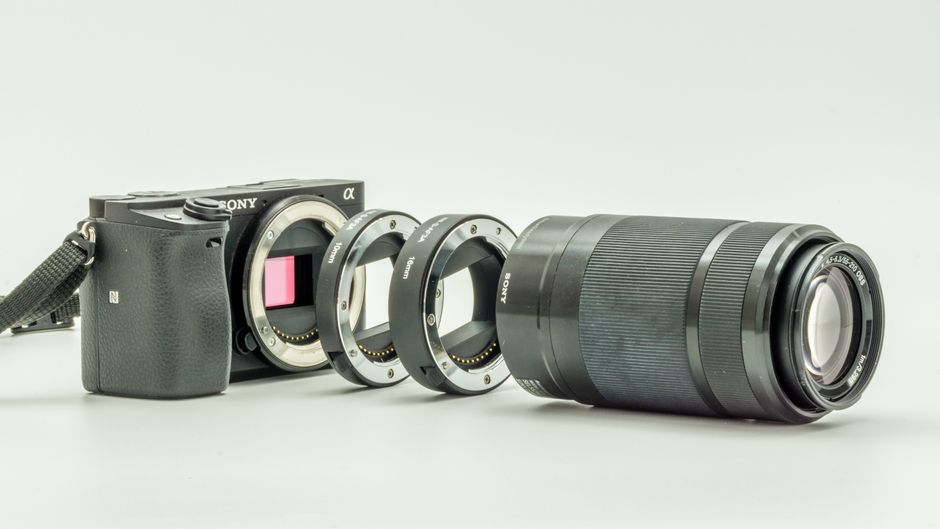
This proposed deal reinforces Asia’s, and specifically Japan’s, continued dominance in the foundational technologies of both imaging and optical communications. Japan houses world leaders in optical glass (OHARA, HOYA), precision machinery, and semiconductor materials. A Sony-Tamron combination would create a national champion with end-to-end capabilities, potentially influencing global standards and supply chain resilience amid ongoing geopolitical tensions.
For emerging telecom markets in Africa and the Middle East & North Africa (MENA), the implications are twofold:
- Cost of Network Deployment: Increased competition and innovation in optical component manufacturing could eventually trickle down to lower prices for fiber optic terminal equipment, optical line terminals (OLTs) for FTTH, and microwave transmission systems that use optical components. This would benefit network operators across Africa and MENA looking to expand fiber backbones and 5G networks cost-effectively.
- Sensing for Infrastructure Management: Tamron’s lenses are widely used in security and surveillance cameras. Sony’s imaging sensors are ubiquitous. A merged entity could offer more integrated, intelligent camera systems for critical infrastructure monitoring – from securing remote cell towers and cable landing stations to monitoring pipeline and power line corridors via drone-based inspection. This is highly relevant for operators managing vast, geographically dispersed networks.
- Supply Chain Diversification: African operators have historically been dependent on a limited set of global equipment vendors. The emergence of a powerful new optics supplier from Japan could provide an alternative sourcing option, enhancing bargaining power and supply chain security for regional players like MTN, Vodacom, Safaricom, STC, and e&.
Strategically, the move highlights a trend of convergence where capabilities developed for one high-tech sector (consumer imaging) become critical inputs for another (telecom/datacom infrastructure). It underscores the need for telecom strategists to monitor adjacent technology sectors for disruptions that can reshape their own cost structures and technological roadmaps.
Forward-Looking Analysis: Optics as a Core Telecom Competency

Sony’s bid for Tamron is a bellwether for the increasing strategic value of optical precision in the digital economy. As networks evolve towards terabit speeds, pervasive sensing, and the metaverse, the demand for advanced, cost-effective optical solutions will only intensify. We anticipate the following developments in the telecom sector following this and similar consolidations:
- Increased M&A Activity: Expect further mergers and acquisitions between semiconductor companies, optical component makers, and traditional telecom equipment vendors. The lines between these categories will continue to blur.
- Rise of “Optical Integration” as a Key Metric: Network operators and hyperscalers will increasingly evaluate vendors based on their depth of optical integration and in-house manufacturing capabilities, not just system-level performance.
- New Standards and Interfaces: Vertically integrated players like a potential Sony-Tamron may push for new, more efficient optical interfaces that leverage their combined sensor-lens expertise, influencing standards bodies like the IEEE, ITU-T, and OIF.
- Focus on Power Efficiency: The drive for greener networks will benefit from innovations in optical component efficiency, a area where integrated design from sensor to lens can yield significant power savings in transceivers and active optical equipment.
For telecom executives and infrastructure investors, the key takeaway is to recognize optics not as a commoditized component, but as a domain of intensifying innovation and strategic control. Sony’s play for Tamron is a clear signal that mastering light – both for capturing images and transmitting data – is central to the future of connected technology.