
Starlink’s LEO Expansion Hits 6,371 Satellites, Redefining Global Connectivity Strategy for Telecom Operators
📰Original Source: Satellite OasisSpaceX’s Starlink constellation has officially deployed 6,371 Low Earth Orbit (LEO) satellites as of May 2024, fundamentally altering the economics and competitive landscape for broadband connectivity in underserved and remote regions globally, according to industry analysis. This massive scale, driven by reusable…
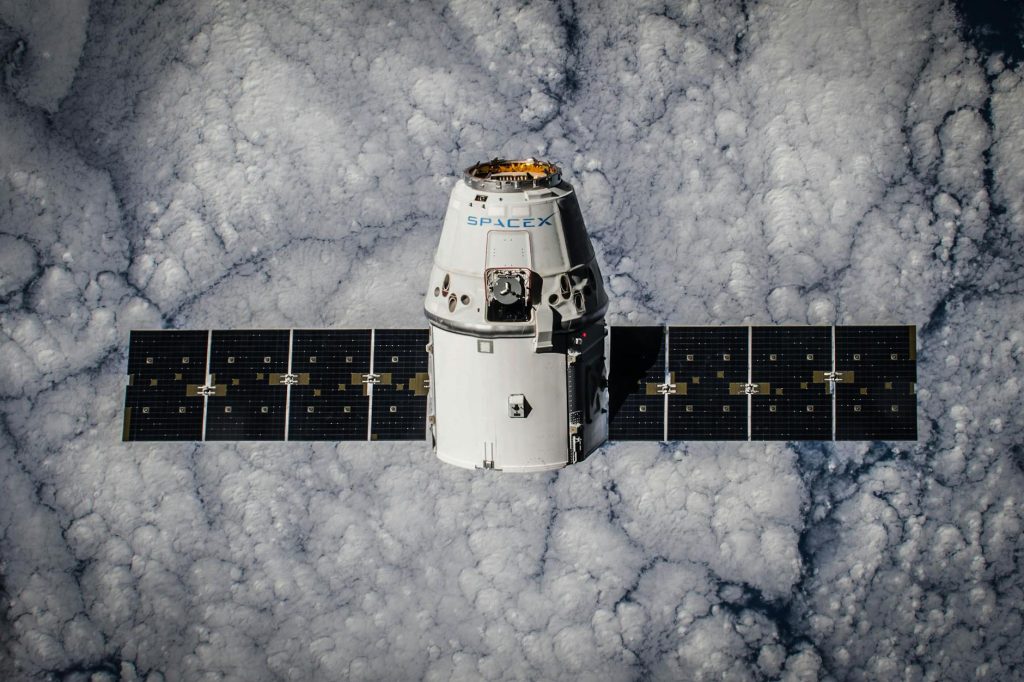
SpaceX’s Starlink constellation has officially deployed 6,371 Low Earth Orbit (LEO) satellites as of May 2024, fundamentally altering the economics and competitive landscape for broadband connectivity in underserved and remote regions globally, according to industry analysis. This massive scale, driven by reusable Falcon 9 launches, is enabling Starlink to offer residential service with latency as low as 20-40ms and download speeds frequently exceeding 150 Mbps, directly challenging the long-held supremacy of terrestrial fiber and legacy Geostationary (GEO) satellite services in the rural and maritime/in-flight connectivity markets. For telecom operators (MNOs and fixed-line ISPs), this represents both a disruptive competitive threat in low-density areas and a potential backhaul/complementary technology partner, necessitating a strategic reassessment of network investment and service bundling.
The Technical Architecture: How Scale and Vertical Integration Enable Disruption

Starlink’s operational model is built on unprecedented vertical integration and launch cadence. SpaceX manufactures its own satellites (V2 Mini and upcoming V2 models with laser inter-satellite links), launches them on its reusable Falcon 9 rockets—which have achieved a pace of over 90 launches in 2023—and operates the global network of gateway earth stations and user terminals. This control over the entire stack, from rocket factory to customer modem, is the key differentiator from traditional GEO satellite operators like Viasat or HughesNet, who purchase launch capacity and satellites from third parties. The current constellation of 6,371 satellites operates in shells at altitudes between 540 km and 570 km, drastically reducing signal propagation delay compared to GEO satellites at ~35,786 km, which inherently suffer from a minimum 500+ ms latency.
The technical roadmap is aggressive. The second-generation Starlink V2 satellites, which began deployment in 2023, are larger and more capable, featuring advanced phased-array antennas and those critical laser inter-satellite links (ISLs). ISLs create a mesh network in space, allowing data to hop between satellites without needing to travel down to a ground station and back up for every long-distance connection. This reduces reliance on geographically fixed gateways, lowers latency for intercontinental traffic, and enables true global coverage over oceans and polar regions. For telecom operators, this architecture presents a new form of global backhaul and trunking that bypasses terrestrial and submarine cable choke points.
User terminal technology has also evolved. The standard rectangular dish now features an updated design for better performance, while a high-performance flat panel model serves mobility and enterprise users. SpaceX has driven terminal costs down through mass production, a crucial factor for service affordability. The network’s capacity is not static; as satellite count increases and more advanced V2 models with ~4x the capacity per satellite come online, overall network throughput and user experience will improve, challenging the notion that satellite is a capacity-constrained last resort.
Industry Impact: Threat, Complement, and New Partnership Models

The rise of mega-LEO constellations is forcing a strategic reckoning across the telecom ecosystem. For Mobile Network Operators (MNOs) in developed markets with extensive fiber and 5G footprints, Starlink is primarily a competitive threat in rural and exurban areas where deploying FTTH is economically challenging. In the United States, Starlink has captured significant market share in these areas, often out-competing DSL and fixed wireless access (FWA) offerings on speed and reliability. This pressures MNOs to accelerate their own FWA deployments using C-band and 5G mmWave spectrum or to seek regulatory support for rural fiber builds.
However, the relationship is not purely adversarial. The announced partnership between Starlink and T-Mobile USA on “Direct to Cell” service exemplifies a complementary model. SpaceX plans to launch satellites with an eNodeB payload, effectively turning them into cell towers in space. This will allow T-Mobile’s customers to send basic text messages (with voice and data to follow) in areas of no terrestrial coverage, using their existing, unmodified smartphones. For T-Mobile, this is a low-capex way to dramatically expand its coverage map for emergency and basic services, adding a unique competitive differentiator against AT&T and Verizon. Similar partnerships have been announced with Optus in Australia, Rogers in Canada, and KDDI in Japan, creating a new wholesale market for satellite-to-cellular connectivity.
For infrastructure players, the implications are profound. Traditional backhaul providers face competition from space-based alternatives for trunking traffic to remote cell towers or for providing temporary capacity during outages or events. The maritime and aeronautical connectivity markets, long dominated by GEO providers like Inmarsat and Viasat, are being aggressively targeted by Starlink Maritime and Aviation services, offering drastically higher speeds at competitive prices. This is forcing incumbents to accelerate their own LEO plans (e.g., Viasat’s acquisition of Inmarsat) and invest in next-generation GEO High-Throughput Satellites (HTS).
Strategic Implications for Africa, MENA, and Emerging Markets
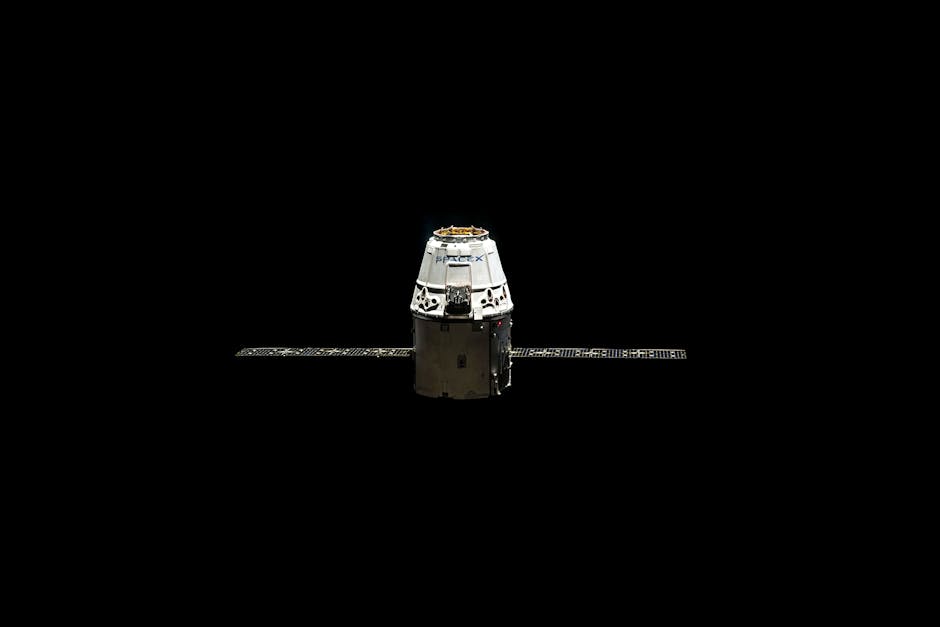
The impact of LEO connectivity is perhaps most transformative in regions with underdeveloped terrestrial infrastructure. In Africa, where fiber penetration outside major cities is limited and terrestrial wireless backhaul is expensive, Starlink has rapidly gained regulatory approval in over 25 countries, including Nigeria, Kenya, Mozambique, and Rwanda. It is becoming the connectivity solution of choice for enterprises, NGOs, schools, and clinics in peri-urban and rural areas, often leapfrogging fixed-line infrastructure entirely. For African MNOs, this presents a dual dynamic: Starlink competes for high-value enterprise and residential customers, but it also serves as a high-quality, rapidly deployable backhaul solution for their own rural cell sites, potentially lowering their operational costs and accelerating 4G/5G expansion.
In the Middle East, nations with vast, sparsely populated territories like Saudi Arabia and the UAE are leveraging LEO for energy sector connectivity, remote monitoring, and as part of national digital inclusion strategies. Regulatory approaches vary, with some countries requiring partnerships with local telecom operators (e.g., Starlink’s partnership with Oman Telecommunications Company) and others allowing direct consumer access. The technology is also reshaping the economics of connecting offshore oil and gas platforms and maritime routes in the Arabian Gulf and Red Sea.
A critical challenge for global adoption remains terminal cost and service pricing. While SpaceX has reduced costs, the upfront hardware fee (often $400-$600) and monthly subscription ($70-$120+) remain high for low-income populations in emerging markets. This creates an opportunity for innovative financing models, government subsidy programs, and community-based sharing solutions. Furthermore, the proliferation of LEO satellites raises unresolved issues around space traffic management, orbital debris, and spectrum coordination with terrestrial services, requiring active engagement from telecom regulators who have traditionally focused on ground-based networks.
Forward-Looking Analysis: The Integrated Multi-Orbit Future

The telecom landscape is evolving towards a hybrid, multi-orbit, and multi-technology future. Starlink’s current dominance in LEO is attracting competition. Amazon’s Project Kuiper aims to launch its first operational satellites in 2024, targeting a 3,236-satellite constellation. OneWeb (now part of the Eutelsat Group) has completed its first-generation LEO constellation focused on enterprise and government backhaul. China is planning its own GuoWang mega-constellation. This competition will drive further innovation and potentially lower wholesale capacity prices.
For network strategists at telecom operators, the imperative is to develop a clear “non-terrestrial network” (NTN) strategy as defined by 3GPP in Releases 17 and 18 for 5G-Advanced. This involves evaluating LEO connectivity as: 1) a direct-to-user retail competitor, 2) a backhaul and trunking wholesale product, 3) a complementary mobile network extension (NTN), and 4) a redundancy and disaster recovery solution. The winning operators will be those that can most effectively integrate these space-based capabilities into a seamless service portfolio, managing a complex web of partnerships and competitive threats.
Ultimately, the deployment of over 6,300 Starlink satellites marks a point of no return. LEO broadband is no longer a futuristic concept but a commercial-scale utility. Its continued expansion will pressure margins in rural telecom markets, create new opportunities for global connectivity, and force every player in the telecom value chain to decide where they fit in an increasingly orbital ecosystem. The race for the final frontier of connectivity is now a core part of terrestrial telecom strategy.