
AI Chip Frenzy and the Telecom Infrastructure Reality Check
📰Original Source: ETTelecomSource: ETTelecom’s report “AI bubble debate gets real as chip stocks rally” highlights the intense market volatility and strategic debate surrounding the semiconductor industry’s pivot to AI-specific hardware, a dynamic with profound implications for downstream network infrastructure investment and capacity planning. The rally…

Source: ETTelecom’s report “AI bubble debate gets real as chip stocks rally” highlights the intense market volatility and strategic debate surrounding the semiconductor industry’s pivot to AI-specific hardware, a dynamic with profound implications for downstream network infrastructure investment and capacity planning.
The rally in semiconductor stocks, exemplified by Micron Technology’s shares surging over 60% this year on the back of soaring demand for High-Bandwidth Memory (HBM) chips, has ignited a fierce debate: is this a structural transformation of the notoriously cyclical chip market, or an unsustainable bubble driven by AI hype? For telecom operators and infrastructure providers, this debate is not an abstract financial exercise. The outcome directly dictates the availability, cost, and performance trajectory of the core silicon that will power next-generation data centers, 5G-Advanced and 6G RAN equipment, and AI-native network functions. Bulls argue that AI workloads—from large language model training to real-time network optimization—represent a durable, multi-year capex cycle for hyperscalers and telecoms alike, fundamentally altering demand patterns. Bears warn of an overheated market where capital allocation is distorted, potentially leading to a supply glut and delayed investments in other critical network technologies. Telecom operators must navigate this uncertainty, balancing aggressive AI-driven network modernization plans with the risk of supply chain volatility and inflated hardware costs.
The Technical Driver: High-Bandwidth Memory and the AI Network Fabric

At the heart of the semiconductor rally is a specific technological shift: the ascendancy of High-Bandwidth Memory (HBM). Unlike traditional DRAM, HBM stacks memory dies vertically and connects them to a processor (like a GPU or AI accelerator) via a silicon interposer, achieving exponentially higher data transfer rates—currently exceeding 1 TB/s with HBM3E. This is not merely a faster chip; it represents a fundamental architectural change for AI compute. For telecom, this has a direct parallel: the network fabric connecting these AI systems must evolve in lockstep.
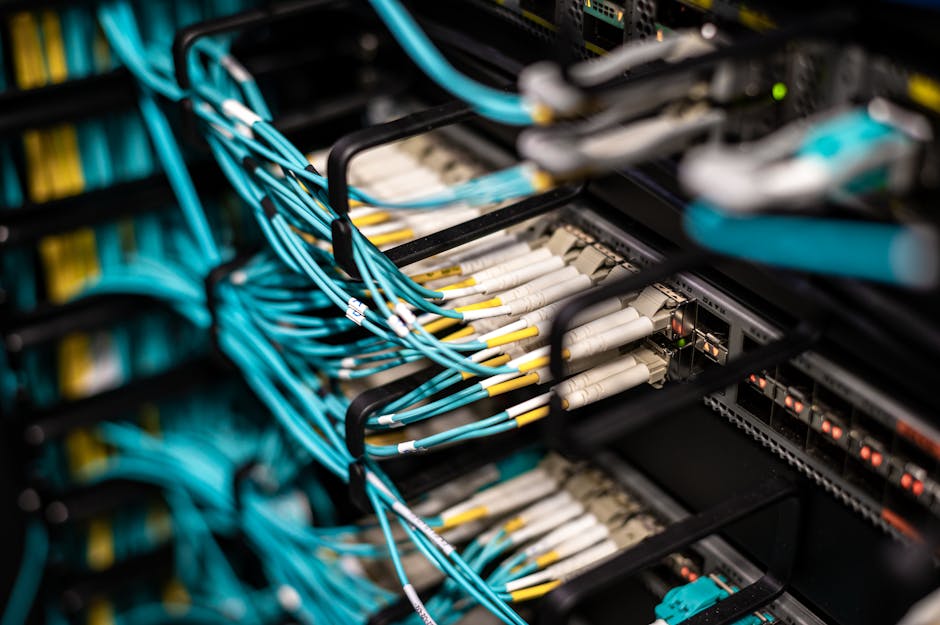
The insatiable data appetite of AI clusters, often comprising tens of thousands of GPUs, is pushing data center interconnect (DCI) requirements beyond the capabilities of standard 400GbE. The industry is rapidly moving towards 800GbE and 1.6TbE optical interfaces, with co-packaged optics (CPO) emerging as the next frontier to reduce power and latency. Companies like Broadcom, Marvell, and NVIDIA (through its Spectrum-X Ethernet platform) are innovating at the switch and NIC silicon level to create lossless, low-laten cy fabrics capable of handling the “elephant flows” of AI training. For Mobile Network Operators (MNOs), this translates to a new generation of cloud-native RAN (vRAN/oRAN) servers and edge AI appliances that will require similar, albeit smaller-scale, HBM-enabled accelerators for tasks like real-time beamforming, channel estimation, and AI-based radio resource management. The supply and pricing dynamics of HBM and AI-specific ASICs will therefore dictate the economic viability and rollout pace of intelligent, software-defined networks.
Industry Impact: Capex Reallocation and the Hyperscale-Telco Divide
The semiconductor frenzy is forcing a strategic reassessment of capital expenditure across the telecom ecosystem. Hyperscale cloud providers (Amazon Web Services, Microsoft Azure, Google Cloud) are the primary drivers of AI chip demand, accounting for the bulk of orders for NVIDIA’s H100/H200 and upcoming Blackwell GPUs, as well as custom silicon like Google’s TPU and AWS’s Trainium. Their massive, centralized investments in AI data centers are sucking oxygen—and semiconductor fabrication capacity—from the broader market.
This creates a dual challenge for telecom operators and independent data center providers:
- Supply Chain Competition: Securing adequate supply of AI-optimized servers, smart NICs, and switching gear is becoming more difficult and expensive, potentially delaying private 5G core deployments and telco cloud transformations.
- Capex Prioritization: Telcos must decide how much of their limited capex to allocate to AI/ML infrastructure versus foundational investments like fiber deep, 5G mid-band expansion, and power system modernization. A “bubble” scenario where AI chip prices correct sharply could benefit late-moving telcos, while a sustained shortage could cripple their competitiveness in enterprise AI services.
Furthermore, the rise of AI is blurring the lines between network operator and cloud provider. Telecoms are increasingly partnering with or competing against hyperscalers to offer managed AI and edge computing services. The availability and cost of the underlying silicon will be a key determinant of who controls the high-margin AI service layer.
Regional Implications: Africa, MENA, and the Global AI Divide

The semiconductor supply chain concentration and AI infrastructure race risk exacerbating the global digital divide, with specific ramifications for Africa and the MENA region. Leading markets like Saudi Arabia, the UAE, and South Africa are making sovereign bets on AI, as seen in initiatives like Saudi Arabia’s “Alat” and the UAE’s G42. These nations have the capital to compete for scarce AI hardware and talent. However, for the majority of African nations, the current AI chip landscape presents significant hurdles:
- Cost Prohibitive Access: The premium pricing for HBM-equipped systems puts state-of-the-art AI training capabilities out of reach for most African telecom operators and startups, potentially locking them into a cycle of consuming AI services from foreign hyperscalers rather than developing indigenous capabilities.
- Infrastructure Readiness Gap: Deploying and operating power-hungry AI clusters requires robust, reliable data center infrastructure with high-power density racks and advanced liquid cooling—facilities that are still under development in many regions.
- Strategic Dependency: Reliance on a handful of global semiconductor foundries (TSMC, Samsung) and AI chip designers (NVIDIA) creates a strategic vulnerability. Geopolitical tensions or export controls could abruptly cut off access to critical technology.
To mitigate this, regional operators like MTN, Vodacom, and stc may increasingly turn to consortium-based purchasing or leverage partnerships with hyperscalers (e.g., AWS Local Zones, Azure Edge Zones) to access AI capabilities. Alternatively, they may focus on less silicon-intensive inference workloads at the edge, utilizing more readily available, mid-range accelerators. The long-term risk is the emergence of a two-tier global telecom landscape: AI-native networks in advanced economies and AI-consumer networks elsewhere.
Forward Look: Navigating the Silicon Cycle for Network Advantage

The current AI chip debate underscores a critical truth for telecom: network strategy is now inextricably linked to semiconductor strategy. Operators cannot afford to be passive observers of this market. To navigate the coming years, telecom leadership must adopt a multi-pronged approach:
- Diversified Sourcing: Engage with a broader ecosystem of silicon providers, including those developing RISC-V based architectures (e.g., Tenstorrent) and specialized telecom ASIC vendors, to reduce dependency on a single supply chain.
- Software-Defined Abstraction: Double down on cloud-native, containerized network functions that can be orchestrated across heterogenous hardware—from x86 CPUs to Arm-based processors and various AI accelerators. This provides flexibility to shift workloads based on silicon availability and cost.
- Strategic Partnerships: Forge deeper, equity-level partnerships with chip designers and hyperscalers to co-develop reference architectures for telco AI, ensuring telecom-specific requirements (latency, security, scalability) are baked into future silicon roadmaps.
- Investment in Enabling Infrastructure: Regardless of AI chip volatility, investing in high-capacity, low-latency fiber backhaul and edge data centers with scalable power and cooling creates the necessary foundation to rapidly deploy new silicon when it becomes available and cost-effective.
The semiconductor industry’s AI pivot is real and driving profound change. Whether the current market enthusiasm is a bubble or a new plateau, the underlying demand for intelligent, high-throughput networking is structural. Telecom operators that strategically manage their silicon dependencies, invest in agile infrastructure, and focus on pragmatic, near-term AI deployments for network automation and customer experience will be best positioned to harness this revolution, regardless of how the stock charts fluctuate.