AI Hyperscalers Drive Demand for Custom Silicon, Reshaping Telecom Network Infrastructure
📰Original Source: ETTelecomMajor hyperscalers like Google, Amazon, and Microsoft are fueling a massive surge in demand for custom silicon, fundamentally reshaping the supply chain for network infrastructure components, according to insights from industry leaders including Broadcom, Marvell Technology, and Cyient, as reported by ETTelecom. This…
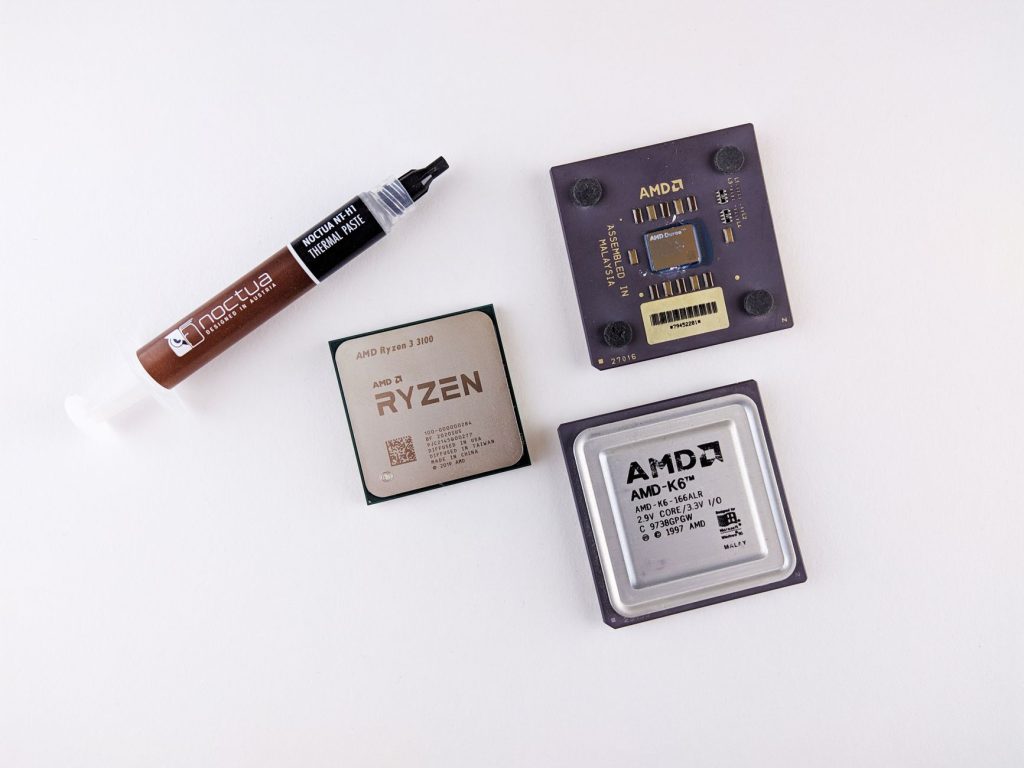
Major hyperscalers like Google, Amazon, and Microsoft are fueling a massive surge in demand for custom silicon, fundamentally reshaping the supply chain for network infrastructure components, according to insights from industry leaders including Broadcom, Marvell Technology, and Cyient, as reported by ETTelecom. This pivot away from generic, off-the-shelf chips towards Application-Specific Integrated Circuits (ASICs) and custom silicon is driven by the explosive computational and networking requirements of artificial intelligence (AI) workloads. For telecom operators and infrastructure vendors, this trend signals a critical evolution in data center and network architecture, with profound implications for power efficiency, performance, and strategic partnerships across the ecosystem.
The Technical and Market Drivers Behind Custom ASIC Adoption

The core driver for custom silicon is the unique and intensive nature of AI/ML model training and inference. Standard CPUs and GPUs, while powerful, are not optimized for the specific tensor operations and data movement patterns inherent to these workloads. Hyperscalers, operating at a scale where marginal efficiency gains translate into hundreds of millions in cost savings, are investing heavily in designing chips tailored to their software stacks. Google’s Tensor Processing Unit (TPU), now in its fifth generation, and Amazon’s Trainium and Inferentia chips are prime examples. This demand is creating a significant market for semiconductor design and manufacturing services. Broadcom, a key player in this space, has noted that AI-related revenue now constitutes 35% of its semiconductor solutions segment, a figure projected to grow. Similarly, companies like Marvell Technology are seeing robust demand for their custom compute and networking silicon, particularly for data processing units (DPUs) and smart switches that manage the colossal east-west traffic within AI clusters.
The technical challenges are immense. Developing a cutting-edge ASIC requires multi-billion-dollar investments, deep expertise in advanced node semiconductor processes (e.g., 3nm, 2nm), and mastery of complex co-design between hardware and software. The development cycle, from architecture definition to tape-out and volume production, can span 18-36 months. Furthermore, the networking requirements for AI clusters are unprecedented. A single AI training job can span thousands of GPUs or custom accelerators, requiring a lossless, ultra-low-latency, high-bandwidth fabric. This is pushing the adoption of technologies like 800 Gigabit Ethernet (800GbE) and even 1.6 Terabit Ethernet, with custom switches and optical interconnects becoming essential. The power density of these AI racks is also soaring, influencing data center cooling designs and power distribution infrastructure.
Impact on Telecom Operators and Infrastructure Vendors
For telecom network operators (OpCos) and equipment vendors, the rise of custom silicon has multi-layered implications. Firstly, it accelerates the architectural shift towards disaggregated, white-box networking in data centers and cloud backbones. Hyperscalers are increasingly designing their own networking switches (like Google’s Jupiter fabric) and sourcing optical components directly, challenging the traditional business models of integrated network vendors. This pushes vendors like Cisco, Nokia, and Ericsson to offer more flexible, software-driven platforms and to deepen their own silicon capabilities or partnerships.
Secondly, the power and cooling demands of AI-optimized silicon will strain existing telecom central offices and edge data centers. Operators planning to offer AI or high-performance computing (HPC) services at the edge must invest in upgraded power infrastructure, liquid cooling solutions, and high-fiber-count connectivity. The need for low-latency AI inference is a key driver for edge computing deployments, but the underlying hardware must be capable of supporting specialized accelerators.
Thirdly, this trend intensifies competition for semiconductor manufacturing capacity and talent. As hyperscalers and their partners (e.g., Broadcom, Marvell) consume more wafer starts at foundries like TSMC and Samsung, the availability of leading-edge nodes for other telecom applications—such as 5G baseband processors, core routers, and optical DSPs—could be constrained, affecting supply chains and costs. Operators must factor this into their long-term infrastructure planning and vendor negotiations.
Strategic Implications for Global Telecom Markets and Africa/MENA

The global race for AI supremacy, underpinned by custom silicon, has significant geopolitical and regional implications. Nations are vying for leadership in semiconductor manufacturing, with policies like the U.S. CHIPS Act and the EU’s Chips Act aiming to bolster domestic supply chains. For telecom markets in Africa and the Middle East and North Africa (MENA) region, this dynamic presents both challenges and opportunities.
The challenge lies in potential dependency and access. Cutting-edge AI infrastructure, built on proprietary custom silicon, is concentrated in the data centers of a few global hyperscalers. Regional operators partnering with these clouds for services must ensure robust, low-latency submarine cable and terrestrial fiber connectivity to these AI hubs. There is a risk of a new form of digital divide based on access to AI compute capacity.
However, opportunities exist for strategic positioning. Regions with favorable conditions for data center construction—such as stable climates for cooling, access to renewable energy for power-hungry AI farms, and supportive regulations—could attract hyperscaler investments in AI-ready cloud regions. Countries like Saudi Arabia, the UAE, and South Africa are already positioning themselves as digital hubs. Furthermore, regional telecom groups could explore partnerships to develop or deploy specialized silicon for network functions (e.g., Open RAN accelerators) or for region-specific AI applications in languages and contexts not prioritized by global models. The demand for efficient, localized AI inference could drive investment in edge data centers equipped with the next generation of AI-optimized hardware.
Forward-Looking Analysis for the Telecom Sector

The trajectory toward custom silicon is irreversible for the highest tiers of AI performance. For the telecom sector, this means the underlying physical and logical infrastructure must evolve in lockstep. We anticipate several key developments:
- Network Silicon Disaggregation: The model of custom ASICs will extend deeper into telecom networks. We will see more specialized silicon for 5G/6G Open RAN radio units, core network functions, and security, moving away from general-purpose merchant silicon.
- Convergence of Networking and Compute: The distinction between a network switch and a compute node will blur. DPUs and SmartNICs, often custom-designed, will handle more network and storage processing directly on the card, freeing up central processors for application workloads.
- New Alliances and Competition: Traditional telecom vendors will form deeper alliances with custom silicon designers and foundries. Simultaneously, hyperscalers may begin to offer their custom networking and AI silicon designs or platforms to telcos, directly entering the telecom equipment space.
- Focus on Sustainability: The power crisis driven by AI silicon will force operators to prioritize energy efficiency across their networks and data centers as a core business metric, not just a CSR initiative. This will influence technology choices from the chip level up.
In conclusion, the hyperscaler-driven demand for custom silicon is not merely a semiconductor industry story; it is a foundational shift recalibrating the entire telecom infrastructure stack. Network operators and vendors must proactively engage with this new reality, assessing their hardware roadmap, partnership strategies, and data center investments to remain competitive in an AI-centric future. The performance, efficiency, and cost of future networks will be inextricably linked to the evolution of specialized silicon.