Compal Electronics Expands AI Server Manufacturing Capacity with New Daxi Center to Meet Hyperscaler Demand
📰Original Source: ETTelecomSource: ETTelecom, August 12, 2026. Original Article. Taiwanese ODM giant Compal Electronics has inaugurated its dedicated Daxi AI Server Manufacturing Center in Taoyuan, Taiwan, a strategic investment aimed at substantially scaling its production capacity for high-performance AI computing infrastructure. The move, announced on…
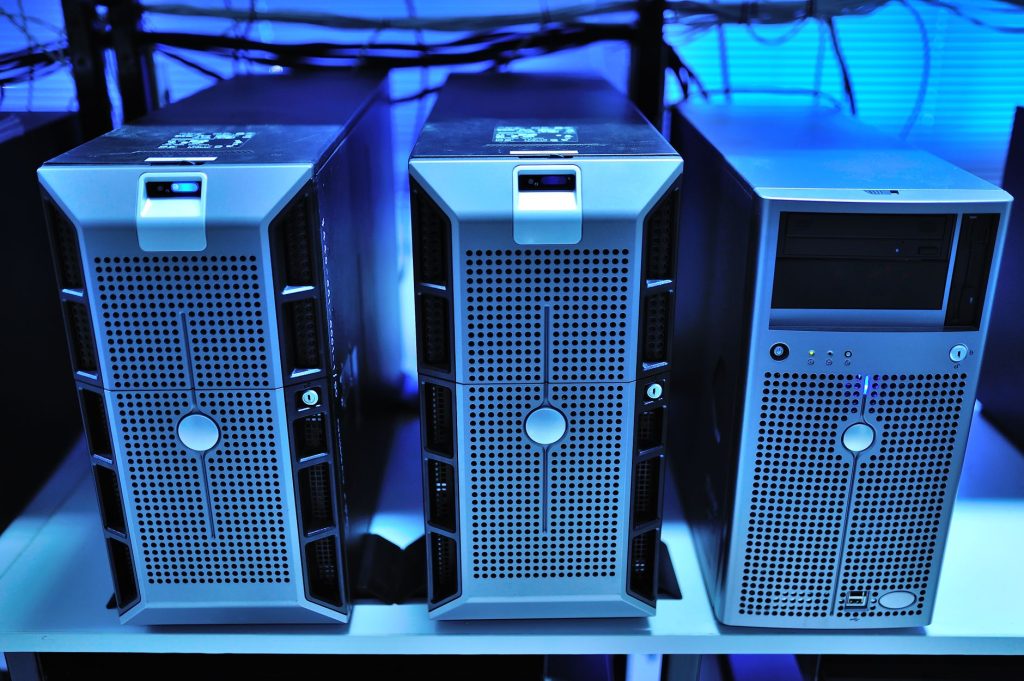
Source: ETTelecom, August 12, 2026. Original Article.
Taiwanese ODM giant Compal Electronics has inaugurated its dedicated Daxi AI Server Manufacturing Center in Taoyuan, Taiwan, a strategic investment aimed at substantially scaling its production capacity for high-performance AI computing infrastructure. The move, announced on August 12, 2026, directly addresses the surging, unrelenting demand from global hyperscale cloud providers and large enterprises building out AI-ready data centers. For telecom operators and network infrastructure providers, this expansion represents a critical node in the strained global supply chain for the GPU-powered servers that will underpin next-generation AI services, network automation, and edge computing deployments.
Technical and Strategic Rationale Behind the Daxi Center
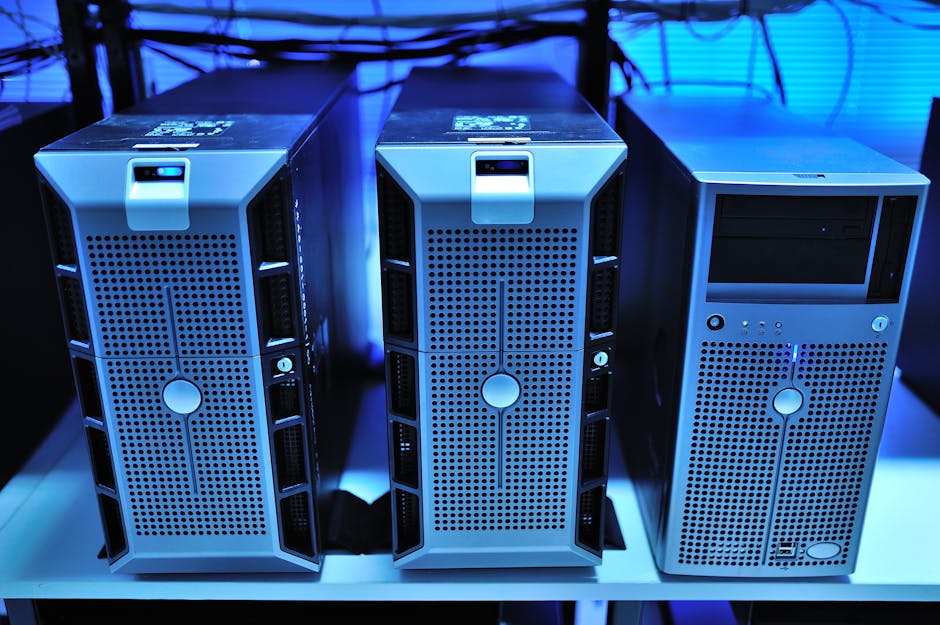
The Daxi facility is not merely an expansion of existing production lines; it is a purpose-built center optimized for the complexities of AI server assembly. These systems, based on platforms from NVIDIA (such as HGX), AMD (Instinct), and increasingly custom ASICs, involve intricate integration of high-power GPUs, advanced liquid cooling systems, high-speed interconnects like NVLink and InfiniBand, and specialized power delivery units (PDUs). Compal’s investment signifies a shift from general-purpose server manufacturing to a high-mix, high-complexity production model required for AI hardware.
While Compal has not released the exact square footage or total line count for Daxi, the company has stated the center will “significantly enhance” its AI server production capacity. This follows a series of capacity expansions across its global manufacturing footprint, including facilities in Mexico and Europe, aimed at providing geographic diversification and resilience for its clients—primarily the hyperscaler ‘Magnificent Seven’ (Amazon AWS, Microsoft Azure, Google Cloud, Meta, etc.). The Daxi center’s location in Taiwan’s major electronics manufacturing cluster provides proximity to key component suppliers, including TSMC for advanced packaging, and allows for tight collaboration with chip designers on validation and integration.
The manufacturing process for these AI servers demands stringent quality control, specialized thermal management testing, and firmware validation that generic server lines cannot efficiently handle. By dedicating a facility to this product segment, Compal aims to improve yield rates, accelerate time-to-market for new server generations, and offer greater customization for hyperscale clients who are increasingly designing their own server architectures (e.g., Google’s TPU pods, Azure’s Maia servers).
Impact on Telecom and Cloud Infrastructure Supply Chains

For telecom operators (telcos) and infrastructure players, the availability and cost of AI servers are becoming existential concerns. The rollout of AI-native 6G networks, the deployment of AI-powered network operations centers (AIOps), and the launch of telco AI-as-a-Service offerings all depend on access to this specialized hardware. Compal, as a leading ODM behind brands like Dell, HPE, and Lenovo, as well as a direct manufacturer for hyperscalers, is a bellwether for industry capacity.
The Daxi center’s ramp-up is a positive signal for the market, indicating that the supply chain is responding to multi-year order backlogs. However, it also highlights the continued concentration of advanced manufacturing in East Asia, despite geopolitical pressures for diversification. Telcos procuring for their own data centers or cloud divisions will benefit from increased overall market capacity, potentially easing lead times from 40-50 weeks down to more manageable levels. This could accelerate telco projects like:
- AI Training Clusters for Network Optimization: Building in-house capacity to train large language models (LLMs) on proprietary network data for predictive maintenance and customer service automation.
- Edge AI Inference Nodes: Deploying compact, ruggedized AI servers at cell tower aggregation points or central offices to enable low-latency services like autonomous vehicle coordination or real-time video analytics.
- Core Network Modernization: Upgrading network core data centers with AI-optimized servers to handle the signaling and data processing loads of 5G-Advanced and 6G.
Nevertheless, the primary beneficiaries remain the hyperscale cloud providers, who consume the vast majority of global AI server output. Telcos competing with or partnering with these clouds (e.g., via strategic alliances like AT&T with Microsoft or Verizon with Google) will see their partners’ infrastructure capabilities strengthened, which can be leveraged through network APIs and co-developed services.
Regional Implications: Asia’s Manufacturing Dominance and Global Diversification
The launch of the Daxi center reinforces Taiwan’s pivotal role in the global high-tech hardware ecosystem, particularly for the most advanced computing systems. This has significant implications for global telecom infrastructure strategy:
1. Asia-Pacific (APAC) Network Build-Out: For telecom operators in APAC markets like Japan, South Korea, Australia, and Southeast Asia, proximity to this manufacturing hub can theoretically shorten logistics chains for data center hardware. However, regional demand often outpaces local supply, meaning operators still face allocation battles. The expansion may support regional cloud players like Alibaba Cloud, Tencent Cloud, and Naver, who are also major consumers of AI servers and are driving digital transformation across Asian enterprises.
2. Geopolitical and Supply Chain Resilience: The concentration of advanced AI server manufacturing in Taiwan presents a continued single-point-of-failure risk recognized by global operators. This is driving parallel investments by Compal and its peers (Foxconn/Ingrasys, Quanta Computer, Wistron) in manufacturing capacity outside Asia, particularly in North America and Europe. For telecom operators in Africa and the Middle East (MENA), procurement strategies must account for these geopolitical tensions, potentially favoring suppliers with diversified manufacturing footprints to ensure continuity of supply for critical network upgrades.
3. Africa and MENA Telecom Considerations: While direct procurement of cutting-edge AI servers by African telcos is currently limited to the largest pan-African groups (e.g., MTN, Vodacom/Safaricom), the trickle-down effect is significant. As global hyperscalers expand their cloud regions in South Africa (AWS, Microsoft Azure) and the Middle East, the underlying infrastructure relies on this ODM capacity. Furthermore, increased global production helps stabilize the secondary market for previous-generation servers, which are often deployed in emerging market data centers. The Daxi center’s output, over time, will increase the availability of high-performance computing infrastructure that can be leveraged via cloud partnerships, reducing the need for massive capital expenditure by individual operators.
Forward-Looking Analysis: The Telecom Infrastructure Horizon

Compal’s Daxi investment is a single data point in a larger trend: the complete re-architecting of data center infrastructure around AI workloads. For the telecom sector, this has several key implications:
Power and Cooling as Critical Constraints: AI servers consume 5-10x the power of traditional servers. The ramp-up in their production, as evidenced by Daxi, forces telecom operators to urgently address data center power capacity, PUE (Power Usage Effectiveness), and advanced cooling (liquid immersion, direct-to-chip) in their own facilities. Network strategy is now inextricably linked to energy strategy.
The Rise of the “AI-Native” Network: As this hardware becomes more available and standardized, telecom software vendors (e.g., Mavenir, Nokia, Ericsson) will increasingly design their virtualized network functions (VNFs) and cloud-native network functions (CNFs) to leverage GPU acceleration for tasks like radio resource management, security threat detection, and real-time transcoding. Procurement will need to shift from generic x86 servers to heterogeneous compute platforms.
Strategic Partnerships Over Pure Procurement: The complexity and cost of AI infrastructure will push more telcos toward deeper partnerships with hyperscalers and specialist AI infrastructure firms, opting for a “as-a-Service” consumption model rather than outright ownership. This makes the operational and business support system (OSS/BSS) integration between telco networks and cloud AI platforms a top-tier competency.
In conclusion, Compal Electronics’ new Daxi AI Server Manufacturing Center is a necessary and strategic response to a fundamental shift in global computing demand. While its immediate impact is felt most acutely in the hyperscaler community, the long-term ramifications for telecom network architecture, energy management, and competitive service offerings are profound. Operators must now view AI server supply chains with the same strategic importance as spectrum or fiber, as they become the foundational hardware for the intelligent networks of the next decade.