By TelecomObserver Staff | June 29, 2026
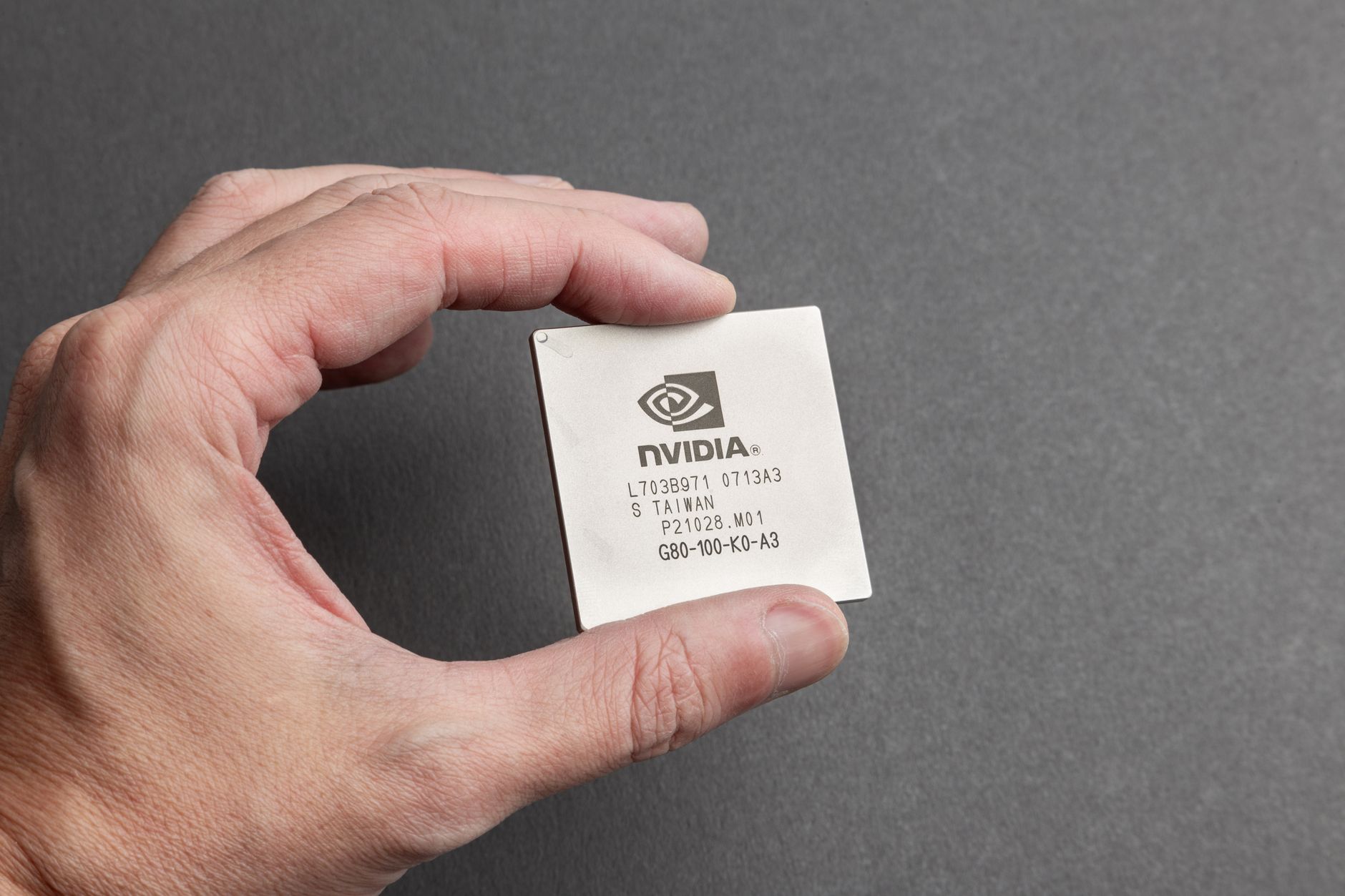
Nvidia’s dominance in supplying AI accelerator chips to China’s telecommunications and cloud infrastructure sector is eroding rapidly, with its market share collapsing as domestic champion Huawei surges ahead, according to a report from ETTelecom. Industry analysts and supply chain data indicate that Huawei’s Ascend AI processors now command over half of the Chinese market for AI chips used in data centers and network functions, a direct reversal from Nvidia’s previous near-monopoly. This seismic shift, driven by stringent U.S. export controls and a concerted national push for technological self-reliance, is fundamentally altering the competitive landscape for AI-powered network infrastructure, from cloud RAN and core networks to edge computing platforms.
For global telecom operators and infrastructure vendors, the implications are profound. The decoupling of China’s massive AI compute ecosystem from Western silicon suppliers like Nvidia and AMD is creating a parallel technology stack. Huawei, alongside other domestic players like Cambricon and Biren Technology, is now setting the architectural and software standards for next-generation AI workloads within Chinese networks. This bifurcation affects global equipment interoperability, software development kits, and the strategic roadmap for AI-infused network elements like intelligent controllers, AIOps platforms, and customer experience management systems.
Technical and Market Dynamics: Huawei’s Ascend Stack vs. Nvidia’s Crippled Offerings
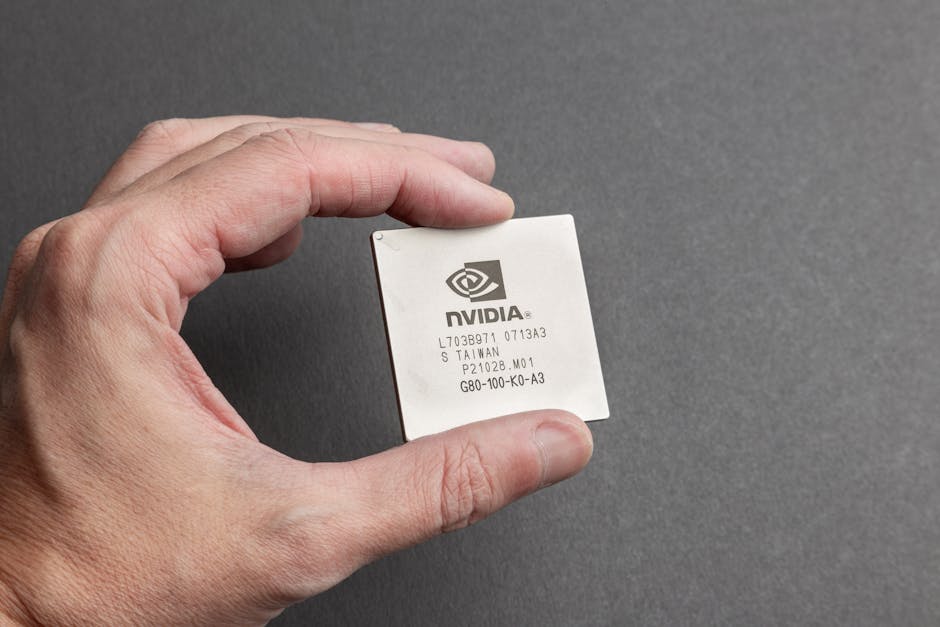
The core of Nvidia’s decline is the U.S. government’s successive rounds of export restrictions, which have systematically capped the performance metrics of chips Nvidia can legally sell in China. Initially, Nvidia responded with purpose-built, compliant variants like the A800 and H800, designed to skirt earlier rules by offering reduced interconnect bandwidth. However, subsequent regulations in 2024 and 2025 closed these loopholes, imposing strict limits on both chip-to-chip transfer rates and overall compute performance.
Huawei, meanwhile, has aggressively scaled its Ascend AI processor series, built on its own Da Vinci architecture. The Ascend 910B is widely recognized as the flagship, offering performance that is now competitive with Nvidia’s restricted A800 and reportedly approaching that of previous-generation unrestricted GPUs in certain inference tasks. Crucially, Huawei offers a full-stack solution: the Ascend processors are paired with its proprietary CANN (Compute Architecture for Neural Networks) software stack and the MindSpore AI framework. This vertically integrated “Ascend ecosystem” provides a viable, sanctioned alternative for Chinese telecom operators, cloud service providers (CSPs) like Alibaba Cloud and Tencent Cloud, and system integrators.
Market data cited in the report shows Huawei’s share of China’s AI chip market soaring past 50%, with Nvidia’s share plummeting from over 80% just a few years ago to an estimated 10-20% in 2026. This isn’t merely a substitution; it’s a market expansion fueled by China’s “AI+” national strategy, which mandates the integration of AI across all industrial sectors, with telecommunications being a primary vector. The demand for AI inference and training capacity within carrier data centers, for network traffic optimization, fraud detection, and personalized service offerings, is exploding. Huawei is capturing virtually all of this new, sovereign demand.
Impact on Telecom Operators and Network Infrastructure Strategy

For telecom operators globally, but especially for those in China and regions with strong Chinese vendor relationships, this shift necessitates a strategic reassessment of AI hardware procurement and platform development.
- Vendor Lock-in and Ecosystem Dependency: Operators committing to Huawei’s Ascend platform are buying into its entire software ecosystem. This creates a deep technical lock-in, affecting everything from AI model development tools (MindSpore vs. PyTorch/TensorFlow) to deployment and management software. For Chinese operators like China Mobile, China Telecom, and China Unicom, this is a mandated strategic direction. For international operators using Huawei equipment, it may influence the design of their own AI and analytics capabilities.
- Supply Chain and Deployment Timelines: Nvidia’s restricted supply introduces uncertainty and potential delays for operators outside China who may still prefer its hardware but face allocation challenges due to global demand. Conversely, Huawei can prioritize its domestic and strategic partners, potentially offering more predictable delivery for Chinese carriers.
- Network AI Use Cases: The performance profile of Ascend chips may favor certain workloads. Telecom AI applications heavily reliant on inference—such as real-time network anomaly detection, predictive maintenance, and customer service chatbots—may run efficiently on the Ascend platform. However, the largest-scale generative AI model training for network digital twins or advanced customer analytics might still face limitations compared to Nvidia’s global flagship products, pushing Chinese CSPs to innovate in distributed and federated training techniques.
- Infrastructure Vendor Strategy: Global vendors like Ericsson and Nokia, which integrate AI accelerators into their cloud-native RAN and core network software, must now evaluate dual-path strategies. While they likely continue to optimize for Nvidia GPUs globally, offering compatibility or optimized versions for Huawei Ascend could be a competitive necessity for bids within China and in markets where Huawei’s influence is strong.
Global and Regional Implications: A Bifurcated Telecom AI Landscape
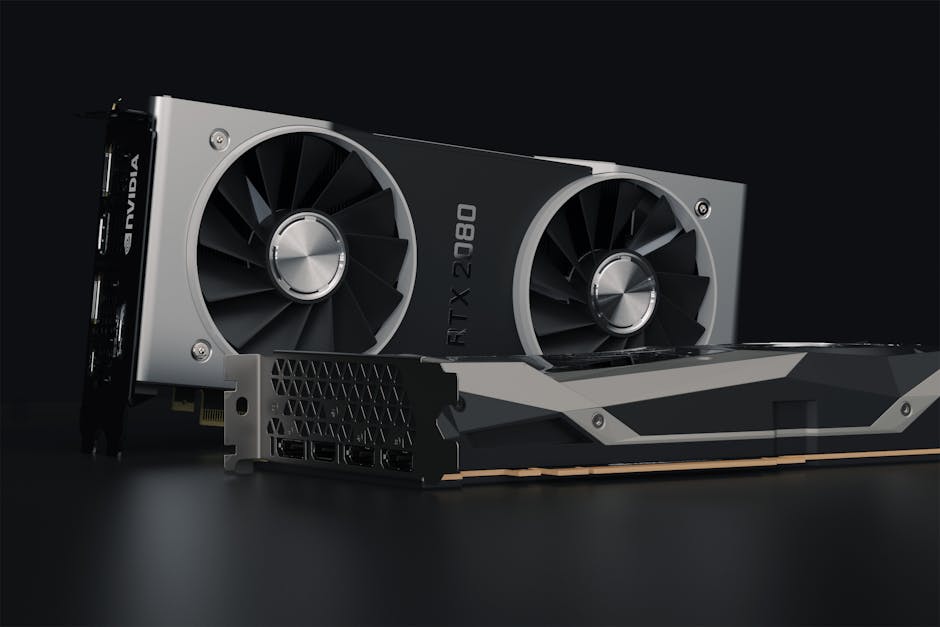
The Nvidia-Huawei divergence is not an isolated chip battle; it is crystallizing a broader technological bifurcation with distinct implications for different global regions.
China & Domestic Market: The Chinese telecom AI infrastructure market is becoming a closed loop. State-directed policy, including “xinchuang” (IT innovation) mandates, requires government agencies and state-owned enterprises—including telecom carriers—to procure secure, controllable domestic technology. Huawei’s ascendancy is a direct result. This market is now largely inaccessible to Nvidia, AMD, and other Western accelerators, creating a protected environment where Huawei, Cambricon, and others can iterate and scale without direct foreign competition.
Global South & Emerging Markets: In regions like Africa, Southeast Asia, and parts of Latin America, where Huawei is a dominant provider of network equipment (RAN, transport, core), the Ascend AI ecosystem presents a compelling bundled offering. Operators in these markets, often under cost pressure, may adopt Huawei’s AI software and hardware solutions for network management and service enablement as a natural extension of their existing infrastructure. This could extend Huawei’s influence from the physical network layer into the higher-value AI and software intelligence layer, creating a long-term architectural dependency.
Western Markets & Allied Nations: In the US, Europe, and allied countries (e.g., Japan, Australia), the trend is opposite. Restrictions on Huawei networking equipment already in place are now extending to high-performance AI chips. Operators in these regions will double down on Nvidia, AMD, and emerging Western alternatives (e.g., Groq, Cerebras) and cloud AI services from AWS, Google, and Microsoft. However, they face the challenge of higher costs and potential supply constraints as global demand for AI silicon outstrips supply.
Forward-Looking Analysis: The New Rules of Telecom AI Procurement

The telecom industry’s journey into AI is now navigating a geopolitical fault line. For Chief Technology Officers and network strategists, the implications are clear:
- Sovereignty is Paramount: National security and regulatory compliance will increasingly dictate AI hardware choices, overriding pure performance or cost considerations. Procurement decisions will be made at the geopolitical level, not just the technical evaluation.
- Software Abstraction Gains Critical Importance: To maintain flexibility, operators and vendors must invest in software abstraction layers and open frameworks that can target multiple AI hardware backends (e.g., ONNX Runtime, OpenVINO). This mitigates the risk of being locked into a single silicon vendor’s ecosystem.
- The Rise of “AI National Champions”: Huawei’s success in China will likely spur similar government-backed initiatives in other regions. The EU may push for greater development of European AI silicon, while India’s telecom stack (TSDSI) could integrate with domestic processor efforts. The era of a single global AI hardware standard is over.
- Impact on Open RAN and Disaggregation: The Open RAN movement, which promotes multi-vendor interoperability, now faces a new challenge: how to abstract the AI/ML workloads in the RAN Intelligent Controller (RIC) and other elements across different, potentially incompatible AI silicon platforms. This adds another layer of complexity to truly open networks.
In conclusion, Nvidia’s declining sales in China are not merely a financial setback for one company; they are a leading indicator of a fragmented global technology landscape. Huawei’s dominance in the Chinese AI chip market solidifies its position as a full-stack telecom and IT titan, capable of offering an end-to-end solution from photons to AI algorithms. For the global telecom industry, this means navigating two increasingly separate technology paths, where choices about AI infrastructure will have long-lasting consequences for innovation, interoperability, and strategic autonomy.
About the Author