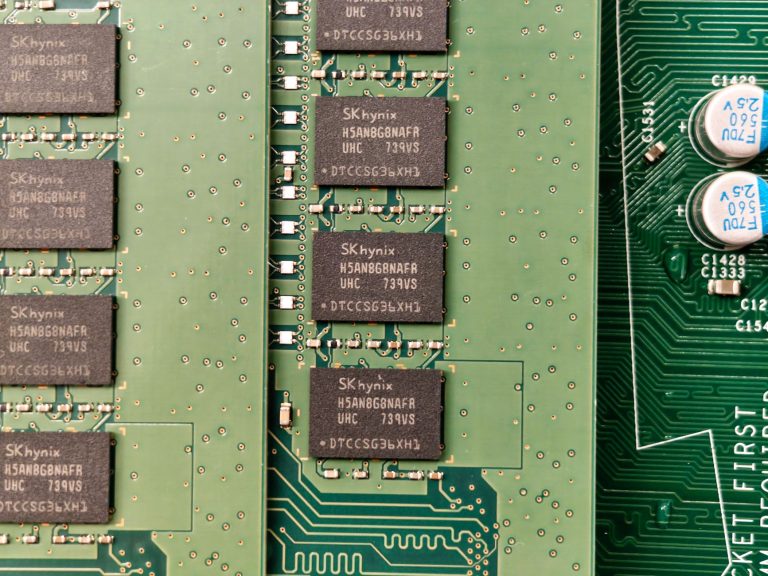
Source: ETTelecom, July 9, 2026. U.S.-based AI chip startup Cerebras Systems is aggressively expanding its infrastructure footprint in Europe, establishing new data centers to meet soaring regional demand for AI compute capacity. This strategic move directly challenges Nvidia’s dominance and signals a profound shift in the hardware requirements and architectural demands placed on European telecom and colocation data center operators. For network infrastructure providers, this represents a new wave of high-density, high-power, and high-bandwidth tenant demand that will strain existing facilities and drive investment in next-generation builds.
The Cerebras Technical Proposition and Its Infrastructure Demands

Cerebras is not merely selling chips; it is selling complete AI supercomputing systems, notably its CS-3 series powered by the Wafer Scale Engine 3 (WSE-3). This architectural approach has significant implications for data center design. Unlike traditional clusters of thousands of smaller GPUs, a single Cerebras system integrates 900,000 AI-optimized cores onto a single silicon wafer roughly the size of a dinner plate (46,225 square millimeters). This radically reduces the need for complex interconnects like NVLink or InfiniBand within the system, but it creates a new set of infrastructure challenges.
Each CS-3 system consumes an estimated 20+ kilowatts of power. A typical deployment for large-scale model training or inference would involve multiple such systems, pushing power densities far beyond the 10-15 kW per rack common in today’s telecom and enterprise data halls. Furthermore, these systems generate immense heat that cannot be dissipated by standard air-cooling methods. Cerebras’s expansion into Europe will necessitate partnerships with data center operators capable of providing direct liquid cooling (DLC) or immersion cooling solutions at scale. This immediately segments the market, favoring operators like Equinix, Digital Realty, and regional specialists in the Nordics and Germany who have invested in advanced cooling architectures. The compute density also places extreme demands on rack structural integrity and power distribution units (PDUs), requiring upgrades from standard 208V/3-phase to higher-voltage feeds.
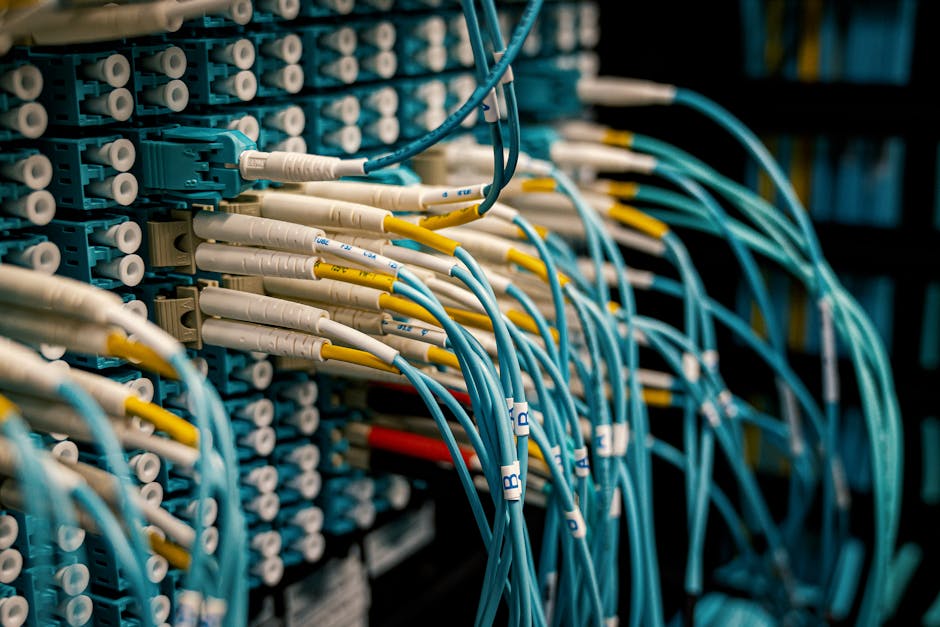
From a network perspective, while internal node communication is simplified, the data ingress/egress requirements are colossal. Training frontier AI models requires petabytes of data to be streamed into the systems. This mandates not just high-bandwidth connections (multiple 100G or 400G ports per system) but also low-latency, high-throughput connectivity to cloud storage, research institutions, and enterprise data lakes. For telecom operators providing data center interconnect (DCI) and cloud on-ramp services, this creates a premium tier of demand. It will accelerate the deployment of 800G coherent optics within data centers and on metro routes connecting AI hubs in cities like Paris, London, Frankfurt, and Zurich.
Impact on Telecom Operators and Infrastructure Providers

The entry of a major alternative AI hardware player like Cerebras into Europe disrupts the supply chain and procurement strategies for telecom operators (telcos) building out their own AI and cloud capabilities. European telcos such as Deutsche Telekom, Orange, Telefónica, and BT are actively developing AI platforms for enterprise customers, network automation, and internal efficiencies. Previously, their path was largely constrained to Nvidia’s DGX systems or cloud partnerships. Cerebras offers a differentiated, potentially more efficient path for specific workloads like large language model (LLM) training, providing telcos with negotiating leverage and architectural choice.
More significantly, this expansion intensifies the competition for premium data center space. AI hardware is not just another server deployment; it is a critical infrastructure asset with unique specifications. Telcos with large existing data center portfolios—like Telecom Italia’s Sparkle, Colt Data Centre Services, or Telehouse—must now evaluate their ability to retrofit facilities for liquid cooling and ultra-high power density or risk losing high-value tenants to competitors. This will force significant capital expenditure decisions. Conversely, it presents a revenue opportunity: telcos can offer “AI-ready” colocation packages bundled with high-bandwidth, low-latency network services, creating a sticky, high-margin product.
The competitive landscape for AI-as-a-Service (AIaaS) in Europe will also evolve. Telecom operators offering AI services will now have the option to build their underlying platforms on Cerebras hardware, potentially offering cost or performance advantages over generic GPU cloud instances from AWS, Google, or Microsoft. This could enable telcos to differentiate their enterprise AI offerings, particularly in regions with strict data sovereignty requirements (e.g., Gaïa-X in the EU), where on-premise or telco-hosted Cerebras systems could be an attractive solution.
Furthermore, the power demand will bring telecom operators into closer, more complex relationships with national power grids and renewable energy providers. Meeting the sustainability goals of both the EU and large corporate tenants will require operators to secure substantial volumes of guaranteed green energy, influencing site selection toward regions with abundant hydro, wind, or nuclear power, such as Sweden, Norway, or France.
Strategic Implications for Global and Regional Telecom Dynamics
Cerebras’s European push is part of a broader global recalibration of AI infrastructure geography, driven by geopolitical, regulatory, and economic factors. Europe’s push for “strategic autonomy” in technology, embodied by the EU Chips Act and the European AI Act, creates a receptive environment for a U.S. alternative to Nvidia. It reduces the region’s dependency on a single supply chain. For telecom operators, this aligns with a wider trend of diversifying critical infrastructure vendors, as seen in the Open RAN movement for radio networks.
This development has indirect but important implications for other regions, including Africa and the Middle East. As global AI compute capacity becomes slightly less concentrated in U.S. hyperscale zones, it could create opportunities for secondary hubs. Middle Eastern operators like stc, e&, and Ooredoo, with sovereign wealth fund backing and ambitions to become digital hubs (e.g., Saudi Arabia’s Vision 2030, UAE’s digital economy strategy), may see partnerships with firms like Cerebras as a fast track to establishing AI competency. The infrastructure requirements—high power, advanced cooling, and robust connectivity—mirror the investments these operators are already making in next-generation data centers in Riyadh, Dubai, and Doha.
In Africa, while immediate large-scale Cerebras deployments are less likely due to power and connectivity constraints, the competitive pressure on Nvidia could eventually trickle down to more accessible pricing and partnerships for AI inference at the edge. African telecom operators like MTN, Safaricom, and Vodacom exploring AI for network optimization, fraud detection, and customer service could benefit from a more varied and competitive supplier ecosystem in the medium term. It also underscores the urgency for African carriers to invest in core data center infrastructure that can eventually support such high-performance compute, lest they remain perpetual consumers of AI services hosted abroad.
Forward-Looking Analysis for the Telecom Sector

The Cerebras expansion is a bellwether for the telecom infrastructure sector. It confirms that AI is not a transient cloud workload but a foundational driver of demand that will reshape data center physics, economics, and geography over the next decade. Telecom operators must now audit their data center assets with an “AI-readiness” scorecard, evaluating power capacity, cooling technology, fiber density, and physical rack strength.
We anticipate several key developments: First, a surge in investment in brownfield retrofits and greenfield builds specifically designed for liquid-cooled AI systems across Europe. Second, increased strategic partnerships between telcos and AI silicon companies, potentially leading to co-branded AIaaS offerings. Third, accelerated deployment of ultra-high-bandwidth DCI networks (moving from 100G/200G to 400G/800G as standard) to connect these new AI compute islands to storage and user networks.
Finally, this will intensify the convergence between the telecom and hyperscale data center worlds. Operators who can master the trifecta of real estate, high-power infrastructure, and low-latency networking will capture a disproportionate share of the high-growth AI infrastructure market. Those who cannot risk being relegated to providing mere bandwidth pipes to the new centers of computational value. The race to build the physical foundation for Europe’s AI future is now underway, and telecom operators are key contestants.
About the Author