
TSMC’s $100B US Bet Signals AI-Driven Chip Demand Surge, Telecom Infrastructure Impact
📰Original Source: ETTelecomSource: ETTelecom – Taiwan Semiconductor Manufacturing Company (TSMC) announced on July 16, 2026, a monumental $100 billion investment to expand its advanced semiconductor fabrication operations in Arizona. This strategic move comes as the foundry giant reported a record-breaking second-quarter net profit of $29.2…
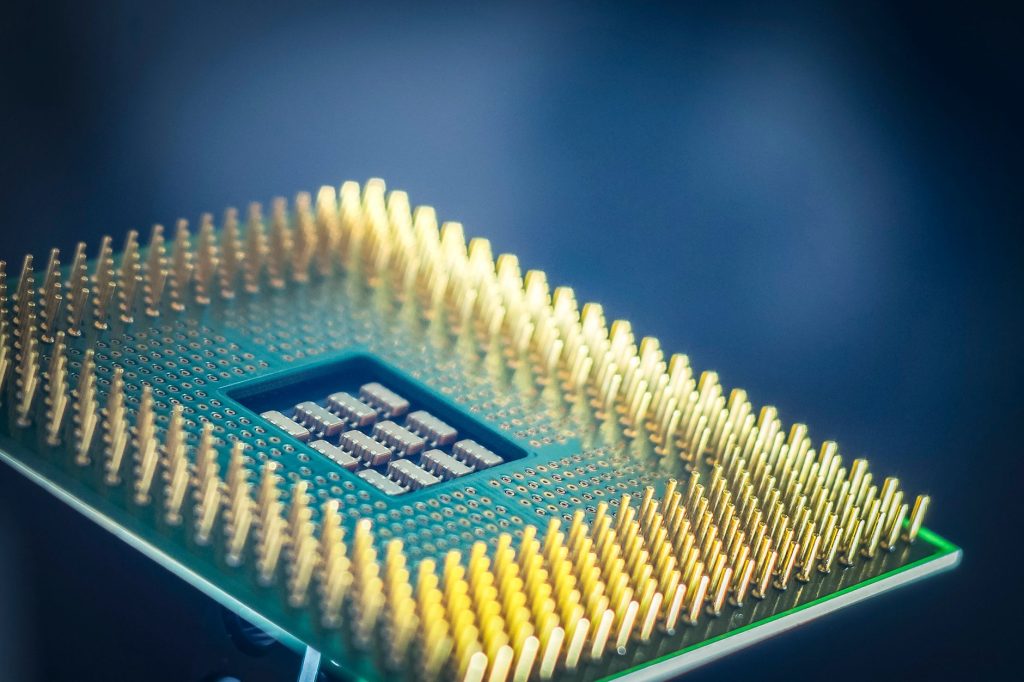
Source: ETTelecom – Taiwan Semiconductor Manufacturing Company (TSMC) announced on July 16, 2026, a monumental $100 billion investment to expand its advanced semiconductor fabrication operations in Arizona. This strategic move comes as the foundry giant reported a record-breaking second-quarter net profit of $29.2 billion, a 77% year-on-year surge, driven overwhelmingly by “insatiable” demand for AI chips. The company simultaneously raised its full-year capital expenditure forecast to a range of $48-52 billion.
For the global telecom industry, TSMC’s capital deployment is a critical leading indicator. The advanced chips produced in these new Arizona fabs, including 2-nanometer (2nm) and more mature 28nm nodes, will form the computational backbone of next-generation network infrastructure. This investment directly addresses the soaring demand for silicon powering AI-optimized data centers, 5G-Advanced and 6G base stations, edge computing appliances, and high-performance optical transport gear. The geographic diversification of leading-edge chip production also has profound implications for supply chain security for telecom operators and equipment vendors worldwide.
Technical and Market Deep Dive: AI Demand Reshaping Semiconductor Priorities

TSMC’s financial results and capital plans underscore a fundamental shift in the semiconductor market, with AI accelerators now commanding priority. Q2 2026 revenue attributable to High-Performance Computing (HPC), which includes AI and data center chips, soared to represent an estimated 60% of the company’s total sales. This marks a decisive pivot from the smartphone-driven cycles of the past decade. The $100 billion Arizona expansion is not a single project but a multi-phase, multi-fab commitment. It builds upon TSMC’s existing $40 billion investment in the state, which includes Fab 21 (producing 4nm) and the under-construction Fab 22 (targeting 3nm and 2nm processes). The new capital will fund additional fabs, likely focused on the bleeding-edge 2nm (N2) node and its successors, as well as specialized packaging technologies like Chip-on-Wafer-on-Substrate (CoWoS) essential for AI processor integration.
From a telecom technical perspective, the process nodes in focus are critical. While 2nm will fuel the next wave of cloud AI training clusters, the continued investment in 28nm and 40nm capacity is equally vital. These mature nodes are the workhorses for a vast array of telecom-specific silicon: power management ICs, RF transceivers for base stations, optical module controllers, and a multitude of IoT and network interface chips. TSMC’s raised CapEx guidance to $48-52 billion for 2026, up from prior estimates, signals that the demand surge is broad-based, impacting both leading-edge and legacy manufacturing lines essential for complete network system builds.
Industry Impact: Supply Chain Security and Network Equipment Roadmaps

For telecom operators (MNOs) and infrastructure vendors like Ericsson, Nokia, Huawei, Cisco, and Ciena, TSMC’s U.S. expansion mitigates a key strategic risk. Over 90% of the world’s most advanced chips are currently manufactured in Taiwan, creating a single point of failure for global telecom infrastructure development. The Arizona fabs will provide a geographically diversified, U.S.-based source for critical components, aligning with government incentives like the CHIPS Act and addressing national security concerns for Western operators and governments. This is particularly crucial for the build-out of secure, government, and military networks.
The investment timeline directly influences telecom equipment roadmaps. Volume production from the new Arizona 2nm fabs is expected in the 2028-2030 timeframe, coinciding with the early commercialization phase of 6G research and the densification phase of 5G-Advanced networks. Telecom equipment manufacturers (TEMs) designing next-generation Radio Access Network (RAN) and core network hardware are now assured of a pipeline for the ultra-low-power, high-performance processors needed for AI-native networks. Furthermore, the scaling of CoWoS packaging capacity will alleviate a major bottleneck for AI accelerator supply, enabling faster deployment of AI-powered network optimization and management functions within operator clouds.
Global and Regional Implications: Reshaping Telecom Manufacturing Hubs

TSMC’s decision accelerates the trend of “friendshoring” and regionalization in the high-tech supply chain. For the Americas region, the Arizona cluster will attract a constellation of supplier ecosystems, including specialty chemical plants, advanced tooling vendors, and packaging/testing facilities. This creates a potential new hub for telecom hardware manufacturing and R&D on the North American continent, reducing logistical lead times for operators in the region.
For the African and MENA telecom markets, the implications are twofold. First, increased global fab capacity should, over the medium term, ease the supply constraints that have plagued network rollouts, potentially lowering costs and shortening lead times for 5G and fiber equipment. Second, it reinforces the strategic importance of partnerships with Western vendors who will have preferential access to U.S.-made chips, especially for projects involving digital infrastructure deemed critical. Conversely, it may introduce new layers of export control complexity for vendors reliant on alternative supply chains. Regions actively building sovereign cloud and AI capabilities, such as Saudi Arabia, the UAE, and several African nations, will watch this development closely, as it affects the availability and geopolitical alignment of the core hardware for their national digital transformation agendas.
Forward-Looking Analysis: The Silicon Foundation for AI-Native Networks

TSMC’s $100 billion bet is a definitive signal that the telecom industry’s future is inextricably linked with AI, built upon a foundation of advanced silicon. The capital influx will catalyze innovation cycles, enabling the transition from networks that merely connect to networks that compute, predict, and autonomously optimize. For telecom executives and network planners, this underscores the necessity of forging deeper strategic partnerships with silicon and cloud providers. Infrastructure investment decisions must now account for the computational density and energy efficiency of new hardware, which will be dictated by the availability of these advanced chips.
The coming years will see a tighter coupling between semiconductor process technology roadmaps and telecom standards development for 6G. Concepts like native AI air interfaces, real-time network digital twins, and pervasive sensing will be feasible only with the chipscale performance that TSMC’s investments aim to deliver. While geopolitical and regulatory challenges remain, the scale of this commitment provides a measure of certainty: the silicon required to power the next decade of telecom innovation is now being built, and a significant portion will be built in the United States, reshaping global technology supply chains in the process.