Aimtron Secures $3.4M Pilot Box-Build Deal for Fiber Test Systems, Signaling Semiconductor-Infrastructure Nexus
📰Original Source: ETTelecomAimtron Electronics Secures $3.4M Pilot Deal in Semiconductor Manufacturing, Signaling Shift in Fiber Test Supply ChainPhoto by David Brown Source: ETTelecom, July 16, 2026. Indian electronics manufacturing services (EMS) provider Aimtron Electronics has secured a strategic pilot box-build manufacturing order valued between $2.6…
Aimtron Electronics Secures $3.4M Pilot Deal in Semiconductor Manufacturing, Signaling Shift in Fiber Test Supply Chain

Source: ETTelecom, July 16, 2026. Indian electronics manufacturing services (EMS) provider Aimtron Electronics has secured a strategic pilot box-build manufacturing order valued between $2.6 million and $3.4 million from a major, undisclosed global semiconductor company. The deal, announced on July 16, 2026, is for the assembly of advanced fiber network test and certification systems, highlighting a critical convergence point between semiconductor supply chains and the tools required to build next-generation telecom infrastructure. For network operators and infrastructure builders, this signals a deepening of semiconductor expertise within the test & measurement (T&M) equipment ecosystem, crucial for validating high-speed fiber and 5G transport networks. The pilot phase, expected to run for 3-6 months, could lead to larger, sustained production volumes, offering a potential new, resilient manufacturing source for critical network validation hardware.
Technical Deep Dive: The Box-Build for Fiber Test & Certification

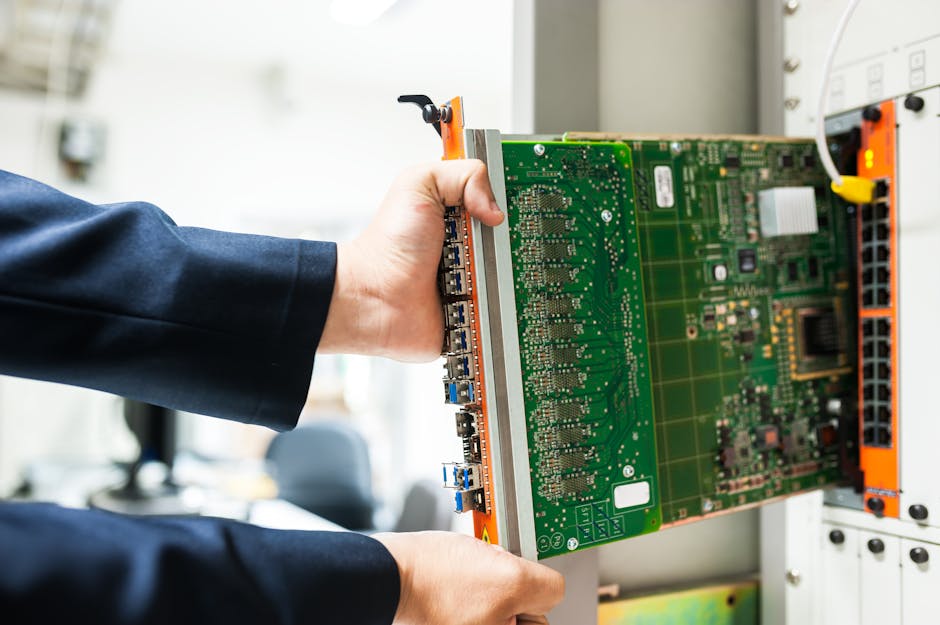
The core of Aimtron’s win is a “box-build” contract for fiber optic test systems. In electronics manufacturing, box-build (or systems integration) involves the complete assembly of a functional electronic system, integrating printed circuit board assemblies (PCBAs), wiring harnesses, enclosures, software, and power supplies into a final, tested product ready for deployment. This is a step beyond simple PCB assembly, requiring systems integration expertise and validation of the final product’s performance against stringent telecom-grade specifications.
The systems in question are for fiber network test and certification. This category includes sophisticated instruments like Optical Time Domain Reflectometers (OTDRs), optical loss test sets (OLTS), and fiber inspection probes. These tools are essential for Tier-1 operators, hyperscale data center interconnect (DCI) providers, and submarine cable installation & maintenance teams. They validate fiber integrity, splice loss, connector cleanliness, and overall optical link performance, which is foundational for supporting 400G, 800G, and emerging 1.6T coherent wavelengths. The involvement of a “global semiconductor company” as the design owner suggests these systems may incorporate proprietary Application-Specific Integrated Circuits (ASICs) or advanced photonic integrated circuits (PICs) for high-speed signal processing, optical modulation analysis, or precision laser control.
Aimtron’s qualification for this work points to its capabilities in handling complex, low-to-medium volume, high-mix manufacturing. The company has stated its intent to move “up the value chain” from basic component distribution and PCB assembly. This deal validates that strategy in the telecom infrastructure domain, positioning Aimtron as a potential alternative or secondary source to established T&M OEMs’ captive manufacturing facilities, which are often concentrated in North America, Europe, and China.
Industry Impact: Reshaping the Test & Measurement Equipment Supply Chain

This pilot deal has significant implications for telecom operators, network equipment manufacturers (NEMs), and the T&M industry structure.
For Telecom Operators and Infrastructure Builders: A more diversified and potentially cost-competitive supply base for critical field test equipment can lead to improved availability and shorter lead times. As global fiber and 5G SA network rollouts accelerate—particularly in emerging markets in Africa, Southeast Asia, and the Middle East—the demand for reliable, advanced test gear is surging. A new manufacturing source in India could offer geographic and supply chain diversification, reducing dependency on traditional hubs. This is critical for maintaining aggressive network deployment schedules and ensuring quality assurance standards are met globally.
For the Test & Measurement Industry: Established players like Viavi, EXFO, Keysight, and VIAVI (via its acquisition of EXFO’s service assurance business) typically control their own design and manufacturing. This deal suggests a potential shift towards an outsourcing or “fab-lite” model for certain product lines, where semiconductor/IP companies focus on core chip design and system architecture, while EMS partners like Aimtron handle final integration. This could allow T&M companies to scale production more flexibly and reduce capital expenditure on manufacturing lines, focusing R&D investment on core optical and RF technologies.
Supply Chain Resilience: The post-pandemic and geopolitical landscape has forced telecom infrastructure providers to scrutinize and diversify their supply chains. Having a qualified EMS provider in India for high-value T&M equipment adds a strategic node in the “China Plus One” procurement strategy adopted by many global firms. Aimtron’s success could pave the way for more Indian EMS companies to enter the telecom infrastructure equipment space, competing with established Taiwanese and Chinese manufacturers.
Strategic Implications for India and Global Telecom Manufacturing
The Aimtron deal is a microcosm of larger trends reshaping global telecom hardware manufacturing, with India playing an increasingly pivotal role.
India’s Manufacturing Ambitions: This contract aligns perfectly with India’s Production Linked Incentive (PLI) schemes for telecom and networking products, which aim to make the country a global hub for manufacturing. While much focus has been on smartphones and 5G radio units, this deal demonstrates capability in the high-value, low-volume niche of test equipment. It showcases the depth of India’s electronics ecosystem, capable of moving beyond high-volume consumer electronics to sophisticated industrial and telecom gear. For global semiconductor firms looking to de-risk production and access India’s growing domestic market, partnerships with firms like Aimtron offer a compelling entry point.
Impact on African and MENA Telecom Markets: Regions like Africa and the Middle East are undergoing massive fiber and 5G expansion, heavily reliant on imported test equipment. A robust manufacturing base in India, with its geographic proximity and trade links to Africa and the Middle East, could improve equipment availability and reduce logistics costs and times for operators in these regions. It could also foster local service and calibration partnerships, enhancing the overall support ecosystem for network deployment and maintenance.
The Semiconductor-Telecom Nexus: This deal underscores the inseparable link between advanced semiconductors and modern telecom networks. The test systems themselves are packed with chips that enable the validation of networks built with other chips. As networks move to disaggregated, open RAN, and cloud-native architectures, the complexity of validation increases, demanding more intelligent, software-defined test equipment. The collaboration between a chip designer and an EMS firm for such systems is a logical evolution, ensuring the test tools are optimized for the latest silicon photonics and DSP advancements.
Forward-Looking Analysis: A Precursor to Broader Industry Shifts
The $3.4 million pilot order for Aimtron is more than a single contract win; it is a leading indicator of structural changes in the telecom infrastructure value chain. We anticipate three key developments in the wake of this announcement:
First, successful execution will likely lead to follow-on orders from the same semiconductor client and attract interest from other T&M OEMs and semiconductor companies with telecom-facing products. Aimtron and peers could become contracted manufacturers for a range of infrastructure-adjacent hardware, from small cell units to fiber demarcation devices.
Second, this model will pressure traditional T&M giants to re-evaluate their vertical integration. We may see more outsourcing of mature product lines or geographic-specific variants to EMS partners, allowing the OEMs to concentrate R&D on cutting-edge technologies like 6G testbeds, quantum network validation, and AI-driven network assurance platforms.
Third, for network operators, the long-term benefit is a more resilient, innovative, and cost-effective ecosystem for the tools that ensure their network quality. As Open RAN and network disaggregation mature, the role of independent, interoperable test equipment becomes even more critical. A healthy, competitive manufacturing base for this equipment is therefore a strategic asset for the entire global telecom industry.
In conclusion, Aimtron’s box-build deal is a significant data point in the ongoing narrative of supply chain diversification and the deepening integration of semiconductor innovation into every layer of telecom infrastructure. For executives managing network rollouts, this development promises greater optionality and robustness in the essential tools required to build and maintain the high-capacity networks of the future.