STMicroelectronics Bullish on AI Data Center Demand Despite Q2 Profit Miss, Telecom Observer
📰Original Source: ETTelecomSTMicroelectronics Bullish on AI Data Center Demand Despite Q2 Profit Miss By TelecomObserver Staff | July 23, 2026 Semiconductor giant STMicroelectronics (STMicro) has sharply raised its full-year revenue forecast for its data center business, citing accelerating demand for AI-related infrastructure, even as its…
STMicroelectronics Bullish on AI Data Center Demand Despite Q2 Profit Miss
By TelecomObserver Staff | July 23, 2026
Semiconductor giant STMicroelectronics (STMicro) has sharply raised its full-year revenue forecast for its data center business, citing accelerating demand for AI-related infrastructure, even as its second-quarter profit fell short of market expectations, sending shares down 6.5%. According to its Q2 2026 earnings report, the Franco-Italian chipmaker now expects its data center revenue to grow by approximately 40% year-on-year, a significant upward revision from its previous guidance of mid-20% growth. This bullish outlook from a key supplier of power management, silicon carbide (SiC), and connectivity chips signals sustained, multi-year investment cycles in hyperscale data centers and AI compute clusters, with direct implications for telecom network operators and infrastructure vendors.
CEO Jean-Marc Chery stated that during the quarter, “demand increased further, with strong bookings in all end markets. We saw improved visibility and signs of tight supply in several product categories.” This supply tightness, particularly in advanced power semiconductors, underscores the broader infrastructure bottlenecks emerging as cloud and telecom operators scale AI workloads. For the telecom sector, STMicro’s performance and outlook serve as a critical bellwether for the underlying hardware demand driving next-generation network buildouts, from AI-optimized data centers to edge compute nodes and power-hungry 5G-Advanced radio units.
Technical Deep Dive: STMicro’s Portfolio and the AI Data Center Stack

STMicroelectronics is not a producer of leading-edge AI accelerators like NVIDIA’s GPUs. Instead, its strength lies in the essential, high-margin components that surround and enable those processors. The company’s upward revision is powered by three core product families critical to modern, energy-efficient data centers and telecom infrastructure.
1. Silicon Carbide (SiC) Power Devices: STMicro is a leader in SiC MOSFETs and diodes, which are crucial for high-efficiency power conversion. In AI data centers, power delivery and thermal management are paramount constraints. SiC-based power supplies and converters operate at higher frequencies and temperatures than traditional silicon, reducing energy loss by up to 50% in critical applications like server power supplies (PSUs), rack-level power distribution units (PDUs), and grid-tied inverters for on-site renewable energy. The demand surge reflects hyperscalers’ urgent need to improve Power Usage Effectiveness (PUE) as AI cluster power draws exceed 50 megawatts per facility.
2. Advanced Power Management ICs (PMICs): These integrated circuits regulate voltage and manage power sequencing for CPUs, GPUs, memory (HBM), and high-speed SerDes interfaces. As processor complexity and core counts explode, the precision and efficiency of PMICs directly impact system stability and performance-per-watt. STMicro’s products are designed into motherboard voltage regulator modules (VRMs) and point-of-load (PoL) converters.
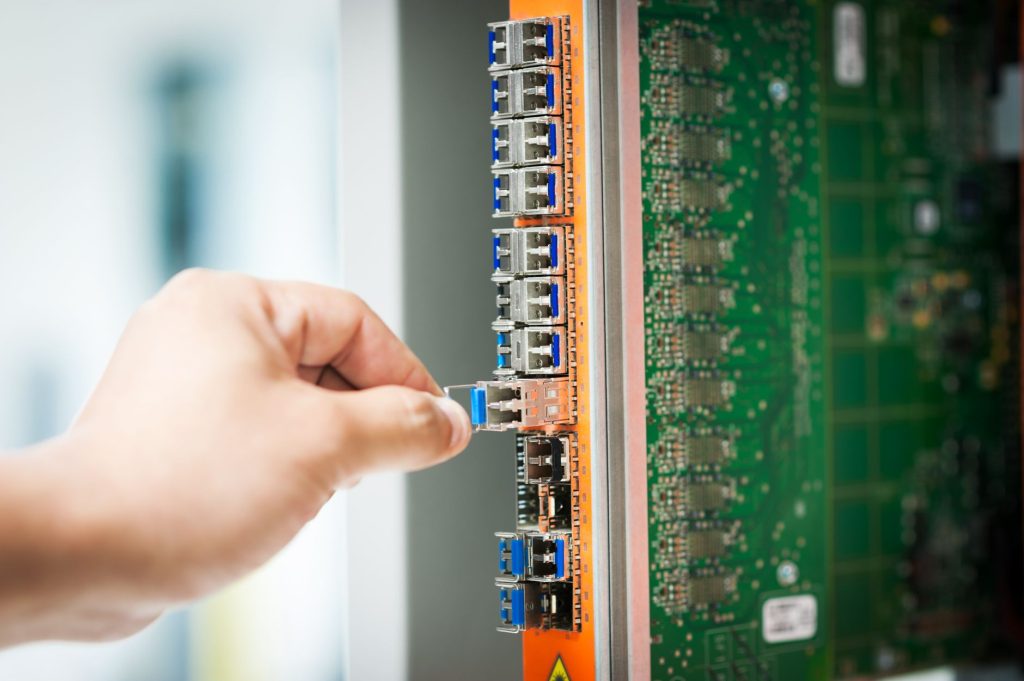
3. Connectivity & Timing Solutions: This includes high-speed transceivers, Ethernet PHYs, and precision clock generators. The transition to 800G and 1.6T optical interconnects within data centers and for DCI (Data Center Interconnect) requires sophisticated analog/mixed-signal chips. STMicro supplies components that enable the low-latency, high-bandwidth fabric connecting AI training clusters, which is architecturally analogous to the fronthaul/midhaul networks in 5G Advanced deployments.
The company reported Q2 net revenue of $3.92 billion, slightly below analyst consensus of $4.01 billion. Its gross margin contracted to 45.0% from 47.9% a year earlier, which management attributed to underutilization charges in certain legacy manufacturing lines and price pressures in the automotive sector. However, the operating margin in its Analog, MEMS, and Sensors Group (AMS)—which houses many data center products—remained resilient. The clear signal is that while some end markets like consumer electronics are soft, the structural demand from AI and cloud infrastructure is overpowering cyclical headwinds.
Industry Impact: Supply Chain Implications for Network Operators and Vendors
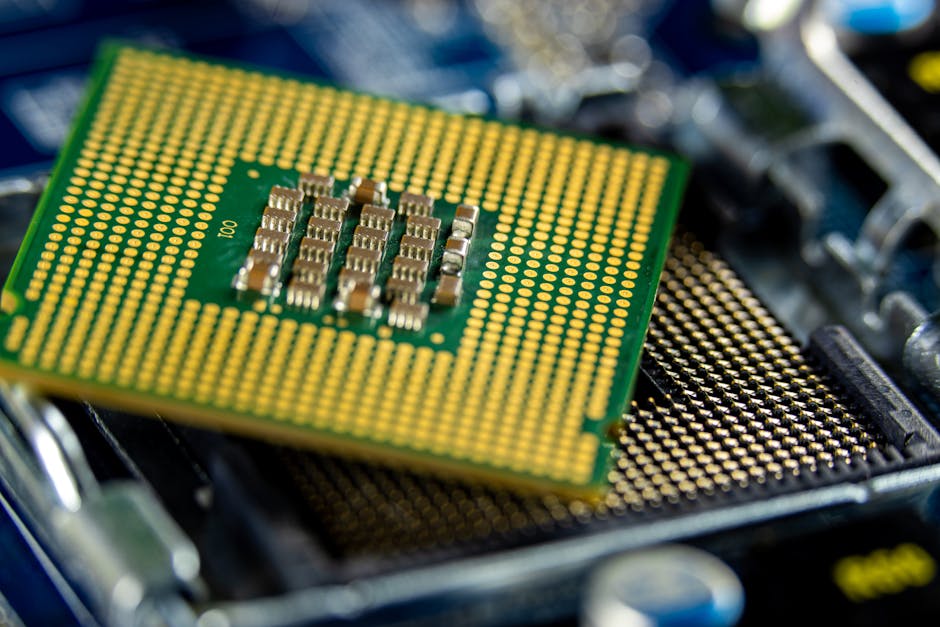
STMicro’s revised forecast and commentary on “signs of tight supply” have immediate ramifications for the telecom equipment manufacturer (TEM) and network operator ecosystem. The semiconductor supply chain for infrastructure-grade components is converging with the data center supply chain, creating new competitive dynamics and potential bottlenecks.
For Telecom Equipment Manufacturers (Ericsson, Nokia, Huawei, etc.): TEMs compete directly with data center OEMs (Dell, HPE) and hyperscale in-house design teams for the same advanced power and connectivity semiconductors. A supply-constrained environment favors large, strategic customers with long-term volume commitments. TEMs may face longer lead times and higher component costs for key parts in 5G macro radios, massive MIMO antennas, and edge servers. This could pressure margins and delay deployments, particularly for power amplifiers and network processing units that rely on similar compound semiconductor (GaN/SiC) fabs.
For Hyperscale Cloud Providers & Colocation Operators: The 40% growth projection validates the massive capital expenditure (CapEx) plans announced by Microsoft Azure, Google Cloud, and AWS, which routinely exceed $150 billion annually combined. Their demand is inelastic and prioritized, likely securing them allocation from suppliers like STMicro. This creates a two-tier market where smaller colocation providers and regional data center builders may struggle to secure timely supply for critical power infrastructure, potentially slowing the expansion of distributed edge data centers crucial for low-latency telecom services.
For Network Operators (AT&T, Vodafone, Reliance Jio, etc.): Operators building their own AI/cloud platforms or heavily leveraging network disaggregation (e.g., using white box switches) are now part of this global electronics procurement battle. To ensure supply for their own edge data center rollouts and Open RAN radio units, operators may need to deepen direct relationships with semiconductor foundries and component suppliers or enter into joint procurement agreements with TEMs. The risk is that component shortages could increase the total cost of ownership (TCO) for next-generation networks.
Furthermore, STMicro’s performance highlights the growing importance of energy efficiency as a core network metric. As operators’ energy costs soar—often 20-30% of opex—the adoption of SiC-based power systems in central offices, cell site power cabinets, and data centers becomes a strategic imperative, not just a technical choice. Vendors offering solutions with superior power efficiency will gain a decisive edge in operator RFPs.
Strategic Implications: Global Telecom and the AI Infrastructure Race
The trajectory of STMicro’s data center business underscores several macro-strategic shifts in the global telecom and digital infrastructure landscape.
1. The Re-convergence of Compute and Network Silicon: The boundary between data center switches and telecom transport equipment is blurring. 800G ZR/ZR+ coherent optics, used in DCI, are now being evaluated for metro and long-haul networks. The chips enabling this—high-performance DSPs, PMICs, and laser drivers—are sourced from a common pool of suppliers. STMicro’s outlook confirms that investment in this unified “cloud-grade” networking stack is accelerating, forcing telecom operators to adopt data center operational models and supply chain strategies.
2. Impact on African & MENA Telecom Markets: For developing markets, the component squeeze presents both a challenge and an opportunity. The challenge is that scarce, advanced components will be allocated first to lucrative hyperscale and Tier-1 operator markets in North America and Europe, potentially delaying network modernization in Africa and the Middle East. However, this also accelerates the leapfrog effect. Operators in these regions, unburdened by legacy infrastructure, can design greenfield networks from the start with the most energy-efficient (SiC-based) power systems and direct-to-fiber architectures, achieving a lower lifetime TCO. Suppliers like STMicro may see secondary growth from these markets as they adopt latest-generation technologies to manage erratic grid power and high energy costs.
3. The Geopolitical Dimension: STMicroelectronics, with major fabs in France and Italy, represents a strategic European champion in the global semiconductor race. Its strong positioning in power and analog semiconductors—areas less dependent on extreme ultraviolet (EUV) lithography than leading-edge logic—makes it a key and resilient player. For telecom operators globally, diversifying supply chains away from geographic concentration risks means engaging with such European and Japanese suppliers (like Infineon and NXP) for critical infrastructure components. This aligns with various national “secure networks” initiatives.
4. Preparing for 6G and Quantum Networking: The underlying technologies STMicro is scaling today—ultra-efficient power delivery, high-speed interconnects, and precision timing—are foundational for future networks like 6G (which will integrate sensing and AI natively) and early quantum communication systems. The current investment cycle in AI data centers is, in effect, funding the R&D and manufacturing scale for the next wave of telecom infrastructure.
Forward-Looking Analysis: What’s Next for the Telecom Supply Chain?
STMicroelectronics’ Q2 report is a clear indicator that the AI-driven infrastructure boom has moved beyond a hyperscale phenomenon into a broad-based industrial upgrade. For the telecom sector, the implications are profound:
- Consolidated Supplier Power: Expect further consolidation among specialty semiconductor firms as scale becomes critical to meet demand. Large, diversified players like STMicro, Infineon, and onsemi will gain pricing power and influence over network architecture decisions.
- CapEx Reallocation: Network operators will need to allocate more capital within their budgets to power and cooling infrastructure as equipment power density increases. The “chip-to-grid” efficiency will become a key vendor selection criterion.
- Strategic Partnerships: We anticipate more direct, multi-year sourcing agreements between Tier-1 operators and semiconductor manufacturers, bypassing some traditional TEM channels for critical components, mirroring the hyperscale model.
- Innovation in Network Power: The shortage and cost of advanced components will drive innovation in alternative architectures, such as centralized “power farms” for cell sites, liquid cooling for edge data centers, and higher DC voltage distribution within facilities to reduce losses.
In conclusion, while STMicro’s profit miss triggered a short-term stock reaction, the strategic message for telecom is unequivocal: the hardware foundation for the AI era is being built at an unprecedented pace, creating both supply chain pressures and transformative opportunities. Network operators who proactively engage with this shifting component landscape, prioritize energy efficiency in procurement, and adapt their infrastructure strategies will be best positioned to harness the performance of future AI-native networks.