Elon Musk’s Hyperscale Data Center Buildout: Tesla Dojo, xAI, and X Drive Unprecedented Infrastructure Demand
Elon Musk’s Hyperscale Data Center Buildout: Tesla Dojo, xAI, and X Drive Unprecedented Infrastructure Demand
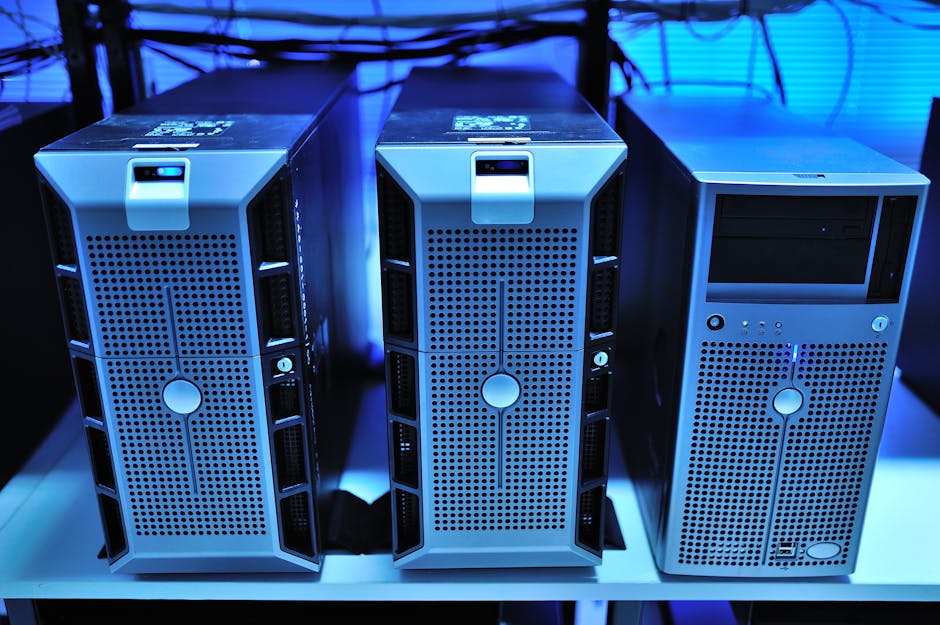
Source: Dgtl Infra – Analysis of public disclosures, earnings calls, and regulatory filings from Tesla, X Corp., and xAI. The scale of computing infrastructure being deployed across Elon Musk’s corporate portfolio represents a seismic shift in demand for power, fiber connectivity, and advanced cooling, directly impacting global telecom and digital infrastructure markets.
The convergence of artificial intelligence training, autonomous vehicle development, and real-time social media processing is catalyzing one of the most aggressive private hyperscale data center construction campaigns to date. Spearheaded by Tesla’s Dojo supercomputer, the rapid scaling of xAI’s Grok large language model, and the computational needs of the X platform, Musk’s enterprises are transitioning from major cloud tenants to builders and operators of foundational AI infrastructure. For telecom operators, colocation providers, and wholesale bandwidth sellers, this shift opens new revenue streams in dark fiber, high-capacity cross-connects, and edge computing while intensifying competition for strategic grid interconnection points and skilled network engineering talent.
Technical Deep Dive: Architecture, Scale, and Power Requirements

The infrastructure demands across Musk’s companies are not monolithic but share a common thread: an insatiable appetite for high-performance compute (HPC) optimized for specific AI workloads. Each entity presents a unique architectural and scaling profile.
Tesla’s Dojo Supercomputer & Autopilot Training: Tesla’s in-house supercomputing initiative, Dojo, is a full-stack redesign of AI training infrastructure. Based on Tesla’s custom D1 chip (built on 7nm process technology), a training tile integrates 25 D1 chips into a single module with 9 petaFLOPS of BF16/CFP8 performance. 120 tiles combine into a cabinet, and multiple cabinets form an “ExaPOD.” Tesla’s first ExaPOD, operational in Palo Alto, is architected to deliver 1.1 exaFLOPS of performance. The primary workload is processing millions of video streams from Tesla’s global fleet to train its Full Self-Driving (FSD) neural networks. This requires not just raw compute but immense data ingestion pipelines. Tesla must backhaul terabytes of real-world driving data daily from vehicles globally to its training clusters, necessitating robust, low-latency global network connectivity and massive edge storage buffers.
xAI’s Grok Training Infrastructure: Founded in 2023, xAI is building its foundational models, notably Grok, requiring a hyperscale GPU cluster rivaling those of OpenAI and Google. Musk stated in April 2024 that xAI would have 100,000 NVIDIA H100 GPUs operational by fall 2024. By Q3 2024, he indicated the company was on track to deploy 300,000 B200 GPUs from NVIDIA. This scale places xAI’s planned infrastructure among the largest AI clusters in the world. To connect these GPUs, xAI relies on InfiniBand networking, requiring specialized, high-bandwidth, low-latency fabric within the data center. The power draw for such a cluster is staggering: 100,000 H100 GPUs could consume approximately 70-80 megawatts (MW) of power, while 300,000 B200s would demand well over 200 MW. This forces xAI to secure capacity in power-constrained markets or build its own dedicated facilities.
X (formerly Twitter) Platform & Real-Time AI: The X platform requires a hybrid infrastructure model. It runs a combination of user-facing microservices, real-time content recommendation algorithms, and an increasing load of AI inference for features like Grok integration and content moderation. While historically reliant on public cloud providers like Google Cloud and AWS, Musk has directed an aggressive move to on-premises infrastructure to reduce costs and increase control. This involves consolidating and upgrading legacy Twitter data centers while building new capacity. The platform’s real-time nature demands global Points of Presence (PoPs) for low-latency media delivery and API responses, increasing demand for interconnection and edge colocation.
Industry Impact: Reshaping Colocation, Connectivity, and Power Markets
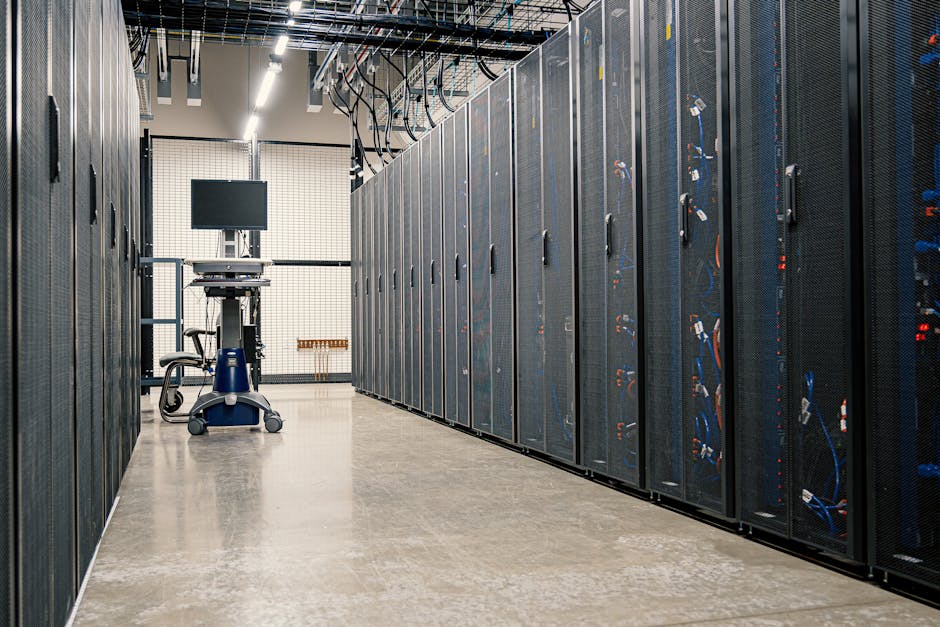
The collective buildout by Musk’s companies is injecting billions in capital expenditure into the digital infrastructure ecosystem, with ripple effects across several sectors.
Colocation & Hyperscale Campus Demand: xAI and Tesla are not building all infrastructure from greenfield sites. They are major customers for wholesale colocation providers. xAI has secured large-scale capacity with providers like CoreWeave (which itself is a large NVIDIA GPU cloud provider) and is likely engaging with other major wholesale operators like Digital Realty, QTS, and CyrusOne. These deals are for full data hall builds, often with customized power and cooling solutions for high-density GPU racks (exceeding 50 kW per rack). The competition for such large, contiguous blocks of capacity (often 50-100 MW per site) in key markets like Northern Virginia, Phoenix, and Columbus is driving up pricing and accelerating new data center construction.
Network Connectivity & Bandwidth Procurement: The data movement requirements are creating a new class of bandwidth buyer. Tesla’s Dojo requires constant ingestion of fleet data, necessitating high-capacity, reliable links from global regions to its training centers. xAI’s training clusters must pull massive datasets from cloud storage and, upon completion, distribute large model checkpoints. This drives demand for:
– Dedicated Dark Fiber: For low-latency, high-capacity links between colocation facilities, research labs, and cloud on-ramps.
– Cloud Interconnection: Heavy use of services like AWS Direct Connect, Google Cloud Interconnect, and Microsoft Azure ExpressRoute to move training data and host complementary services.
– Internet Peering: X requires optimized peering at major Internet Exchanges (IXs) globally to ensure low-latency user experience and efficient content delivery.
Telecom operators with extensive fiber backbones and strong positions in IX locations (like Lumen, AT&T, Verizon, and regional fiber players) are seeing renewed demand for private network services.
Power Grid & Sustainability Challenges: The single biggest constraint for these projects is electrical power. A single 100-MW data center campus consumes power equivalent to 80,000 homes. Musk’s companies are competing with other tech giants (Google, Microsoft, Amazon) and traditional enterprises for scarce grid capacity. This is:
1. Driving development in secondary markets with available power (e.g., parts of Texas, Ohio, Iowa).
2. Accelerating investments in on-site power generation, including natural gas peaker plants and, potentially, Tesla Megapack battery systems for load shifting and backup.
3. Increasing focus on Power Purchase Agreements (PPAs) for renewable energy to offset carbon footprints, though the 24/7 nature of AI compute makes matching with intermittent solar/wind challenging.
Supply Chain for Specialized Hardware: The race to secure NVIDIA GPUs, high-end InfiniBand switches (from NVIDIA/Mellanox), and advanced liquid cooling systems (from vendors like Vertiv, Schneider Electric, and Delta) is creating supply chain bottlenecks. This benefits infrastructure vendors but also pressures colocation providers to offer liquid cooling-ready spaces.
Strategic Implications: Vertical Integration and the New AI Infrastructure Playbook

Musk’s approach signals a broader strategic shift in how technology giants view critical infrastructure, with implications for telecom operators and investors.
Vertical Integration as a Competitive Moat: Tesla’s development of Dojo—from silicon (D1 chip) to system (ExaPOD) to software—represents the ultimate in vertical integration for AI infrastructure. This model, if successful, could pressure other auto/robotics companies to invest in proprietary AI training stacks, potentially creating new, specialized demand for infrastructure partners who can support such bespoke systems. For telecom, this means engaging with customers not just on bandwidth, but on holistic “AI-ready infrastructure” solutions encompassing compute, network, and storage.
Geographic Diversification and Edge Compute: While large training clusters are centralized, inference and data collection are distributed. Tesla’s fleet generates data everywhere. X’s users are global. This reinforces the need for a tiered infrastructure: massive centralized training “foundries” complemented by regional inference hubs and edge nodes. Telecom operators with distributed central office footprints and edge locations are well-positioned to host these inference tiers, offering low-latency connectivity to end-users and devices.
The Rise of the AI-Native Network: The traffic patterns of AI are different from traditional web or video streaming. They involve “elephant flows” of training data and synchronized communication across thousands of GPUs. This requires networks with ultra-low latency and massive, lossless throughput. We are likely to see increased demand for:
– RDMA (Remote Direct Memory Access) over Converged Ethernet (RoCE) enabled networks within and between data centers.
– Wavelength and dedicated ethernet services with strict Service Level Agreements (SLAs) for latency and jitter.
– Network architectures that can dynamically allocate bandwidth for bulk data transfer versus latency-sensitive inference traffic.
Financial and Investment Landscape: The capital intensity of these projects is staggering. xAI’s reported $6 billion funding round in 2024 is largely earmarked for infrastructure. This draws investment away from traditional tech ventures and into physical digital assets. Infrastructure funds and real estate investment trusts (REITs) are keenly focused on this sector, viewing AI data centers as a high-growth asset class with long-term tenant commitments.
Conclusion: A New Wave of Infrastructure-Led Innovation
The infrastructure buildout across Tesla, xAI, and X is not merely a supporting act for AI innovation; it is becoming the core competitive battlefield. For the telecom and digital infrastructure industry, this presents both immense opportunity and significant challenge. The opportunity lies in providing the high-performance connectivity, strategic colocation, and power solutions that form the central nervous system of modern AI. The challenge is adapting to a market where customers demand unprecedented scale, customization, and performance guarantees, often on accelerated timelines.
Going forward, successful infrastructure providers will be those that can offer integrated solutions—combining space, power, cooling, and high-performance networking—under a single, scalable contract. They will need to deepen partnerships with utility providers to secure power and with hardware vendors to ensure timely equipment deployment. Regions with robust power grids, favorable climates for cooling, and pro-digital infrastructure policies will become the new magnets for AI investment.
Ultimately, Elon Musk’s companies are exemplars of a broader trend: the realization that in the age of AI, supremacy is determined as much by compute capacity and data mobility as by algorithms. The race to build the physical foundations of artificial intelligence is now fully underway, and it will reshape the telecom and infrastructure landscape for the next decade.