The Legacy Copper Conundrum: Hidden Master Sockets and the UK’s PSTN Migration Challenge
📰Original Source: Telecom GreenSource: Analysis based on original engineering guidance from Telecom Green’s article, “I Have No Master Socket – Help! An Engineer’s Advice,” published January 15, 2025. This common residential fault report highlights a critical, widespread infrastructure challenge for UK telecom operators as they…
Source: Analysis based on original engineering guidance from Telecom Green’s article, “I Have No Master Socket – Help! An Engineer’s Advice,” published January 15, 2025. This common residential fault report highlights a critical, widespread infrastructure challenge for UK telecom operators as they accelerate the Public Switched Telephone Network (PSTN) switch-off.
The persistent issue of “missing” or concealed Network Termination Equipment (NTE), commonly known as the master socket, is far more than a minor customer service headache. It represents a significant operational and financial obstacle for incumbent operators like BT/Openreach and alternative network providers (AltNets) tasked with migrating millions of lines from legacy copper to full-fibre (FTTP) and IP-based services by the December 2025 PSTN stop-sell deadline. Each hidden NTE5 or older socket (e.g., NTE4, LJU) signifies an unknown internal wiring topology, potentially delaying fibre installs, increasing truck rolls, and complicating service assurance for Voice over IP (VoIP) and broadband.
Technical Deep Dive: Anatomy of a “Missing” Master Socket

The standard Openreach NTE5 master socket, introduced in the late 1980s, demarcates the boundary between the operator’s network and the customer’s internal wiring. Its absence in a modern property is rare; more commonly, it is obscured. Engineers report frequent discoveries behind furniture, under floorboards, in cupboards, or plastered over during renovations. A more complex scenario involves properties with pre-NTE5 installations, such as the older LJU (Line Jack Unit) or even ancient 4-wire bell cable terminations, which customers may not recognise as the primary network point.
From a network engineering perspective, locating the true demarcation point is non-negotiable for service integrity. The NTE5’s front plate contains a built-in test socket, which isolates the Openreach line from all internal extensions and filters. Testing at this point is the definitive method for fault diagnosis. A failure to locate it forces engineers to trace wiring manually, a time-consuming process that can reveal daisy-chained extensions, unfiltered spur lines, and bridge taps—all of which degrade VDSL2/FTTC (Fibre to the Cabinet) and G.fast signals and will cripple VoIP quality on a full IP service. For FTTP installs, the Optical Network Terminal (ONT) must be installed at or near this primary entry point, making its location paramount for a clean fibre run and optimal Wi-Fi placement.
The problem is quantified: Openreach manages approximately 27 million copper lines across the UK. A conservative industry estimate suggests 5-10% of premises have unclear or non-standard demarcation, translating to over 1.3 million potential problem installations ahead of the migration wave.
Industry Impact: Operational Costs and Migration Friction

For telecom operators, the hidden master socket issue directly hits the bottom line through increased operational expenditure (OPEX) and compromised customer experience. Each additional hour an engineer spends hunting for a demarcation point or remediating faulty internal wiring adds significant cost. A standard FTTP installation might be budgeted for a 2-hour slot; a complex trace-and-fix job can double or triple that, eroding profitability, especially for AltNets operating on thin margins.
The PSTN switch-off amplifies this risk exponentially. When migrating a customer to an all-IP service (e.g., BT Digital Voice, Sky VoIP), the service is only as reliable as the internal wiring from the ONT or modem. Poorly documented or faulty extensions can lead to post-migration faults—no dial tone on legacy handsets, crackling lines, or broadband drop-outs—resulting in costly repeat visits and customer churn. Operators are now compelled to invest in pre-migration checks and customer education campaigns, advising homeowners to “find your master socket” before the engineer arrives.
This scenario also creates a strategic advantage for mobile network operators (MNOs) and fixed wireless access (FWA) providers. For customers in properties with severe internal wiring issues, a 5G Home Broadband or FWA solution that bypasses the copper line entirely becomes an attractive, frictionless alternative. Similarly, it pressures operators to accelerate the development and deployment of self-install FTTP kits that rely on existing coaxial or Ethernet cabling, though these have limitations.
Strategic Implications for the UK’s Full-Fibre Rollout and Global Parallels
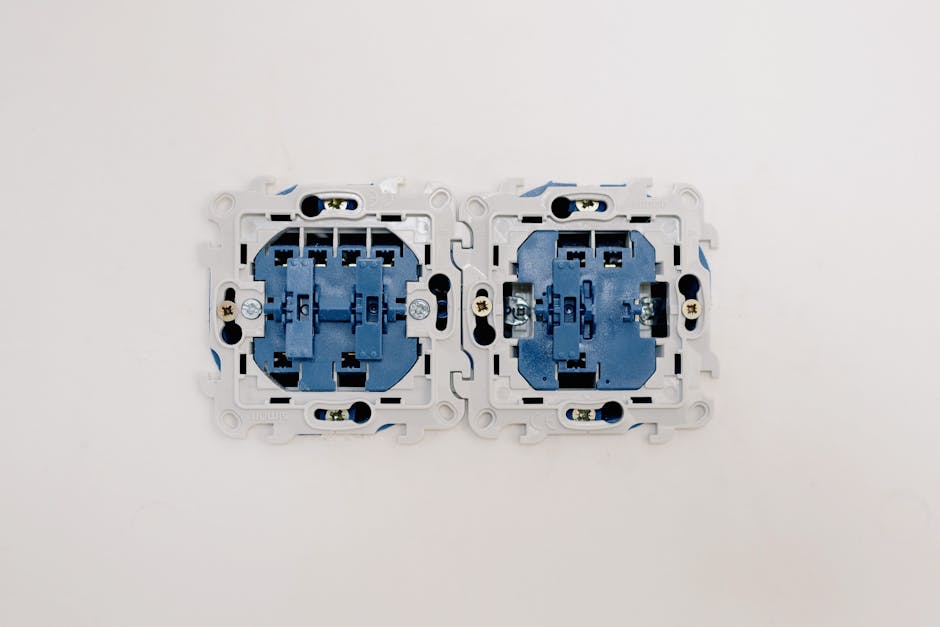
The UK’s master socket dilemma is a specific case of a universal telecom challenge: the hidden legacy of inside plant. As nations worldwide pursue fibre rollouts and PSTN retirement, they confront similar inherited infrastructure mysteries. In many European countries, the demarcation point may be a less familiar socket type (e.g., TAE in Germany, RJ11 in varied forms). In developing markets across Africa and the MENA region, the situation is often more acute, with a mix of aerial drops, buried cables, and ad-hoc in-home wiring, making demarcation and fault isolation a constant struggle for operators.
The UK’s regulated approach, with Openreach providing the NTE, offers some standardisation, but the last 30 years of customer DIY and builder modifications have eroded it. The strategic response must be multi-faceted:
- Data Remediation: Operators must enrich their records with data from engineer visits, using mobile apps to log GPS coordinates and photos of the true NTE location, building a valuable dataset for future visits or sales.
- Installation Process Redesign: The default assumption for FTTP installs should be to establish a new, clean demarcation point at the primary entry, often bypassing old wiring entirely with a new CAT6 run to a central location, albeit at a higher upfront cost.
- Policy and Regulation: Ofcom’s focus on the “Easy Switch” process must account for this physical layer friction. Guidance may need to clarify responsibilities for internal wiring remediation during migration, a current grey area that causes disputes between customers, retail service providers, and Openreach.
For infrastructure investors and AltNets, this issue underscores the hidden costs of a “fibre overbuild” strategy. Passing a premise with fibre is one thing; efficiently connecting a customer with unknown internal wiring is another. Due diligence must factor in potential higher connection costs in areas with older housing stock.
Forward-Looking Analysis: Demarcation in the All-IP, Fibre-First Era

The master socket’s evolution mirrors the network’s evolution. The NTE5 was designed for a copper, voice-centric world. The future demarcation point in a fibre-first, all-IP world is the ONT or Residential Gateway (RG). These devices have their own location requirements (power, Wi-Fi optimisation), often conflicting with the historical placement of the copper NTE in a dark hallway under the stairs.
The industry’s forward path involves redefining the “demarcation” concept. With fibre, the physical line is less susceptible to in-home interference, but the placement of the ONT and home network becomes the new critical point. Operators are moving towards integrated solutions: ONTs with built-in Wi-Fi 6/7 mesh capabilities, and installers trained in basic home network setup. The legacy of hidden master sockets will eventually fade, but it is currently creating a costly and complex transition layer.
Ultimately, resolving this conundrum requires treating the customer’s internal environment as the final, and most variable, segment of the access network. Success in the PSTN migration and full-fibre uptake will depend not just on laying fibre in the street, but on efficiently navigating the last few metres inside the home—a lesson with global relevance for any operator retiring a century-old copper network.