In a significant move consolidating North American wholesale fiber and data center infrastructure, Geo-Tel has announced the acquisition of Zayo Group’s entire data center portfolio across the United States and Canada. According to the announcement on Geo-Tel’s official website, the transaction, valued at approximately $1.2 billion, includes 12 Tier III data centers and 47 colocation facilities, adding over 1.5 million square feet of data center space and 200+ network Points of Presence (PoPs) to Geo-Tel’s assets. The deal, expected to close in Q3 2025 pending regulatory approval, marks a strategic pivot for Geo-Tel from a primarily network-centric operator to a fully integrated infrastructure provider, directly impacting wholesale bandwidth pricing, enterprise connectivity, and cloud on-ramp strategies for telecom operators globally.
Technical Deep Dive: Assets, Capacity, and Network Integration

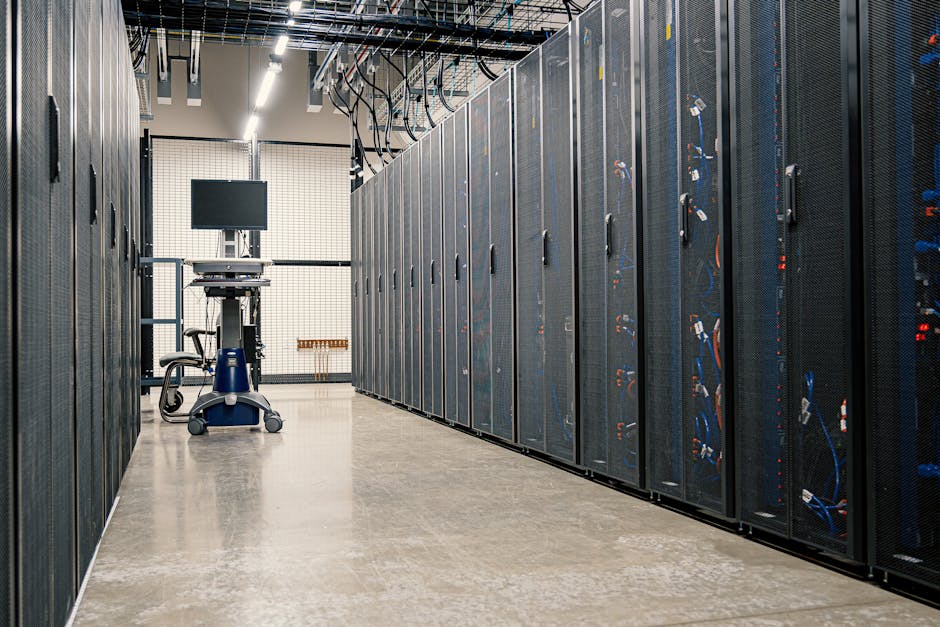
The acquired portfolio from Zayo represents a high-density, network-rich asset base critical for backhaul, cloud interconnection, and content delivery. The 12 core data centers are strategically located in major interconnection hubs, including Ashburn, Virginia; Dallas, Texas; Chicago, Illinois; and Toronto, Canada. Each facility boasts an average Power Usage Effectiveness (PUE) of 1.3 and is supported by dual-feed power substations with N+1 redundancy. From a telecom infrastructure perspective, the key value lies in the in-building fiber and meet-me rooms. The acquisition transfers over 12,000 route miles of metropolitan and long-haul dark fiber, much of which is already lit with 100G and 400G DWDM systems, directly connecting these data centers to Zayo’s (and now Geo-Tel’s) extensive national backbone.
For network operators, the integration roadmap is paramount. Geo-Tel plans to merge this infrastructure into its existing GeoNet platform, creating a unified portal for wavelength, Ethernet, and colocation services. Technically, this involves migrating Zayo’s legacy SONET and SDH circuits to a pure IP/MPLS and OTN (Optical Transport Network) layer, a process Geo-Tel estimates will take 18-24 months. The combined entity will control over 450,000 route miles of fiber in North America, creating a formidable alternative to incumbent telcos like AT&T and Lumen Technologies for wholesale services. The deal also includes Zayo’s extensive small cell and fiber-to-the-tower (FTTT) assets, positioning Geo-Tel as a key neutral host for 5G mobile network operators (MNOs) seeking to densify their radio access networks (RAN).
Industry Impact: Wholesale Market Consolidation and Operator Strategies
This acquisition fundamentally alters the competitive landscape of the North American wholesale telecom market. Geo-Tel, traditionally a challenger, now commands a significantly larger share of the dark fiber and wholesale wavelength market. For telecom operators—particularly mobile network operators (MNOs), competitive local exchange carriers (CLECs), and cloud service providers—this consolidation means both opportunity and risk.
On the opportunity side, a larger, integrated Geo-Tel can offer one-stop shopping for bundled dark fiber, lit wavelength, and colocation, potentially simplifying procurement and reducing the number of vendor relationships. The increased scale may also drive down unit costs for high-bandwidth circuits (100G+), benefiting operators expanding their backbone capacity or building out edge compute networks. However, the reduction in major wholesale suppliers—now essentially down to Geo-Tel, Lumen, AT&T, and Crown Castle in many markets—could lead to less competitive pricing over the long term and increased dependency on a single provider for critical infrastructure.
Network operators must now re-evaluate their sourcing strategies. Many relied on Zayo for competitive backhaul in secondary markets where the incumbent telco’s pricing was prohibitive. With Zayo’s assets under new ownership, operators should immediately audit their existing contracts for change-of-control clauses and engage with Geo-Tel’s leadership to understand future roadmaps and pricing models. Furthermore, this move may accelerate similar consolidation among other regional fiber providers, as scale becomes increasingly critical to compete with cloud hyperscalers building their own networks.
Global and Regional Implications: Africa, MENA, and Submarine Cable Access

While this is a North American transaction, the ripple effects will be felt in emerging markets, particularly Africa and the Middle East and North Africa (MENA) region. Geo-Tel has been aggressively expanding its EMEA and APAC footprint through partnerships and acquisitions. Controlling a dominant North American data center and fiber portfolio strengthens its hand as a global carrier’s carrier. For African and MENA telecom operators that rely on international bandwidth from submarine cable landing stations, Geo-Tel now offers a more seamless path inland.
Operators like Liquid Intelligent Technologies, WIOCC, and MTN GlobalConnect, which operate submarine cables landing in Virginia (USA) and Portugal, can now potentially contract directly with Geo-Tel for end-to-end connectivity from the cable landing station to major inland data centers like Ashburn, a primary hub for AWS, Google Cloud, and Microsoft Azure. This reduces the need for multiple hand-offs and lowers latency for cloud applications hosted in the US serving African enterprises. Conversely, it increases the bargaining power of Geo-Tel in negotiations for terrestrial extensions from submarine cable landing points.
In the MENA region, where digital transformation and smart city projects are driving massive data center growth, Geo-Tel’s expanded capability could influence partnerships. A company with both deep fiber and data center expertise is an attractive partner for Gulf Cooperation Council (GCC) operators like stc, e& (formerly Etisalat), and du looking to build out carrier-neutral internet exchanges (IXs) and cloud regions. Geo-Tel’s integrated model could serve as a blueprint for regional operators considering similar vertical integration.
Forward-Looking Analysis: The Integrated Infrastructure Model and Future M&A

The Geo-Tel-Zayo deal is not an isolated event but a symptom of a broader trend: the convergence of fiber networks and data centers into a single, software-defined infrastructure layer. As 5G, IoT, and AI drive exponential data growth, the value is shifting from mere connectivity to integrated platforms that offer compute, storage, and networking as a unified service. For telecom operators, this means the competitive set is no longer just other telcos but also hyperscale cloud providers (AWS, Google, Microsoft) and large-scale data center REITs (Digital Realty, Equinix).
Looking ahead, we anticipate further consolidation in the sector. Regional fiber operators with dense metro networks but limited scale, such as Uniti Group or Consolidated Communications, could become acquisition targets for larger players seeking to fill geographic gaps. Similarly, tower companies like American Tower or SBA Communications may look to acquire fiber assets to offer more complete infrastructure solutions to their MNO tenants. For the global telecom sector, the lesson is clear: owning and controlling the underlying physical infrastructure—fiber, data centers, towers—is becoming a strategic imperative for long-term relevance and profitability. Operators who rely solely on leasing capacity risk being marginalized in the value chain.
About the Author