Trump Regrets Smaller Intel Stake Amid Chip Surge, Signaling Deeper Telecom Supply Chain Risk
Source: ETTelecom, Original Article, May 19, 2026.
Former President Donald Trump’s public regret over not negotiating a larger U.S. government equity stake in Intel Corporation, following a reported $100 billion surge in the company’s valuation, is not merely a political footnote. It is a stark signal of the intensifying geopolitical battle over semiconductor sovereignty that sits at the very heart of global telecommunications infrastructure. The comments, reported by ETTelecom on May 19, 2026, underscore a critical vulnerability for telecom operators worldwide: the concentration of advanced chip manufacturing outside of Western control and its direct implications for 5G/6G rollouts, network security, and the strategic autonomy of national telecom sectors.
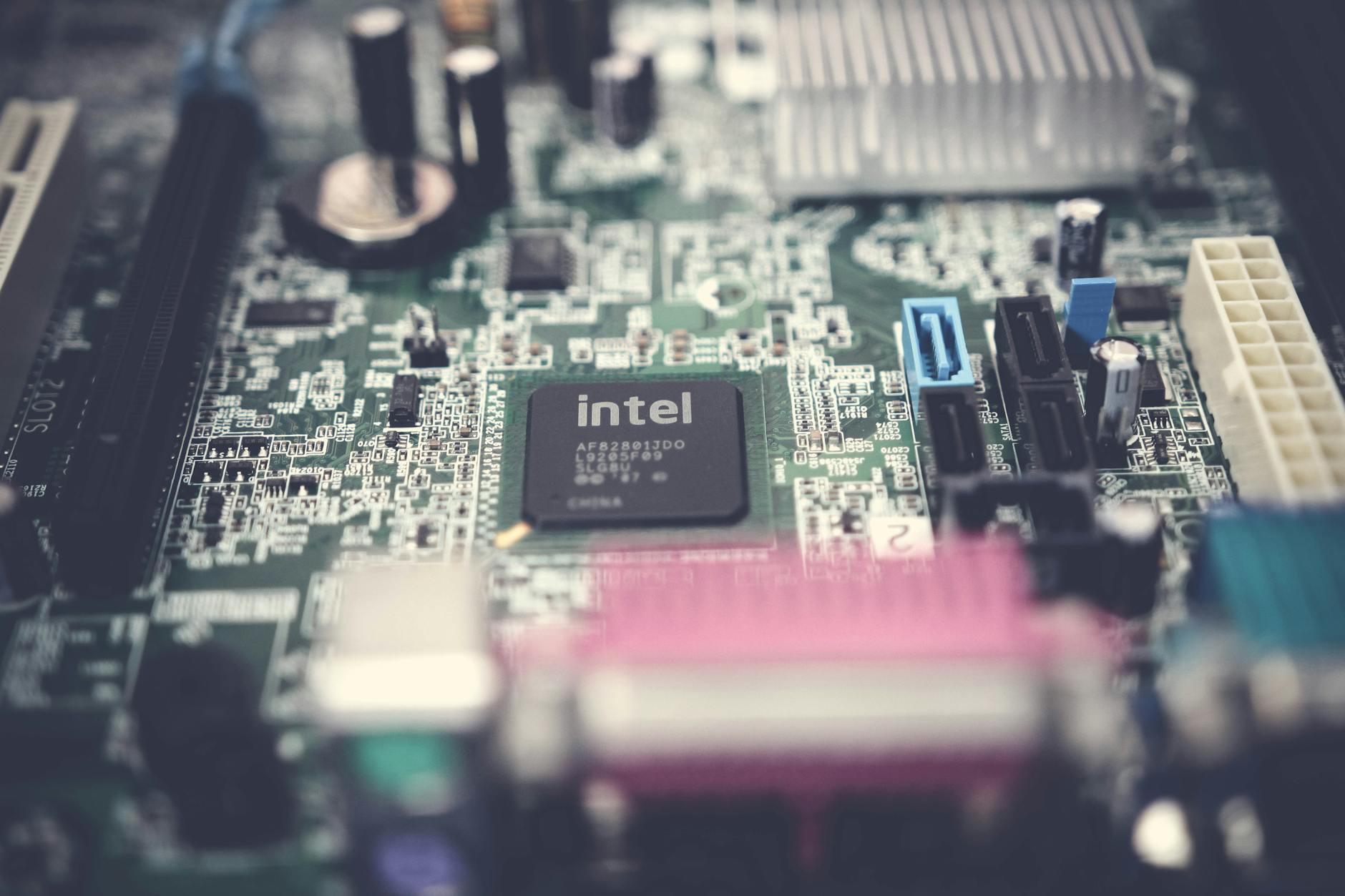
For telecom network engineers and CTOs, the underlying narrative is one of supply chain fragility. Intel’s resurgence, fueled by massive U.S. CHIPS Act subsidies and a strategic pivot to become a foundry competitor to Taiwan’s TSMC and South Korea’s Samsung, directly impacts the availability, cost, and geopolitical risk profile of the essential silicon inside every baseband unit, router, optical transport node, and smartphone. Trump’s hypothetical 10%+ stake represents more than lost treasury revenue; it symbolizes a potential lever for state influence over the pace and direction of telecom-relevant chip innovation, from Open RAN accelerators to edge computing processors.
The Technical Chessboard: Intel’s Foundry Play and Telecom Silicon Dependencies
Intel’s strategic value to the telecom industry extends far beyond its traditional CPU business. Under CEO Pat Gelsinger’s IDM 2.0 strategy, Intel has aggressively invested in becoming a leading-edge foundry, aiming to manufacture chips for other companies. This is pivotal for telecom for several reasons:
- Diversification from TSMC: Over 90% of the world’s most advanced semiconductors (sub-7nm) are manufactured by TSMC in Taiwan. This creates a single point of failure for telecom equipment vendors like Nokia, Ericsson, and even hyperscalers building telco cloud infrastructure. Intel’s Arizona, Ohio, and European fabs offer a geographically and politically diversified source for these critical components.
- Open RAN Silicon: The Open RAN movement seeks to disaggregate hardware and software, relying heavily on standardized, merchant silicon for baseband processing. Companies like Marvell, NVIDIA, and Intel itself are developing specialized SoCs and accelerators for this market. Intel’s internal fabrication of its Xeon CPUs with integrated vRAN accelerators and its ability to fabricate chips for other Open RAN silicon providers is a key enabler for the ecosystem’s resilience.
- Edge and Network Cloud: The evolution towards cloud-native networks (CNF) and edge computing demands powerful, energy-efficient processors. Intel’s foundry services could manufacture custom ASICs for telecom operators or vendors designing specialized edge servers and smartNICs, reducing dependency on a monolithic Asian supply chain.
Trump’s regret over the size of the stake highlights a recognition that controlling—or at least significantly influencing—this manufacturing capacity is a national infrastructure imperative, akin to securing submarine cable landing rights or 5G spectrum.
Industry Impact: Operator Capex, Vendor Strategy, and Geopolitical Pricing
The implications of intensified U.S. government focus on Intel and domestic chip production are multi-layered for telecom industry stakeholders:
- For Telecom Operators (MNOs): Long-term, a robust, competitive Western semiconductor foundry ecosystem could mitigate supply shocks like those experienced during the COVID-19 pandemic. However, in the near term, massive U.S. subsidies ($52.7 billion via the CHIPS Act) and potential government equity positions could distort market dynamics. If Intel’s costs are artificially lowered by state support, it could affect pricing for competing fabless designers (e.g., Qualcomm, Broadcom) who rely on TSMC/Samsung, potentially altering the cost structure of network equipment.
- For Network Equipment Vendors (NEMs): Ericsson, Nokia, and newer Open RAN players like Mavenir must now factor geopolitical sourcing into their R&D. Designing a 5G baseband unit for Intel’s 18A process node versus TSMC’s N3P is a multi-year, billion-dollar commitment. A U.S. government with a direct stake in Intel’s success could push for “secure and trusted” telecom equipment mandates, favoring vendors who source from U.S.-allied fabs, reshaping competitive landscapes.
- For Infrastructure Investors: The valuation surge Trump referenced ($100 billion) reflects market belief in Intel’s foundry turnaround. Investors in tower companies, fiber networks, and data centers must now consider the silicon supply chain as a critical risk factor. A disruption in advanced chip supply could delay 5G-Advanced and 6G deployments, stalling revenue from new network leases and connectivity services.
Global and Regional Implications: Africa, MENA, and the New Tech Cold War
The U.S.-China tech war, with semiconductors as the primary battleground, has profound consequences for telecom development in Africa and the Middle East.
- African Telecom Development: Many African nations are mid-way through 4G expansion and early 5G deployments. Their networks rely heavily on cost-effective equipment, often from Chinese vendors like Huawei and ZTE. U.S. pressure to exclude these vendors over security concerns, coupled with efforts to onshore chip production, could lead to a bifurcated market. African operators may face a choice: cheaper, readily available Chinese tech or potentially more expensive, geopolitically “safer” Western kit with longer lead times. The affordability of smartphones—heavily dependent on chip pricing—is also at stake for digital inclusion goals.
- MENA’s Strategic Position: Gulf nations like Saudi Arabia (via the Vision 2030 initiative) and the UAE are aggressively investing in high-tech industries and seeking to become digital hubs. They are keenly aware of supply chain risks. The region could become a testing ground for new network architectures using Intel-based, U.S.-aligned silicon, as they seek to diversify partnerships away from an over-reliance on any single geopolitical bloc.
- Global Standardization Fracture: If the U.S. and China succeed in creating parallel, decoupled tech stacks (from chips to software), it could lead to a splintering of global telecom standards. This would increase complexity and cost for multinational operators and global roaming services, forcing them to maintain dual network architectures.
Forward-Looking Analysis: Sovereignty, Security, and the Silicon Foundation

Trump’s comments are a symptom of a broader, irreversible trend: the re-politicization of the global telecom supply chain. The era of viewing semiconductors as pure commodities sourced from the lowest-cost, highest-yield manufacturer is over. For the telecom sector, several developments are now inevitable:
- Increased Government Intervention: More nations will explore direct investments, stakes, or strong incentives for domestic or allied chip production. The EU’s Chips Act and initiatives in Japan, India, and South Korea are part of this trend.
- “Secure by Design” Mandates: National security regulations will increasingly mandate specific origins for the silicon in critical network infrastructure, especially for core networks and government networks. The U.S. “Secure and Trusted Communications Networks” act is a precursor.
- Rise of Vertical Alliances: We will see deeper, strategic alliances between telecom operators, equipment vendors, and specific silicon providers (like the AT&T-Intel-Microsoft partnership for Open RAN) to guarantee supply and co-develop technology.
- Investment in Legacy Nodes: While the spotlight is on cutting-edge (<5nm) chips, much telecom infrastructure relies on mature process nodes (28nm-90nm) for power management, RF, and other components. Investment in shoring up capacity for these "legacy" chips is equally critical for network resilience.
The $100 billion valuation change Trump noted is a financial marker of a much larger tectonic shift. For telecom leaders, the task is no longer just to buy the best technical solution; it is to navigate a landscape where the silicon inside the box is as strategically consequential as the spectrum license or the fiber right-of-way. Building resilient, future-proof networks now requires a deep understanding of semiconductor geopolitics and active supply chain diplomacy.
About the Author