
Bharti Airtel’s $1.6B Investment Targets 100,000 New 5G Sites in India’s Intense Market
📰Original Source: Business StandardIndia’s second-largest mobile network operator, Bharti Airtel, has announced a significant capital expenditure plan of 120 billion Indian rupees (approximately $1.6 billion USD) to dramatically expand its 5G network and digital capabilities over the coming fiscal year. According to a Business Standard…
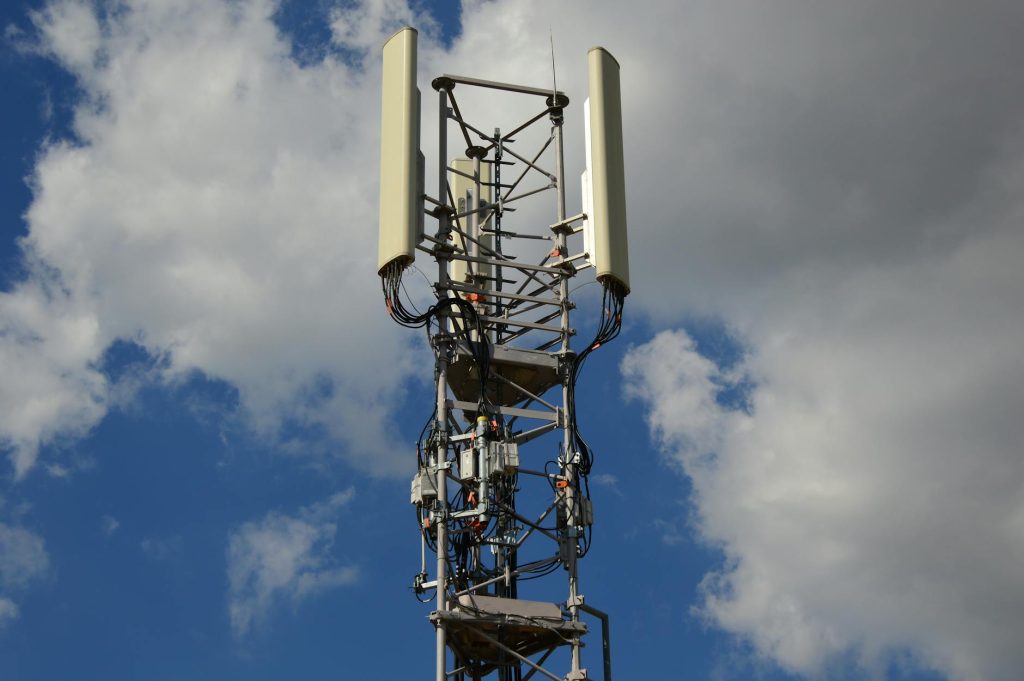
India’s second-largest mobile network operator, Bharti Airtel, has announced a significant capital expenditure plan of 120 billion Indian rupees (approximately $1.6 billion USD) to dramatically expand its 5G network and digital capabilities over the coming fiscal year. According to a Business Standard report, the investment is aimed at adding over 100,000 new 5G sites to its network, significantly increasing its fiber-to-the-home (FTTH) footprint, and enhancing its data center and cloud infrastructure. This aggressive move signals a renewed competitive phase in India’s telecom market, where Airtel is locked in a fierce battle for market leadership with Reliance Jio, which has also committed to massive 5G deployment. For infrastructure suppliers and tower companies, this represents one of the largest single-operator 5G radio access network (RAN) rollouts globally in 2025, creating a surge in demand for antennas, fiber backhaul, and data center capacity.
Technical Deep Dive: Network Expansion and Strategic Priorities

Bharti Airtel’s Rs 120 billion investment is not a blanket allocation but a targeted strategy to fortify specific network domains critical for future revenue. The plan is multi-faceted, focusing on radio, fiber, and cloud infrastructure to create a converged, high-capacity network platform. The centerpiece is the addition of 100,000 new 5G sites. While Airtel has not specified the exact technology split, this expansion will almost certainly focus on mid-band (n78, 3.3-3.6 GHz) for capacity and coverage in urban and suburban areas, and low-band (n28, 700 MHz) for wider rural coverage and deep indoor penetration. This follows Airtel’s existing strategy of a non-standalone (NSA) 5G architecture, leveraging its robust 4G LTE core for initial deployment while preparing for a future transition to a 5G standalone (SA) core for network slicing and ultra-low latency services.
Parallel to the RAN expansion, a substantial portion of the capex is earmarked for fiber infrastructure. This includes both fiber-to-the-tower (FTTT) backhaul to support the new 5G sites and a major push in fiber-to-the-home (FTTH) under the Airtel Xstream Fiber brand. The operator is looking to significantly increase its fiber footprint, challenging JioFiber and other regional ISPs. This dual focus on mobile and fixed-line fiber is a classic convergence play, aiming to capture the entire household connectivity wallet. Furthermore, the investment will bolster Airtel’s data center and cloud services arm, Nxtra, and its enterprise-focused digital solutions. This indicates a strategic pivot beyond consumer mobile to high-margin enterprise and government segments, where secure, low-latency connectivity and cloud services are in high demand.
Industry Impact: Supply Chain, Towercos, and Competitive Dynamics

For the global telecom infrastructure ecosystem, Airtel’s announcement is a major demand signal. The scale of adding 100,000 5G sites within a year will require massive procurement of radio units (RUs), baseband units, and antennas. Given Airtel’s existing vendor relationships, this is a significant win for suppliers like Nokia, Ericsson, and Samsung, who provide its 5G RAN equipment. Indian tower companies, particularly Indus Towers (in which Airtel holds a major stake) and American Tower Corporation (ATC), will see a surge in tenancy and demand for new tower builds and upgrades to support the additional load and power requirements of 5G equipment.
The competitive landscape in India is the primary driver. Reliance Jio has stated its 5G network is already present in all telecom circles and is rapidly onboarding subscribers. Jio’s strategy has been one of aggressive coverage and pricing. Airtel’s counter-strategy, as evidenced by this capex, is to match and exceed Jio’s network quality and coverage while differentiating on service reliability and premium enterprise offerings. This investment war forces the third major player, Vodafone Idea (Vi), into an increasingly precarious position. Vi, still struggling with its own debt and delayed fundraise, may find it impossible to match this scale of investment, risking a further erosion of its market share to the two well-funded giants. For regulators, this intensifying duopoly presents challenges regarding market balance, pricing power, and the long-term health of a competitive multi-operator environment.
Strategic Implications for the Indian and Global Telecom Market

Airtel’s massive investment is a clear bet on India’s digital future and the monetization of 5G. The Indian market, with over 1.1 billion mobile subscribers, is at an inflection point where 5G adoption is moving from early adopters to the mass market. This capex is designed to ensure Airtel has the network capacity to handle the exponential data growth that will accompany this shift, preventing congestion and maintaining quality of service. It also prepares the ground for future revenue streams that are currently nascent in India, such as fixed wireless access (FWA) as a fiber alternative, private 5G networks for enterprises, and advanced IoT applications.
Globally, this announcement underscores India’s position as the world’s most active and competitive 5G deployment arena. The pace and scale of rollout in India now rival or exceed that of many developed markets. This has implications for global equipment vendors who are increasingly reliant on the Indian market for growth as other regions slow their 5G spending. Furthermore, the Indian model of intense competition, low average revenue per user (ARPU), and rapid scale offers lessons—and warnings—for operators in other high-growth markets in Africa and Southeast Asia. Airtel’s pan-African operations, through Airtel Africa, may also see strategic lessons applied, particularly in the use of fiber backhaul and a focused enterprise approach to improve profitability.
Forward-Looking Analysis: Monetization and the Road Ahead
The critical question for Bharti Airtel and its investors is not about building the network, but about generating a return on this $1.6 billion investment. The Indian consumer market is notoriously price-sensitive, making significant ARPU uplift from consumer 5G plans challenging in the short term. Therefore, Airtel’s strategy appears to be two-pronged. First, use network superiority as a defensive tool to retain and attract high-value postpaid and broadband customers, reducing churn. Second, and more crucially, aggressively pursue the enterprise and government sector with tailored solutions leveraging its enhanced 5G, fiber, and cloud stack.
The success of this bet hinges on execution speed and the ability to launch compelling, revenue-generating services ahead of Jio. The rollout of a 5G standalone core will be a key milestone to watch, as it unlocks network slicing for enterprise customers. Additionally, the regulatory environment for spectrum, particularly the availability of millimeter wave (mmWave) bands for high-capacity FWA and private networks, will influence the trajectory. For the wider telecom sector, Airtel’s move reaffirms that in leading growth markets, sustained heavy investment in next-generation infrastructure is not optional but a prerequisite for survival and leadership. The coming year will test whether this massive capex translates into sustainable market leadership and financial returns in the world’s most demanding telecom battlefield.