Orange Marine’s DUNANT Submarine Cable Lands in Cape Verde, Boosting Atlantic Connectivity for West Africa
SOURCE: The Orange Marine cable-laying vessel Pierre de Fermat has successfully landed the high-capacity DUNANT submarine cable system in Praia, Cape Verde, according to infrastructure deployment reports tracked by TelecomObserver. This landing, completed in late Q1 2025, marks a critical infrastructure expansion linking the West…
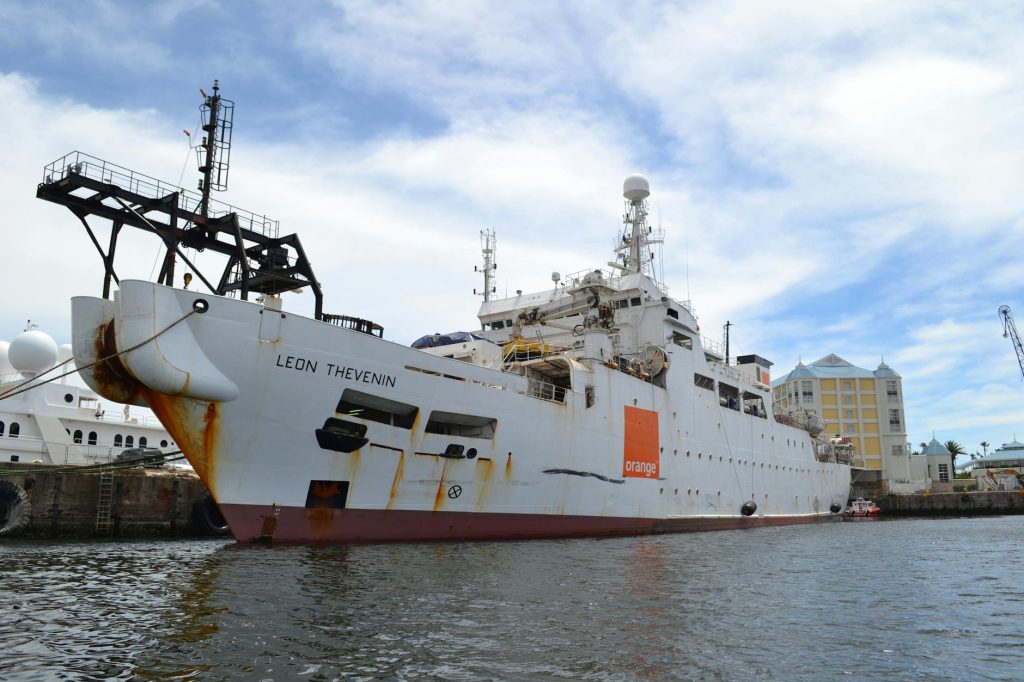
SOURCE: The Orange Marine cable-laying vessel Pierre de Fermat has successfully landed the high-capacity DUNANT submarine cable system in Praia, Cape Verde, according to infrastructure deployment reports tracked by TelecomObserver. This landing, completed in late Q1 2025, marks a critical infrastructure expansion linking the West African archipelago to the primary transatlantic route between Virginia Beach, USA, and Saint-Hilaire-de-Riez, France.
Technical Architecture and Strategic Atlantic Integration

The DUNANT cable, owned by Google and Submarine Cable Alpha (a joint venture between Google, Orange, and others), is a 12-fiber pair system based on space-division multiplexing (SDM) technology. It entered commercial service in 2021 with a design capacity exceeding 250 Tbps. The new 700km branching unit (BU) spur to Cape Verde, installed by Orange Marine, represents a strategic “mid-span meet” connecting the island nation directly to this high-traffic artery without requiring a dedicated, end-to-end cable build.
From a technical perspective, the landing in Praia involves a new cable landing station (CLS) equipped with Wavelength Selective Switch (WSS) ROADM technology, enabling dynamic capacity provisioning between the main transatlantic trunk and the Cape Verdean branch. This gives the local operator, Cabo Verde Telecom (CV Telecom), granular control over international bandwidth. The system utilizes C+L band amplification, maximizing spectral efficiency across the extended reach to the islands. The engineering challenge involved precise branching unit integration into the live cable system approximately 1,200 km from the African coast, a operation requiring specialized marine ROVs and careful power feed engineering to maintain the main trunk’s integrity.
Market Impact: Reshaping West Africa’s Bandwidth Economics and Operator Strategy

The DUNANT extension fundamentally alters the competitive landscape for international capacity in West Africa. Prior to this landing, Cape Verde’s primary international connectivity relied on the older Atlantis-2 cable to Portugal and the West Africa Cable System (WACS), with latency to North America often routed through Europe. Direct access to a low-latency, high-capacity route to the US East Coast provides a compelling alternative.
For mobile network operators (MNOs) and internet service providers (ISPs) in the region, this translates into three immediate impacts:
- Price Pressure on Legacy Routes: The influx of new, efficient capacity from DUNANT will exert downward pressure on IP transit and wholesale capacity prices on incumbent systems like Atlantis-2. This benefits all OpCos in Cape Verde, including CV Telecom and its mobile unit, CVMóvel, potentially reducing their international bandwidth costs by an estimated 30-40% over the next 24 months.
- Hub Potential for Content Delivery: Praia’s new low-latency path to Northern Virginia (a major global content hub) positions Cape Verde as a potential edge location for content delivery networks (CDNs) and hyperscale cloud regions serving West Africa. Operators can now market enhanced quality of experience (QoE) for latency-sensitive services like cloud gaming, unified communications, and real-time financial trading platforms.
- Diversification and Resilience: The landing adds a vital third major cable route, significantly improving the nation’s resilience against cable cuts. This enhances service level agreement (SLA) guarantees that operators can offer to enterprise and government clients, a key differentiator in the growing West African digital economy.
Regional Implications: Catalyzing the “Digital Atlantic” and MENA-Africa Data Flows

Beyond Cape Verde, the DUNANT spur has broader implications for Atlantic and African telecom dynamics. It creates a new, efficient data corridor between West Africa and the Americas, bypassing traditional European gateways. This aligns with increasing data exchange between African nations and Latin America, particularly Brazil.
For the broader West African coastal nations, the Praia landing establishes a proximate, high-capacity interconnection point. Neighboring countries like Senegal, The Gambia, Guinea-Bissau, and Mauritania may now explore terrestrial or short-hop submarine backhaul links to Praia to tap into the DUNANT capacity, creating a new regional hub. This could stimulate investment in terrestrial cross-border fiber along the West African coast, a region historically challenged by such infrastructure.
Furthermore, this development intersects with other major projects like the 2Africa cable, which will have multiple landings across West Africa. The presence of both 2Africa (circum-African) and DUNANT (transatlantic) creates a resilient mesh, allowing operators to optimize traffic routes for cost and latency between Africa, Europe, and the Americas. For the Middle East and North Africa (MENA) region, it provides an alternative path for north-south data flows into West Africa, increasing route diversity and reducing dependency on any single chokepoint, such as the Red Sea or the Strait of Gibraltar.
Forward-Looking Analysis: The New Submarine Cable Paradigm for Secondary Markets

The DUNANT-Cape Verde project exemplifies a growing trend in submarine cable development: the use of branching units to efficiently connect secondary and tertiary markets to primary trunk routes. This model, led by consortia and private cable owners like Google and Meta, lowers the capital expenditure (CapEx) barrier for connecting smaller nations to world-class infrastructure. We anticipate this trend accelerating, with future transatlantic and transpacific cables pre-planning BU locations to serve the Caribbean, Indian Ocean islands, and additional African coastal states.
For telecom operators and infrastructure investors, the strategic takeaway is clear. The value of a national telecom market is increasingly tied to its connectivity to multiple, diverse submarine cables. Nations that facilitate such landings through streamlined permitting and open-access CLS policies will attract more investment and become regional data centers. The next phase of competition will shift from securing basic international bandwidth to offering the lowest latency and highest resilience routes for specific application flows, such as AI/ML training data, financial transactions, and real-time media.
Cape Verde’s successful integration into the DUNANT system is a case study in modern digital infrastructure strategy. It demonstrates how agile partnerships between global tech firms, specialist marine installers like Orange Marine, and forward-looking national operators can rapidly elevate a country’s position in the global digital ecosystem, with ripple effects across an entire region.