Source: ETTelecom, May 19, 2026.
Cyient DLM Limited (NSE: CYIENTDLM), a leading provider of integrated electronics manufacturing services (EMS) and solutions for critical infrastructure sectors, has appointed Ramakanth Alapati as its President & Chief Strategy and Growth Officer. The strategic hire, effective May 19, 2026, signals a deliberate push by the company to capture a larger share of the burgeoning global telecom and datacenter hardware supply chain. Alapati’s mandate is to scale Cyient DLM’s advanced manufacturing capabilities specifically for high-growth verticals, including data centers, AI/ML infrastructure, next-generation computing, and telecom network equipment—a move that directly impacts the procurement strategies and supply chain resilience of network operators worldwide.
Deep Dive: Aligning Manufacturing Prowess with Network Infrastructure Demand
Ramakanth Alapati brings over 25 years of specialized expertise in scaling manufacturing operations across the technology value chain. His appointment is not merely an executive reshuffle but a calculated response to seismic shifts in global telecom infrastructure demand. Cyient DLM operates in the high-reliability, low-volume to high-mix (HVM) segment of electronics manufacturing, a niche critical for producing the specialized hardware that underpins modern networks. This includes power systems for cell sites, optical transceiver assemblies, edge computing enclosures, and backhaul radio units.
The company’s stated focus under Alapati’s leadership will be on “closely related adjacencies across the technology value chain.” For telecom operators and infrastructure vendors, this translates to a more capable and strategic supplier for complex, system-level assemblies. Instead of sourcing individual components from disparate geographies, operators and OEMs can look to EMS partners like Cyient DLM for integrated sub-systems, reducing integration risk and shortening time-to-market for new network deployments, including 5G Advanced and early 6G testbeds.
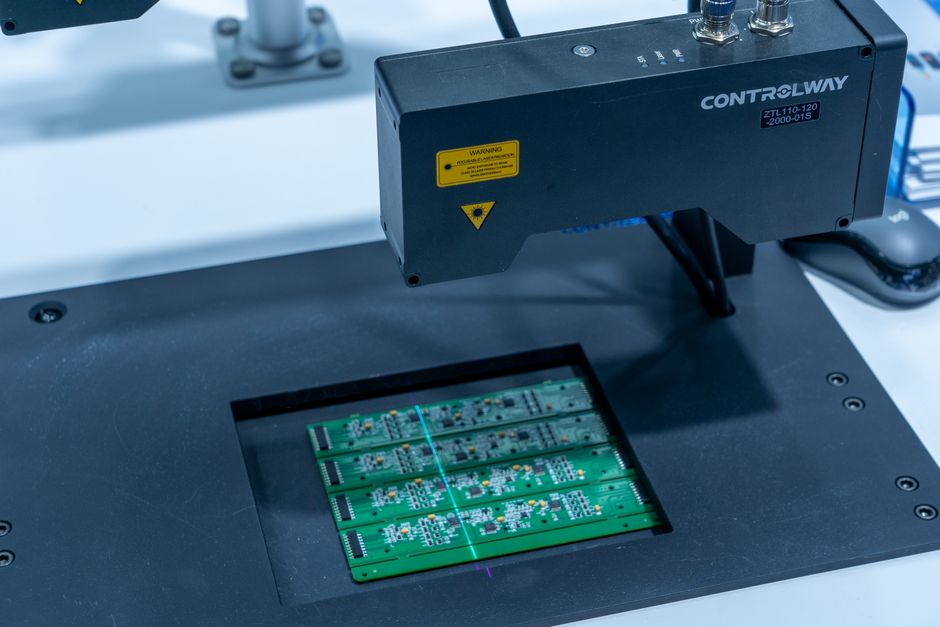
Cyient DLM’s existing capabilities in precision sheet metal fabrication, complete box-build assembly, and advanced PCB assembly (including surface-mount technology) are directly applicable to telecom. The strategic elevation of this role indicates an intent to move further up the value stack, potentially offering design-led manufacturing (DLM) services for custom O-RAN radio units, modular data center power distribution units (PDUs), and AI-accelerated network interface cards.
Industry Impact: Reshoring, Supply Chain Security, and Vendor Strategy

Alapati’s appointment occurs against a backdrop of global telecom operators and cloud providers actively diversifying their hardware supply chains away from single-region dependencies. The post-pandemic and geopolitical landscape has made supply chain resilience a top-tier operational risk. Companies like Cyient DLM, with strong design and manufacturing roots in India—a country increasingly seen as a strategic alternative or supplement to traditional manufacturing hubs—are poised to benefit.
For Mobile Network Operators (MNOs), Tower Companies (TowerCos), and hyperscale data center operators, this development signifies a growing and sophisticated supply base for critical network components. A strengthened Indian EMS sector provides more negotiating leverage, potential for cost optimization, and a hedge against logistics disruptions. Furthermore, as network architectures become more open and disaggregated (e.g., O-RAN, Open Optical), the role of specialized EMS partners becomes even more crucial. They provide the hardware integration and testing layer that binds open-source software with merchant silicon and generic hardware.
The move also pressures competing global EMS providers and in-house manufacturing units of legacy telecom equipment vendors. Cyient DLM’s focused growth strategy, led by an executive with a track record in scaling, suggests it will aggressively compete for contracts involving next-generation, power-dense, and thermally challenging hardware—precisely the kind needed for AI-ready data centers and energy-efficient 5G networks.
Strategic Implications for the Global and MENA Telecom Markets

The strategic implications extend beyond India. The Middle East and North Africa (MENA) region, undergoing massive digital transformation projects like Saudi Arabia’s Vision 2030 and the UAE’s digital economy push, is a net importer of high-end telecom and data center hardware. A robust and competitive manufacturing ecosystem in India can serve as a reliable, geographically proximate source for this equipment, potentially reducing lead times and costs for MENA operators.
For African telecom markets, where network expansion and modernization are capital-intensive, having access to cost-competitive yet high-quality hardware is paramount. Cyient DLM’s focus on scaling could translate into more affordable and accessible infrastructure components for African MNOs, supporting the continent’s push for broader 4G coverage and selective 5G deployment. The company’s expertise in building hardware for challenging environments (e.g., ruggedized enclosures, efficient thermal management) is directly relevant to the African operating context.
Globally, this appointment underscores the increasing convergence of telecom, cloud, and AI infrastructure. The hardware needs of these sectors are merging, demanding manufacturing partners that understand the unique reliability, power, and performance requirements of each. Alapati’s background in scaling for “next-generation computing” and AI adjacencies positions Cyient DLM at this convergence point.
Forward-Looking Analysis: The Hardware Foundation of the AI-Native Network

The appointment of a Chief Strategy and Growth Officer with this specific mandate is a clear market signal. Cyient DLM is betting that the next phase of telecom growth will be hardware-intensive, driven by AI workloads at the edge, denser fiber and wireless networks, and sustainable power solutions. For the telecom sector, this means the supply chain for physical infrastructure is becoming a strategic battlefield.
Operators should monitor EMS providers like Cyient DLM not just as suppliers, but as innovation partners capable of co-developing customized hardware solutions. The success of Alapati’s strategy will be measured by Cyient DLM’s ability to secure design-win partnerships with leading telecom OEMs and cloud providers, moving from being a contract manufacturer to a strategic enabler of network evolution.
In the coming 18-24 months, expect Cyient DLM to potentially announce new manufacturing capacity expansions, strategic technology partnerships (e.g., with chipset vendors like Intel, NVIDIA, or Marvell), and entry into new, adjacent hardware categories critical for the AI-native network, such as direct liquid cooling solutions for edge data centers or integrated power systems for Open RAN cell sites. The race to build the physical foundation for an AI-powered digital world is on, and telecom infrastructure is at its core.
About the Author