Starlink Constellation Scale Signals Major Shift in Telecom Infrastructure Economics
SpaceX’s Starlink low Earth orbit (LEO) constellation has grown to 6,371 operational satellites as of May 2026, according to data cited by Satellite Oasis. This massive scale, enabled by SpaceX’s vertically integrated rocket manufacturing and reusable launch technology, fundamentally alters the economic equation for satellite broadband. For telecom operators, this expansion represents both a competitive threat in underserved markets and a potential wholesale backhaul partner in hard-to-reach regions. The constellation’s growth directly impacts business cases for terrestrial fiber expansion, particularly in rural and remote areas where government subsidies have historically failed to deliver adequate connectivity.
The deployment cadence—with SpaceX launching rockets nearly daily for its own services and government contracts—has created unprecedented satellite density. This density is critical for reducing latency and increasing capacity. Starlink satellites operate at altitudes between 340 km and 570 km, compared to traditional geostationary satellites at approximately 35,786 km. This altitude difference translates to latency reductions from 600+ milliseconds to 20-40 milliseconds, making LEO service viable for real-time applications like VoIP, gaming, and enterprise VPNs that were previously impractical over satellite.
From a network engineering perspective, Starlink’s in-house control over rockets, satellites, ground stations, and user terminals creates significant cost advantages. This vertical integration allows SpaceX to iterate quickly on satellite design, with newer generations featuring laser inter-satellite links (ISLs) that enable routing traffic through space without ground station hops. For network planners at telecom operators, this means Starlink can offer lower-latency paths than some terrestrial fiber routes that require multiple peering points.
Industry Impact: Reshaping Competition Between Telcos, Satellite Operators
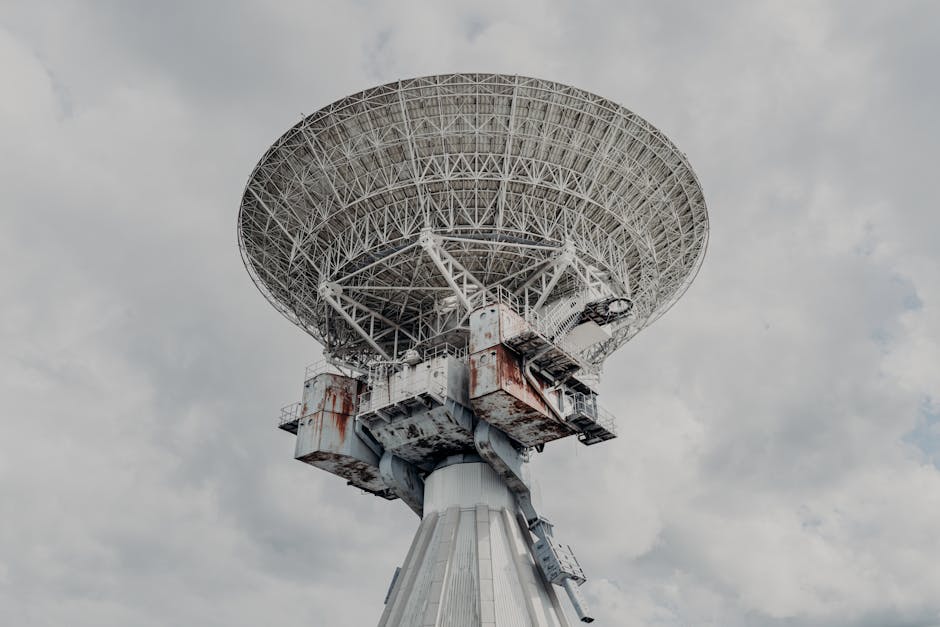
The Starlink constellation’s expansion creates immediate competitive pressure on three fronts: incumbent satellite operators, rural fixed wireless access (FWA) providers, and mobile network operators (MNOs) in coverage-challenged regions. Viasat, HughesNet, and other GEO satellite providers face direct substitution as Starlink offers higher speeds (100+ Mbps vs. 25 Mbps typical for GEO) and lower latency. For telecom operators with rural FWA assets, Starlink represents a technologically superior alternative that doesn’t require tower infrastructure.
Perhaps more significant is Starlink’s emerging role as a wholesale infrastructure provider. The SpaceX-T-Mobile partnership on satellite-to-cell service demonstrates how LEO constellations can augment terrestrial networks rather than just compete with them. This “Direct to Cell” service, scheduled for initial text capability in 2024 and expanding to voice/data in 2025, gives MNOs a new tool for addressing coverage gaps without building expensive towers in low-ROI areas. For operators in regions with challenging topography—mountainous areas, island nations, or vast deserts—Starlink backhaul could reduce reliance on expensive microwave links or undersea cable landing stations.
From an investment perspective, Starlink’s scale challenges the business case for new GEO-HTS satellites costing $200-$500 million each. With SpaceX’s Starship heavy-lift vehicle expected to further reduce launch costs, the capital efficiency gap between traditional satellite operators and SpaceX will likely widen. Infrastructure investors should watch for consolidation among GEO operators and increased partnerships between MNOs and LEO providers.
Regional Implications: Africa, MENA, and Emerging Markets Face Connectivity Transformation

In Africa and the Middle East, where terrestrial infrastructure gaps are most pronounced, Starlink’s constellation presents both disruption and opportunity. Countries with low population density or political instability that have hindered fiber rollout—such as parts of the Sahel, Central Africa, and Yemen—now have a commercially viable alternative. However, spectrum licensing and terminal affordability remain significant barriers. Starlink terminals currently retail for $599-$2,500, though SpaceX has indicated prices should decrease with scale.
For African telecom regulators, Starlink creates policy dilemmas. While the service can accelerate national broadband goals, it also bypasses local infrastructure investment and potentially reduces government control over internet access. Several African nations have already restricted or banned Starlink service, including Senegal and Zimbabwe, citing licensing violations. Conversely, others like Nigeria and Kenya have embraced it as a tool for digital inclusion. The competitive dynamic is particularly acute in markets where incumbent operators have enjoyed monopoly positions in underserved areas.
In the MENA region, oil & gas operations, maritime logistics, and desert tourism represent premium markets where Starlink’s mobility features—including maritime and aviation services—can command premium pricing. For telecom operators serving enterprise clients in these sectors, Starlink represents both a competitive threat and a potential partnership opportunity for hybrid network solutions.
Strategic Outlook: Hybrid Networks and New Telecom Ecosystem Roles

The telecom industry is moving toward hybrid network architectures where LEO satellites complement rather than replace terrestrial infrastructure. For network engineers, this means designing systems with dynamic traffic steering between fiber, 5G, and satellite links based on latency requirements, cost, and availability. Software-defined networking (SDN) and network function virtualization (NFV) will be essential for managing these heterogeneous networks.
Looking forward, several developments will shape Starlink’s telecom impact:
- Spectrum Coordination: As LEO constellations grow, interference management with 5G and fixed wireless spectrum becomes critical. The ITU World Radiocommunication Conference 2027 will address these issues.
- Edge Computing Integration: Starlink’s low latency enables edge computing applications in remote locations, potentially creating new revenue streams for operators.
- Standardization: 3GPP Release 19 includes enhanced satellite-to-terrestrial integration, which could accelerate operator adoption of LEO backhaul.
- Competitive Response: Amazon’s Project Kuiper (3,236 satellites planned), OneWeb (648 satellites), and Telesat’s Lightspeed are racing to deploy competing constellations.
For telecom executives, the strategic imperative is to develop clear policies regarding LEO partnerships versus competition. Operators with strong rural positions should consider defensive measures like subsidized FTTP expansion or FWA upgrades. Those in coverage-constrained markets should evaluate wholesale agreements with Starlink or competitors. Infrastructure investors should monitor SpaceX’s eventual IPO plans, which could provide capital for further constellation expansion while increasing competitive transparency.
The 6,371-satellite milestone confirms that LEO broadband has moved from experimental to commercially operational. As the constellation grows toward SpaceX’s initial target of 12,000 satellites and ultimate goal of 42,000, its impact on telecom economics, regulation, and competition will only intensify. Network operators that strategically engage with this new layer of infrastructure—whether as partners, competitors, or customers—will be best positioned in the evolving connectivity landscape.
About the Author