TOKYO, July 3, 2026 – Japanese memory chip giant Kioxia Holdings Corp. has begun shipping samples of its next-generation, 3D flash memory technology, a strategic move to capitalize on the exploding demand for AI infrastructure hardware, according to a report by ETTelecom. This product launch coincides with a dramatic financial turnaround, with Kioxia’s stock price surging over sevenfold since late 2023, as the company positions itself as a critical supplier for data centers, AI accelerators, and high-performance storage. The firm is also actively pursuing a U.S. stock market listing to boost its global competitiveness and fundraising capabilities in a sector now dominated by AI-driven capital expenditure.
For telecom network operators and infrastructure providers, Kioxia’s resurgence signals a pivotal shift in the supply chain for the high-density, low-latency storage required at the edge and in core data centers. As networks evolve to support massive AI inference workloads, 5G-Advanced, and immersive services, the performance and economics of NAND flash memory directly impact the total cost of ownership for cloud RAN (vRAN/O-RAN), AI-powered network functions, and subscriber data management systems. Kioxia’s push into advanced nodes, such as its 300+ layer 3D NAND, is a direct response to the insatiable data throughput and capacity demands of modern telecom software-defined infrastructure.
Technical Deep Dive: The 3D NAND Race Heats Up for AI Workloads

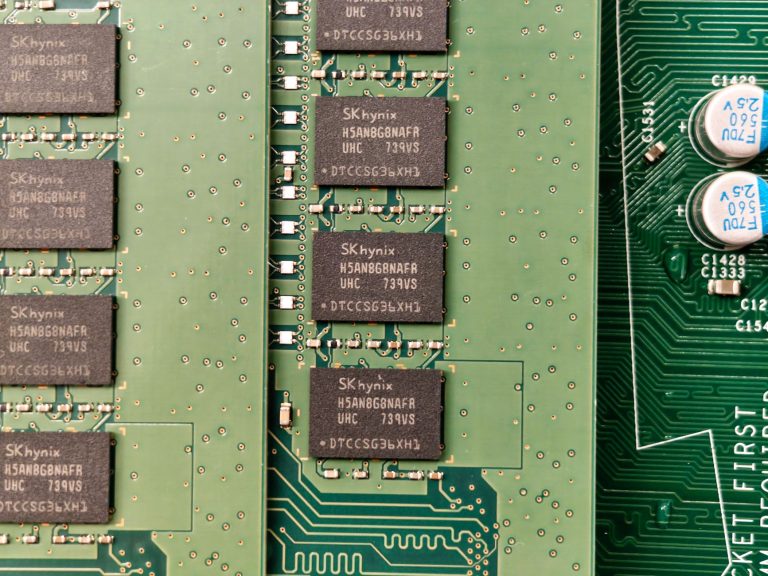
Kioxia’s next-generation memory samples represent the cutting edge of 3D NAND flash technology, a storage architecture where memory cells are stacked vertically like skyscrapers to achieve vastly higher densities than traditional planar NAND. While the ETTelecom report does not specify the exact layer count of the new samples, industry trajectory indicates this is likely Kioxia’s push beyond 300 layers, competing directly with Samsung’s 9th-generation V-NAND and SK Hynix’s 321-layer products announced in 2025.
The technical imperatives for AI are distinct from consumer storage. AI training and inference require not just massive capacity but extreme bandwidth and input/output operations per second (IOPS). High-performance SSDs built on advanced 3D NAND are critical for reducing data bottlenecks in AI pipelines, where models must rapidly access vast datasets. For telecom, this translates to faster processing of network telemetry for predictive maintenance, real-time analytics for customer experience management, and low-latency retrieval in content delivery networks (CDNs). Kioxia’s technology, developed in its Yokkaichi and Kitakami plants in Japan, leverages innovations in cell stacking, charge trap flash (CTF) architecture, and advanced circuitry to reduce latency and increase endurance—key metrics for write-intensive network logging and caching applications.
Financially, Kioxia’s comeback is staggering. From a low of around ¥2,900 in late 2023, its shares skyrocketed to over ¥21,000 by mid-2026, a more than 7x increase. This rebound is fueled by the broader AI investment supercycle, which has reversed a prolonged downturn in the memory market. The company’s operating profit swung from a significant loss to profitability, driven by disciplined production cuts industry-wide and a surge in average selling prices (ASPs) for NAND. Kioxia’s strategic focus is now clear: capture a dominant share of the high-margin enterprise and data center SSD market, which is growing at a CAGR exceeding 20%, far outpacing consumer segments.
Industry Impact: Reshaping the Supply Chain for Network and Data Center Operators

The re-emergence of a strong, technologically competitive Kioxia has profound implications for the global telecom infrastructure ecosystem. For years, the NAND market has been consolidating, with Samsung, SK Hynix, and Western Digital (Kioxia’s former joint-venture partner) holding dominant positions. A revitalized Kioxia injects crucial competition and supply diversity into a market that is foundational to modern networking.
- Supply Security & Pricing Leverage for Hyperscalers & Telcos: Major cloud providers (AWS, Google Cloud, Microsoft Azure) and large telecom operators building massive data centers rely on a stable, multi-vendor supply chain for critical components like SSDs. Kioxia’s strengthened position gives these buyers an alternative source, mitigating geopolitical and supply disruption risks. This competition can also help moderate price inflation for storage, a significant line item in Capex for network core modernization and edge data center rollouts.
- Accelerating vRAN and Open RAN Adoption: Virtualized RAN architectures demand high-performance, low-latency storage for the virtualized network functions (VNFs) and containerized network functions (CNFs) that run on commercial off-the-shelf (COTS) servers. The storage performance directly impacts metrics like fronthaul latency and channel processing times. Advanced NAND from Kioxia and its peers enables denser, more cost-effective server designs for distributed units (DUs) and centralized units (CUs), making large-scale Open RAN deployments more economically viable.
- Fueling AI at the Edge: The vision of running AI inference on edge network nodes—from cell towers to central offices—requires rugged, high-endurance storage that can handle constant data writes from IoT sensors, video analytics, and network optimization algorithms. Kioxia’s focus on improving the write cycles and power efficiency of its NAND aligns perfectly with the harsh environmental and operational demands of telecom edge infrastructure.
- Strategic Partnerships and JV Dynamics: The dissolution of Kioxia’s deep flash memory joint venture with Western Digital in 2025, after regulatory hurdles blocked a full merger, forced both companies onto independent paths. Kioxia’s current success validates its standalone technology roadmap. However, the industry will watch for new strategic partnerships, potentially with other Japanese tech firms or with specific cloud/telecom giants seeking co-developed, customized memory solutions for their AI hardware stacks.
Regional & Strategic Implications: Japan’s Tech Revival and Global Telecom Hardware Dynamics

Kioxia’s resurgence is not occurring in a vacuum; it is part of a broader strategic effort by Japan to reclaim leadership in critical semiconductor technologies. Backed by substantial government subsidies through Japan’s Ministry of Economy, Trade and Industry (METI), Kioxia represents a national champion in the memory sector. This has implications for global supply chain resilience, particularly as the U.S. and its allies seek to diversify semiconductor manufacturing away from geopolitical hotspots.
For telecom markets in Africa, the Middle East, and Southeast Asia, which are heavily dependent on imported network equipment and data center hardware, a more competitive and geographically diverse memory supply chain is a net positive. It reduces single-point dependency and could, over time, lead to more affordable storage solutions for emerging market operators building out their first major cloud and AI capabilities.
The pursuit of a U.S. listing, as reported, is a bold strategic move. It would provide Kioxia with access to deeper capital markets and a higher valuation multiple typically afforded to tech companies in New York. The capital raised would fuel aggressive R&D and capacity expansion, essential to keep pace with Samsung and SK Hynix. For telecom investors, a publicly traded Kioxia on a major U.S. exchange offers a pure-play investment vehicle into the AI infrastructure hardware boom, distinct from the broader conglomerates that dominate the current landscape.
Conclusion: Forward-Looking Analysis for the Telecom Sector

Kioxia’s shipment of next-gen NAND samples is a bellwether event for the infrastructure supporting the AI-powered future of telecom. The company’s financial recovery underscores how fundamental memory technology has become to the economic model of advanced networks. As operators deploy more software-defined, cloud-native architectures, the performance, cost, and reliability of storage subsystems will be as critical as processing power and network bandwidth.
Looking ahead, we anticipate three key developments:
- Customization for Telecom Workloads: Memory suppliers like Kioxia will increasingly work directly with network equipment providers and hyperscalers to design SSDs optimized for specific telecom workloads, such as real-time packet processing or distributed database management for 5G cores.
- Convergence of Memory and Network Interfaces: The evolution of technologies like Compute Express Link (CXL) will blur the line between memory and storage. Kioxia’s R&D in areas like CXL-attached memory could lead to novel architectures for telco data centers, reducing latency for AI inference tasks.
- Geopolitical Reconfiguration: A strong, U.S.-listed Kioxia provides a reliable, allied source of advanced memory, which may influence procurement decisions by Western telecom operators and governments, especially for sensitive national network infrastructure.
In summary, Kioxia’s comeback is more than a corporate turnaround; it is a strategic reinforcement of the global hardware supply chain that underpins the AI revolution in telecommunications. Network operators planning their next-generation data center and edge builds should closely monitor the competitive dynamics and technology roadmap in the advanced NAND flash market, as it will directly influence the performance and economics of their future services.
About the Author