South Korea’s $3.5B Semiconductor Fund: A Strategic Boost for Telecom Infrastructure and Global Supply Chains
📰Original Source: ETTelecom South Korea’s $3.5B Semiconductor Fund: A Strategic Boost for Telecom Infrastructure and Global Supply Chains Source: According to a report by ETTelecom on August 10, 2026, the South Korean government is set to launch a 5 trillion won ($3.52 billion) semiconductor fund,…
Source: According to a report by ETTelecom on August 10, 2026, the South Korean government is set to launch a 5 trillion won ($3.52 billion) semiconductor fund, officially termed the ‘K-Chip Fund’, aimed at bolstering domestic chip manufacturing capabilities and accelerating the development of national semiconductor mega-clusters. This state-backed initiative, announced by the Ministry of Trade, Industry and Energy, is a direct response to global supply chain vulnerabilities and intensifying geopolitical competition in the strategic semiconductor sector. For telecom operators and network infrastructure providers globally, this investment signals a critical move to secure the foundational silicon for next-generation 5G-Advanced, 6G radios, AI-driven network functions, and edge computing hardware, directly impacting future network roadmaps and vendor strategies.
Technical and Market Deep Dive: The K-Chip Fund’s Structure and Objectives

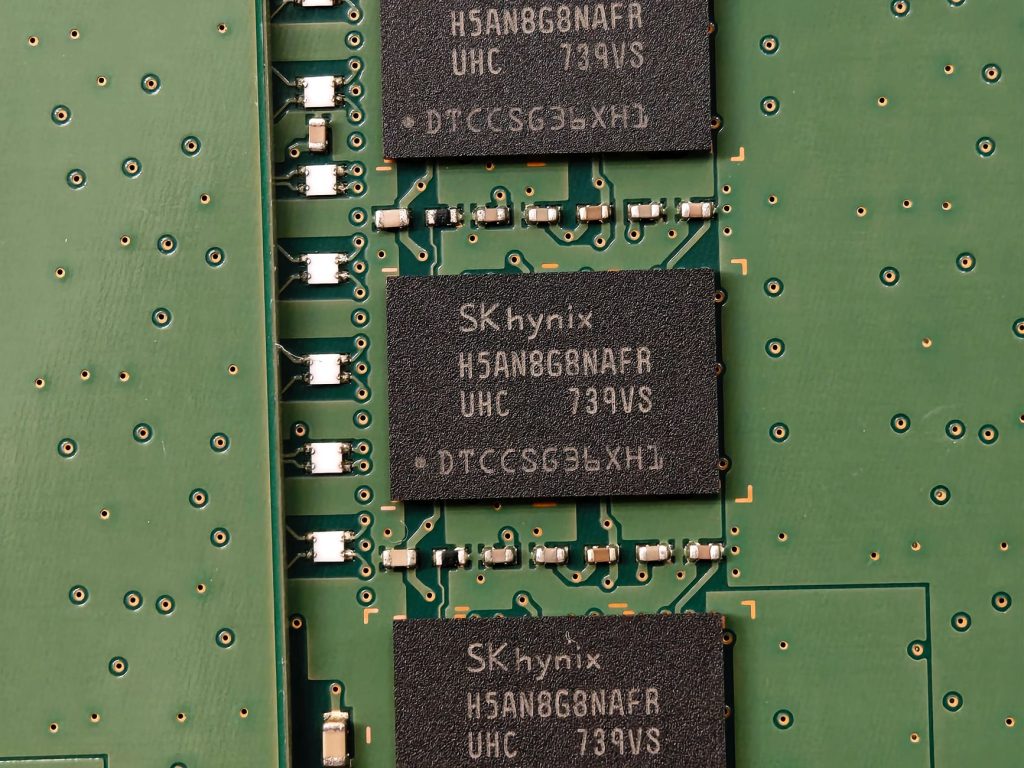
The 5 trillion won K-Chip Fund represents a multi-pronged industrial policy designed to fortify South Korea’s position in the global semiconductor value chain. The fund is structured to address key bottlenecks, with a significant portion earmarked for direct investment in expanding domestic fabrication capacity for both memory and logic chips. A core component involves providing low-interest loans and guarantees to major domestic players like Samsung Electronics and SK Hynix to support their ambitious capital expenditure plans, which collectively exceed $100 billion for new and upgraded fabs. Crucially, the fund also allocates substantial resources to smaller domestic suppliers of materials, components, and equipment—companies specializing in photoresists, high-purity gases, wafer polishing, and advanced testing gear. This supplier-focused support, including enhanced trade finance, is aimed at reducing reliance on foreign, particularly Japanese and Dutch, supply chains and increasing the overall resilience and technological sovereignty of the Korean chip ecosystem.
Parallel to the fund, the government is fast-tracking regulatory approvals and infrastructure development for semiconductor “Mega Special Zones” under the newly revised Mega Special Zone Act. These zones, notably in Pyeongtaek, Yongin, and Cheongju, are designated for large-scale fab complexes. The act streamlines processes for land use, environmental reviews, and power/water allocation, aiming to cut project lead times by up to 30%. The government has committed to ensuring a stable supply of ultra-pure water and a staggering 10 gigawatts (GW) of additional power capacity by 2030 to meet the extreme energy demands of advanced semiconductor manufacturing, which requires continuous, high-quality utility support—a critical consideration for colocation and edge data center strategies in the region.
Industry Impact: Securing the Silicon Backbone for Future Telecom Networks

For the global telecommunications industry, South Korea’s strategic push is far more than a domestic industrial story; it is about securing the physical silicon that will define network capabilities for the next decade. Modern telecom infrastructure is deeply silicon-dependent. Radio Access Network (RAN) units, from massive MIMO antennas to small cells, rely on specialized System-on-Chip (SoC) designs and RF components. Core network functions, especially those virtualized (vRAN, vEPC) and cloud-native (5G Core), demand high-performance, energy-efficient processors from companies like Samsung, which is a key supplier for major telecom equipment vendors. The expansion of memory capacity, led by SK Hynix, is equally vital for the data-intensive workloads of AI-driven network optimization, real-time analytics, and content caching at the edge.
This fund directly impacts telecom operators (MNOs) and infrastructure players in several key ways. Firstly, it mitigates supply chain risk. The concentrated nature of advanced semiconductor manufacturing—with over 90% of cutting-edge logic chips produced in Taiwan and South Korea—has been a persistent concern for network rollouts. By incentivizing capacity expansion in a second major jurisdiction, the fund helps diversify the geographic risk for critical components. Secondly, it accelerates the roadmap for telecom-specific silicon. With assured capital and supportive policy, Korean chipmakers can more aggressively invest in R&D for application-specific integrated circuits (ASICs) for Open RAN, silicon photonics for optical transport, and low-power chips for IoT modules. This could lead to more competitive pricing, innovation, and supply stability for equipment vendors like Ericsson, Nokia, and Huawei, who source from these firms, ultimately benefiting network operators through more advanced and cost-effective infrastructure options.
Strategic and Regional Implications: The Geopolitics of Telecom Infrastructure

South Korea’s $3.5 billion fund must be viewed within the broader context of global semiconductor nationalism, a trend with profound implications for telecom infrastructure planning worldwide. It is a counter-move to similar massive subsidies enacted by the United States (CHIPS Act), the European Union (European Chips Act), Japan, and China. This global subsidy race is reshaping the semiconductor manufacturing map, potentially creating regionalized supply hubs. For telecom operators, particularly in Africa, the Middle East, and Southeast Asia, this could influence future vendor selection, equipment costs, and technology availability. Operators may need to consider the geopolitical alignment of their primary equipment vendors’ supply chains as part of their risk management strategy.
Furthermore, the success of South Korea’s initiative has direct bearing on the pace of 6G development. Korean entities like Samsung and LG are core contributors to global 6G standardisation efforts in bodies like the ITU and 3GPP. Their ability to prototype and produce terahertz (THz) frequency chips, advanced antenna-in-package solutions, and AI-hardware for native AI-air interfaces is contingent on access to leading-edge fabrication nodes (2nm and below). The K-Chip Fund provides the financial fuel for this R&D. For forward-looking operators, a robust Korean semiconductor sector means a more viable and competitive path to 6G commercialization post-2030, with potential implications for spectrum strategy and long-term capital planning.
The focus on “Mega Special Zones” also creates new infrastructure opportunities. The guaranteed demand for 10 GW of power and vast amounts of ultra-pure water will spur massive investments in South Korea’s industrial utility infrastructure. This could create synergies for co-locating high-density, low-latency edge data centers near these semiconductor clusters to serve emerging applications like real-time industrial AI, autonomous systems, and advanced network slicing—offering a potential blueprint for other nations seeking to integrate semiconductor and digital infrastructure planning.
Conclusion: Forward-Looking Analysis for the Telecom Sector

South Korea’s $3.5 billion semiconductor fund is a strategic, state-capitalist intervention with clear ripple effects across the global telecommunications landscape. It is not merely an industrial subsidy but an investment in the foundational technology stack upon which future networks will be built. In the near term (2-4 years), telecom operators should monitor this development for its potential to stabilize supply chains for 5G expansion and fiber network equipment. In the medium term (5-7 years), the impact will be felt in the availability and capability of chips powering Open RAN deployments, AI-native networks, and edge computing appliances.
For infrastructure investors and telecom executives, the key takeaway is the accelerating convergence of semiconductor policy and network strategy. Procurement decisions must now account for silicon sovereignty and supply chain resilience as critical factors alongside performance and price. The era where chips were a commoditized, invisible component is over; they are now a central strategic asset. South Korea’s move reinforces that nations and companies controlling advanced semiconductor design and manufacturing will wield significant influence over the pace and direction of global telecommunications evolution. The race to build the networks of the future is, fundamentally, a race built on silicon.