
Starlink’s Maritime & Aviation Ambitions Challenge GEO Satcom and Undersea Cable Economics
Source: Starlink’s commercial service expansion into maritime and aviation verticals, as detailed in its official service offerings and FCC filings, signals a direct competitive assault on traditional Geostationary Earth Orbit (GEO) satellite operators and begins to reshape the economics of global backhaul and remote connectivity.…
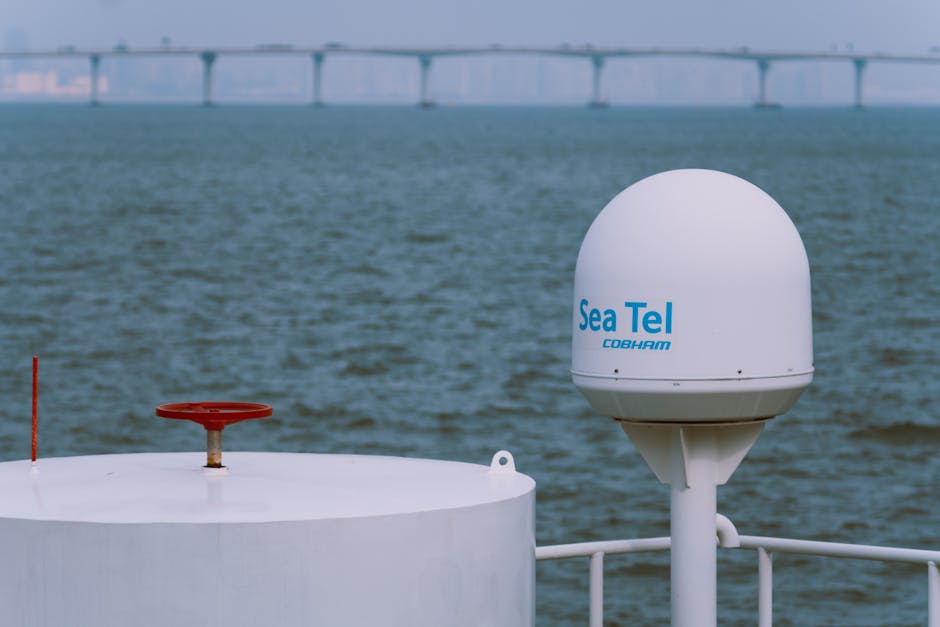
Source: Starlink’s commercial service expansion into maritime and aviation verticals, as detailed in its official service offerings and FCC filings, signals a direct competitive assault on traditional Geostationary Earth Orbit (GEO) satellite operators and begins to reshape the economics of global backhaul and remote connectivity. This move, leveraging its growing Low Earth Orbit (LEO) constellation, introduces a new paradigm for high-bandwidth, low-latency connectivity at sea and in the air, directly challenging incumbents like Inmarsat, Viasat, Intelsat, and SES, while also presenting a new layer of competition for mobile network operators (MNOs) and undersea cable consortiums in specific use cases.
Technical Specifications and Service Tiers: The LEO Advantage

Starlink’s foray into maritime and aviation is not a simple repackaging of its residential service. It is built on specialized hardware and service tiers designed for high-mobility, high-demand environments. The core technical differentiator remains the LEO architecture: satellites orbiting at approximately 550 km, versus GEO satellites at 35,786 km. This reduces signal latency from ~600 ms (GEO) to under 50 ms, a critical factor for real-time applications like video conferencing, financial trading platforms at sea, and in-flight operational communications.
For maritime, Starlink offers a ‘Flat High-Performance’ terminal with a wider field-of-view and enhanced stabilization for vessel pitch and roll. Publicly listed specifications indicate download speeds ranging from 50-350 Mbps and uploads from 10-40 Mbps, with plans offering prioritized data (e.g., 1 TB, 5 TB) before potential deprioritization. This performance bracket directly targets and surpasses the standard GEO VSAT offerings for commercial shipping, which typically deliver 10-100 Mbps with significantly higher latency and cost-per-bit.
In aviation, Starlink Aviation, with partnerships already announced with airlines like Hawaiian Airlines and JSX, promises in-flight broadband with speeds up to 350 Mbps per aircraft. The aviation antenna is a low-profile, electronically steered phased array, certified for aerodynamic performance. The service model is a flat monthly fee per aircraft, contrasting sharply with the capacity-based, often exorbitant, pricing models of traditional in-flight connectivity (IFC) providers like Gogo and the satellite divisions of Viasat and Intelsat.
Industry Impact: Disruption for GEO Operators and New Dynamics for MNOs

The immediate impact is felt most acutely by GEO Fixed Satellite Service (FSS) and Mobile Satellite Service (MSS) operators. Their maritime and aero segments are high-margin revenue streams. Starlink’s entry commoditizes high-throughput, low-latency connectivity, forcing incumbents to accelerate their own LEO plans (e.g., Viasat’s acquisition of Inmarsat, SES’s mPower MEO constellation) and slash prices. The competitive response is multifaceted: bundling services, enhancing managed service offerings, and leveraging legacy regulatory and distribution channels. However, the capex advantage of a single, globally scalable LEO network versus multiple GEO/MEO hybrid systems is significant.
For Mobile Network Operators (MNOs), particularly those serving archipelagos or coastal regions, Starlink Maritime presents both a threat and an opportunity. It threatens traditional cellular-at-sea services and offshore platform backhaul contracts. However, it also offers a powerful new tool for network expansion. An MNO can use Starlink as a primary or diverse backhaul link to offshore islands or temporary event sites, bypassing the need for expensive microwave hops or waiting for undersea cable landings. This enables faster 4G/5G deployment in remote areas, though it introduces a new dependency on a non-terrestrial infrastructure provider.
Infrastructure investors and private equity firms backing fiber and undersea cable projects must now factor in LEO competition for certain mid-haul and trunking applications. While undersea cables offer unparalleled capacity (terabits per second) and cost-per-bit for dense traffic routes, Starlink’s model is competitive for thin-route, low-latency requirements and rapid deployment scenarios where laying cable is impractical or too slow.
Strategic Implications for Africa, MENA, and Global Telecom Dynamics

The implications for emerging telecom markets in Africa and the Middle East are profound. These regions have vast maritime economic zones (fishing, oil & gas, shipping lanes) and challenging terrestrial geography. Traditional GEO satellite has been the default for offshore connectivity, but its high cost and poor performance have limited digitalization. Starlink Maritime, if licensed and made available, could dramatically lower the entry barrier for digital services in these sectors, boosting economic activity. For landlocked nations, Starlink Aviation improves the viability of direct international flights by enabling high-quality passenger and crew connectivity, enhancing airline competitiveness.
Regulatory hurdles remain the primary gatekeeper. Spectrum coordination, landing rights, and economic protectionism will dictate the pace of adoption. Countries with state-owned telecom operators or GEO satellite interests may slow or block Starlink’s entry. However, the consumer and business demand for better connectivity is a powerful counterforce. Regulators are now forced to evaluate LEO technology not just as a consumer internet service, but as critical infrastructure for transportation, energy, and national security.
Globally, this accelerates the convergence of terrestrial and non-terrestrial networks (NTN). 3GPP’s integration of NTN into 5G-Advanced and 6G standards is no longer academic. Network architects must design hybrid architectures that seamlessly integrate LEO backhaul, GEO for broadcast, and terrestrial fiber. The role of the telecom operator is evolving from pure pipe provider to a manager of a multi-orbit, multi-technology connectivity fabric.
Forward-Looking Analysis: The New Connectivity Stack

The telecom landscape is stratifying into a new stack: 1) Ultra-High-Capacity Layer (Undersea cables, terrestrial fiber for core/aggregation), 2) Global Low-Latency Mesh Layer (LEO constellations like Starlink, OneWeb, Kuiper for mobility and remote access), 3) Broadcast & Managed Services Layer (GEO/MEO satellites for specific government, broadcast, and legacy MSS), and 4) Ubiquitous Access Layer (Terrestrial 4G/5G/6G).
Starlink’s push into maritime and aviation solidifies its position in Layer 2 and begins to erode Layer 3. The long-term battle will be over the intelligence layer that orchestrates between these physical networks – the software-defined wide area networking (SD-WAN) and network-as-a-service (NaaS) platforms. Operators that can effectively source capacity from LEO, GEO, and fiber, and present it as a unified, SLA-backed service to enterprise and government clients will capture the greatest value.
For infrastructure players, the message is clear: specialization is key. Undersea cable consortia must focus on maximizing capacity and reducing costs on major routes. Tower companies must prepare for a proliferation of satellite gateways and edge compute nodes. The era of a single technology dominating global communications is over; the future is heterogeneous, and Starlink has just secured a major role in it.