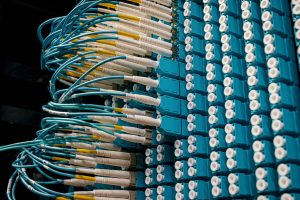
Strategic Shift: Apple-Intel Partnership Signals US Reshoring Push with Major Telecom Infrastructure Implications
📰Original Source: ETTelecom / The Wall Street JournalStrategic Shift: Apple-Intel Partnership Signals US Reshoring Push with Major Telecom Infrastructure Implications Source: ETTelecom, citing statements from former President Donald Trump and a May Wall Street Journal report on a preliminary Intel-Apple deal. The reported collaboration, aimed…
Strategic Shift: Apple-Intel Partnership Signals US Reshoring Push with Major Telecom Infrastructure Implications
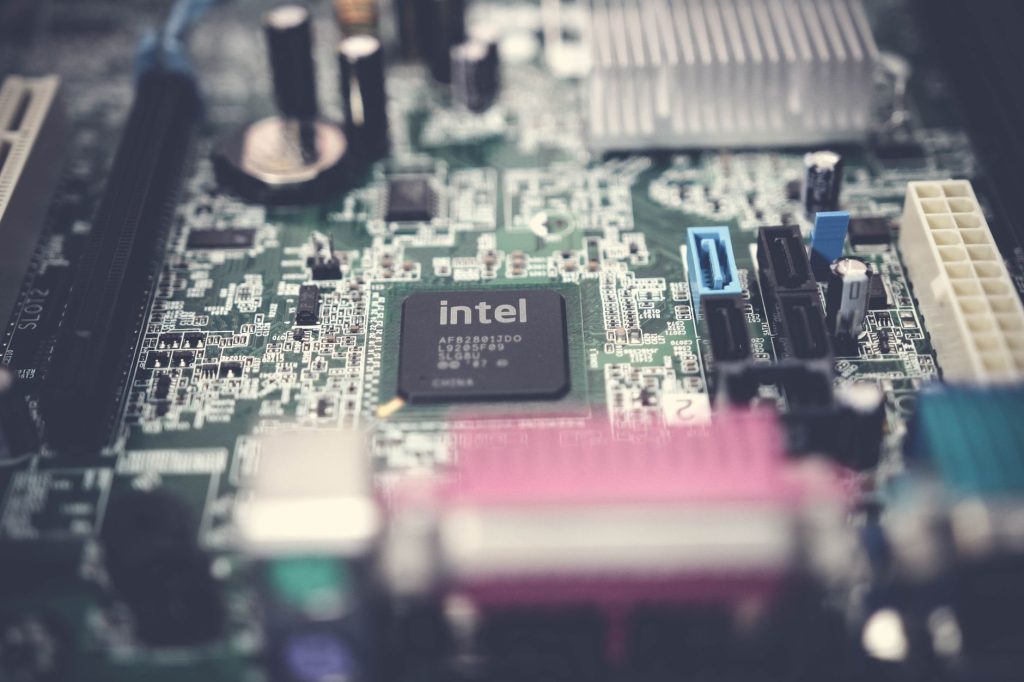
Source: ETTelecom, citing statements from former President Donald Trump and a May Wall Street Journal report on a preliminary Intel-Apple deal. The reported collaboration, aimed at designing and producing chips in the United States, represents a critical inflection point for the global semiconductor supply chain, with profound consequences for telecom network equipment, 5G/6G infrastructure, and device ecosystems.
Former President Donald Trump’s announcement that Apple will partner with Intel on US-based chip design and production underscores a high-stakes geopolitical and industrial realignment. For telecom operators and infrastructure providers, this move is not merely a consumer device story; it is a direct signal of intensifying pressure to secure resilient, geopolitically aligned supply chains for the core silicon that powers everything from baseband units and core network routers to smartphones and IoT modules. The preliminary deal, reported by the Wall Street Journal in May 2026 after over a year of discussions, would see Intel’s advanced foundry services (IFS) fabricate certain Apple chips, marking a potential reversal of Apple’s long-standing reliance on Asia-based TSMC for its most advanced processors.
Technical and Market Deep Dive: From A-Series to Infrastructure Silicon
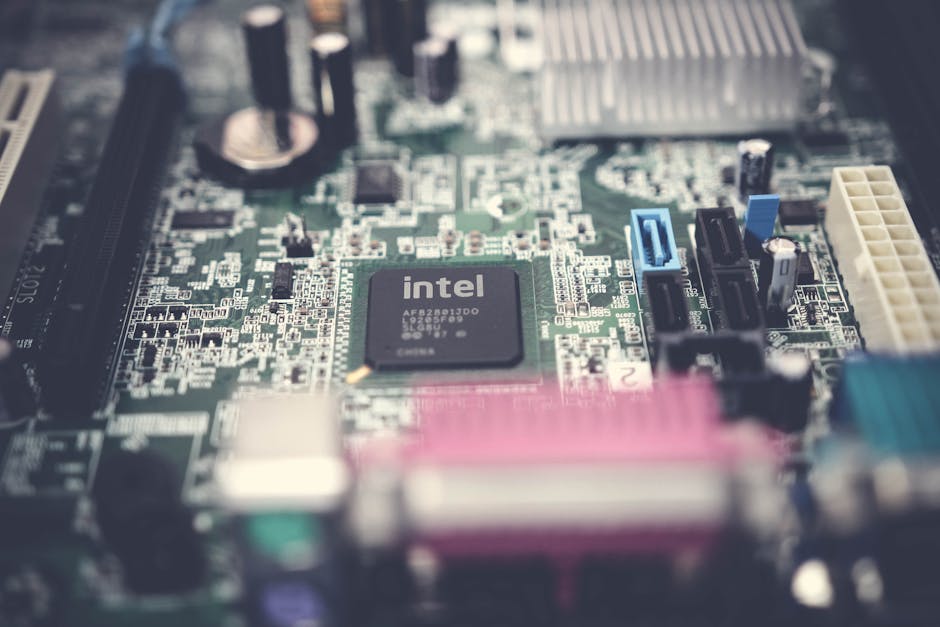
The telecom industry’s dependency on advanced semiconductors is absolute. Modern radio access networks (RAN), whether Open RAN or traditional integrated systems, are built on system-on-chip (SoC) designs integrating CPUs, GPUs, NPUs, and specialized accelerators for signal processing (DSP). Core network functions virtualized on commercial off-the-shelf (COTS) hardware rely on server-grade CPUs from Intel, AMD, and ARM-based designs. Apple’s own silicon journey, culminating in the M-series for Macs and A-series for iPhones, demonstrates the performance and power efficiency gains possible with custom, tightly integrated design.
A partnership with Intel’s IFS division would provide Apple with a geographically diversified manufacturing base within the United States. For Intel, securing Apple as a flagship foundry customer is a strategic imperative to validate its process technology roadmap and achieve scale against TSMC and Samsung. For the telecom sector, the implications are twofold:
- Infrastructure Silicon Supply: While initial production may focus on consumer-facing A-series or M-series chips, the underlying Intel 18A (1.8nm equivalent) and subsequent process nodes are precisely the technology needed for next-generation network processing units (NPUs) and baseband modems. A robust US-based advanced node foundry offers network equipment providers (NEPs) like Cisco, Nokia, Ericsson, and Juniper a domestic alternative for sourcing cutting-edge ASICs and FPGA components critical for 5G-Advanced and 6G systems.
- Device Ecosystem Resilience: iPhones are key endpoints on global mobile networks. A US-made Apple SoC could mitigate supply chain disruptions impacting device availability for operators. More broadly, it sets a precedent for other device OEMs to consider dual-sourcing or reshoring strategies, potentially influencing the supply chain for Android smartphones, cellular tablets, and connected devices.
The deal’s structure remains pivotal. Will it involve co-design of new chips tailored for telecom edge computing, or is it purely a manufacturing agreement? Intel’s packaging technologies, such as Foveros 3D, could be leveraged to create heterogeneous chiplets combining Apple’s custom CPU cores with Intel’s connectivity IP (e.g., mmWave RF) or networking accelerators.
Industry Impact: Reshaping Operator and Equipment Vendor Strategies

For Mobile Network Operators (MNOs) and telecom infrastructure investors, the Apple-Intel news accelerates several existing strategic trends:
1. Supply Chain Security as a Core Network KPI: Operators can no longer view supply chain as purely a procurement concern. The fragility exposed during the COVID-19 pandemic and ongoing geopolitical tensions has made component sourcing a first-order issue for network reliability and expansion plans. A viable US advanced foundry capability provides a contingency option. Operators, especially in North America and allied markets, may begin to stipulate a percentage of “trusted source” components in future RFPs for Open RAN and core network equipment, directly benefiting suppliers who can integrate US-fabricated silicon.
2. Cost and Lead Time Dynamics: Reshoring is not cost-neutral. Fabrication in the United States is typically more expensive than in East Asia. This cost will be passed through the value chain, potentially increasing CapEx for network builds. Operators must weigh this against the risk premium of concentrated, geopolitically vulnerable supply. Lead times could improve for US-based operators if local production reduces logistical bottlenecks, enabling faster deployment cycles for network upgrades.
3. Competitive Rebalancing Among NEPs: Equipment vendors with strong US R&D and existing Intel partnerships may gain an edge. For example, Intel is a major partner in the Open RAN ecosystem, providing FlexRAN reference software and Xeon-based platforms. A stronger, Apple-backed Intel foundry business could enhance the performance and availability of Intel’s telecom-focused silicon, benefiting vendors like Mavenir, Rakuten Symphony, and Dell who build on this stack. Conversely, vendors reliant on TSMC may face new scrutiny from customers prioritizing supply chain diversity.
Regional and Global Telecom Dynamics: The Africa and MENA Angle

While a US-centric partnership, the ripple effects will be felt in emerging telecom markets across Africa and the Middle East and North Africa (MENA).
Africa’s Infrastructure Build-Out: African operators are engaged in massive 4G expansions and selective 5G deployments. Their primary constraints are cost and financing, not geopolitical supply chain nuances. However, if the Apple-Intel deal contributes to a broader bifurcation of the tech ecosystem into US-aligned and China-aligned spheres, African nations may face increased pressure to choose sides in infrastructure procurement. Historically, African networks have been built with a mix of European (Ericsson, Nokia), Chinese (Huawei, ZTE), and other vendors. A more polarized landscape could complicate multi-vendor strategies and financing tied to geopolitical alliances.
MENA’s Strategic Position: Gulf Cooperation Council (GCC) operators, such as stc, e&, and Ooredoo, are leaders in 5G adoption and are investing heavily in digital infrastructure and sovereign cloud capabilities. For them, supply chain resilience and “trusted hardware” are paramount for national security and economic diversification visions like Saudi Arabia’s Vision 2030. A reliable US-based semiconductor source aligns with their strategic partnerships with American tech firms and could influence their long-term vendor selection for core national infrastructure projects. It also provides an alternative to sole-sourcing from Chinese vendors, offering greater negotiation leverage.
Global Submarine Cable and Data Center Links: The data centers that host network functions and the submarine cables that carry international traffic are packed with semiconductor-driven switching and routing gear. A push for US-made chips in this infrastructure layer could influence procurement for major new cable systems (e.g., Equiano, 2Africa) and hyperscale data center builds in regions like North Africa, impacting suppliers like Infinera, Ciena, and Cisco.
Forward-Looking Analysis: The Telecom Sector’s Silicon Future
The reported Apple-Intel partnership is a harbinger of a more fragmented, resilient, and geopolitically conscious semiconductor industry. For telecom leaders, the strategic takeaway is clear: silicon sourcing is now a critical pillar of network architecture and risk management.
We anticipate the following developments:
- Increased Vertical Integration: Large operators and hyperscalers building telecom clouds may explore deeper partnerships with chip designers and foundries to commission custom silicon for specific network workloads, following the Apple model.
- Regulatory Catalysis: Governments in the US, EU, India, and Japan will use subsidies (like the CHIPS Act) and regulations to further incentivize “trusted foundry” adoption for critical infrastructure, creating compliant market segments.
- 6G Foundations: Research and standardization for 6G (anticipated circa 2030) will explicitly incorporate supply chain resilience as a design goal, influencing architecture choices toward modular, chiplet-based designs that can be sourced from multiple fabs.
The ultimate success of the Apple-Intel venture will be measured in yield rates, transistor performance, and volume scalability. For the global telecom industry, its mere existence is a powerful market signal: the era of concentrating critical silicon production in a single geographic region is ending. Network builders must now plan for a multi-polar semiconductor world, where technical performance is balanced against geopolitical and supply chain resilience. The decisions made by Apple and Intel today will shape the availability, cost, and security of the networks we will depend on tomorrow.