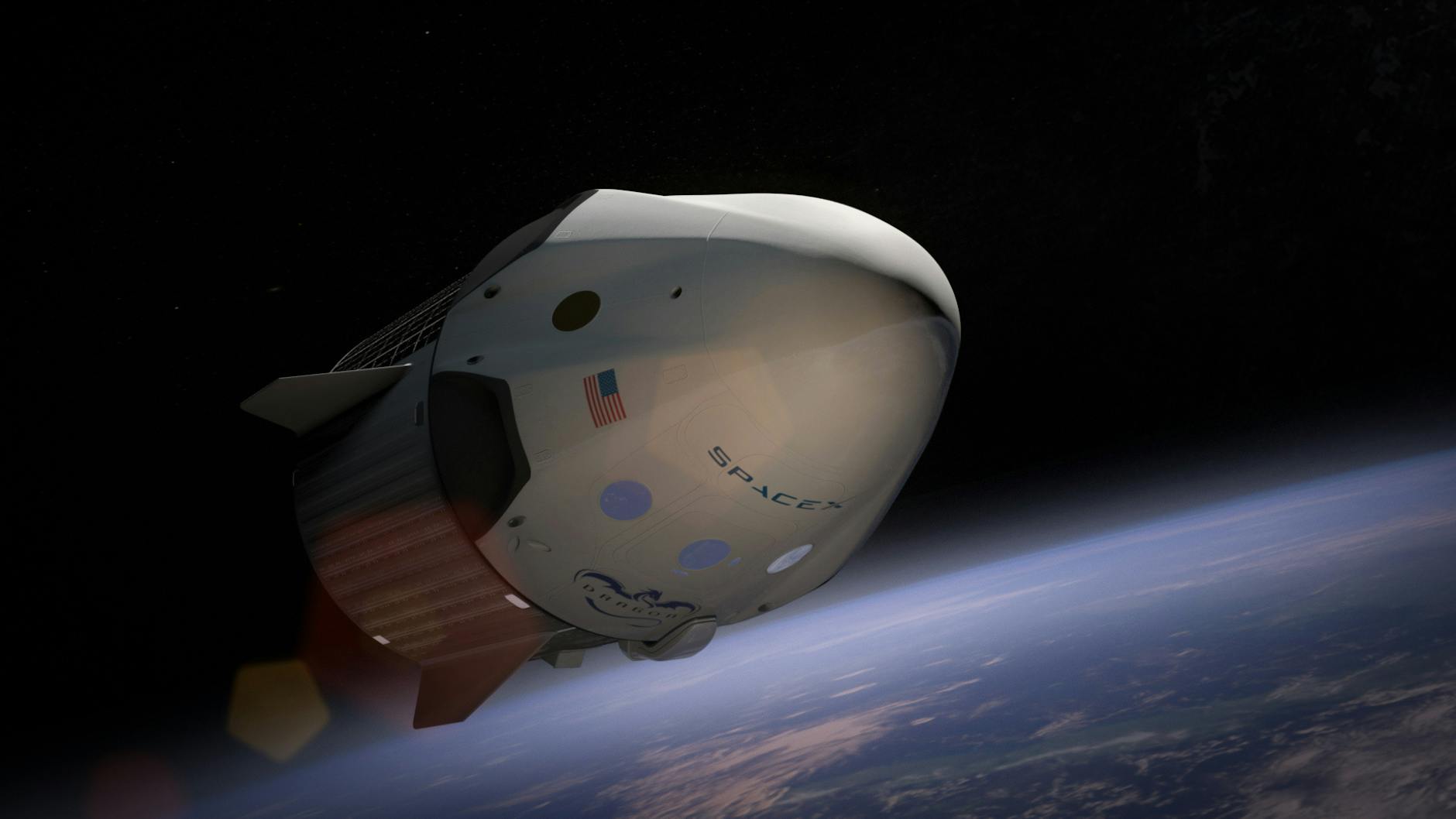
Source: SatNews. French space logistics and mobility company Exotrail has successfully deployed the NASA-funded AEPEX (Advanced Energetics and Propulsion Experiment) 6U CubeSat into a 500 km sun-synchronous orbit (SSO) using its Spacevan 002 orbital transfer vehicle (OTV). The mission, launched from Vandenberg Space Force Base on May 9, 2026, aboard a SpaceX Falcon 9 Transporter-12 rideshare, represents a critical validation of on-demand, last-mile delivery for small satellites. For telecom operators and infrastructure investors, this milestone signals the maturation of a flexible, cost-effective supply chain for deploying and replenishing LEO constellations, IoT connectivity nodes, and in-orbit technology demonstrators, reducing dependency on primary launch schedules and specific orbital slots.
Technical Deep Dive: Spacevan 002 and the AEPEX Mission Profile
The Exotrail Spacevan 002 is a dedicated, electric-propulsion orbital transfer vehicle designed for the “last-mile” delivery of small satellite payloads. Following its deployment from the Falcon 9 upper stage into an initial drop-off orbit, Spacevan 002 embarked on a multi-day orbit-raising maneuver using its ExoMG™ gridded ion thruster system. This system leverages iodine propellant—a safer, denser, and more storable alternative to traditional xenon—enabling efficient propulsion for small platforms. The OTV successfully inserted the AEPEX CubeSat into its precise 500 km SSO target, a common altitude for Earth observation and communications constellations, before moving to a disposal orbit. The AEPEX payload itself, developed by the University of Illinois Urbana-Champaign with NASA funding, focuses on testing advanced electric propulsion and power systems, directly relevant to extending the operational life and maneuverability of future telecom satellites.
This mission underscores several key technical advances: the use of a standardized 6U CubeSat form factor (approximating 10x20x30 cm), the reliability of electric propulsion for precise orbital insertion, and the operational model of a dedicated OTV functioning as an in-space logistics vehicle. For network planners, the repeatability of this process is as significant as the initial success. Exotrail has demonstrated a service that can deliver single or multiple smallsats to custom inclinations and altitudes from a standard rideshare drop-off point, decoupling satellite deployment timelines from the primary launch provider’s trajectory.
Industry Impact: Reshaping Satellite Deployment and Constellation Management

The successful Spacevan 002 mission has immediate and profound implications for the satellite telecom ecosystem, particularly for operators of LEO constellations and providers of IoT and machine-to-machine (M2M) connectivity.
For MNOs and Satellite Operators: The ability to deploy individual or small batches of satellites on-demand transforms constellation replenishment and technology insertion. Instead of waiting for a dedicated launch or a favorable rideshare slot to a specific orbital plane, operators can use a service like Exotrail’s to launch satellites into a generic orbit and then have them precisely delivered. This reduces satellite warehousing costs, mitigates the risk of launch delays grounding entire replacement batches, and allows for more agile upgrading of constellation capabilities. For emerging IoT constellations like those from Swarm Technologies (now SpaceX) or Lacuna Space, this enables cost-effective expansion or targeted coverage boosts in specific regions.
For Infrastructure and Service Providers: The model validates “Space Logistics as a Service.” Companies like Exotrail, D-Orbit (with its ION satellite carrier), and Momentus (with its Vigoride OTV) are creating a new layer of infrastructure analogous to trucking or feeder airlines in terrestrial logistics. This layer creates business opportunities for specialized propulsion providers, satellite integrators focusing on rapid turnaround, and insurers developing new risk models for multi-stage deployments. It also lowers the barrier to entry for smaller players, including research institutions and startups, to test telecom-related hardware like new inter-satellite link radios or software-defined payloads in orbit.
Competitive Dynamics: This service directly challenges the traditional model where a satellite’s orbit is largely fixed by its primary launch. It introduces flexibility that could accelerate the “democratization” of space-based telecom, allowing more niche players to enter the market. For large GEO satellite operators, while less directly applicable, the technology points to future in-orbit servicing and life-extension missions that could protect high-value assets.
Strategic Implications for Africa, MENA, and Emerging Telecom Markets

The agile deployment model epitomized by Spacevan 002 holds particular strategic value for telecom development in Africa and the MENA region, where geographic and economic challenges often outpace traditional infrastructure rollout.
Targeted Connectivity Solutions: Governments and operators in these regions frequently seek to bridge specific coverage gaps—for example, providing connectivity to remote mining operations, offshore platforms, or cross-border trade corridors. A flexible satellite deployment service allows for the rapid launch of a small, dedicated LEO or highly elliptical orbit (HEO) satellite to cover such a gap, without the decade-long lead time and billion-dollar cost of a traditional GEO satellite program. This enables a “satellite-as-a-sensor” or “satellite-as-a-cell-tower” model that can be procured and deployed in response to immediate needs.
Disaster Response and Redundancy: In regions prone to natural disasters that can terrestrial fiber and cell towers, the ability to quickly launch a small satellite to restore emergency communications is a powerful resilience tool. A CubeSat with store-and-forward capability or L-band transponders could be integrated, launched on a rideshare, and delivered to an optimal orbit within weeks, not years.
Regulatory and Sovereignty Considerations: National telecom regulators and space agencies in emerging markets are increasingly interested in sovereign space capabilities. Affordable, agile access to orbit via services like Exotrail’s allows a country to own and operate a dedicated small satellite for communications testing, spectrum monitoring, or secure government communications, fostering local space industry development and reducing reliance on foreign commercial satellite capacity.
Integration with Terrestrial Networks: As 5G NTN (Non-Terrestrial Network) standards mature, the need for tightly integrated satellite and terrestrial networks will grow. Agile smallsats can serve as flying testbeds for new NTN waveforms or direct-to-cell technology over specific regions, allowing African and MENA operators to participate in global standardization efforts with locally relevant data.
Forward Look: The In-Space Logistics Layer and the Future of Telecom Infrastructure

The Exotrail Spacevan 002 mission is not an isolated event but a cornerstone in the construction of a robust in-space logistics layer. This layer will become as critical to space-based telecom as fiber backhaul and microwave links are to terrestrial networks. We anticipate rapid evolution in this sector:
In the near-term (2-3 years), expect OTV services to become a standard option on satellite procurement sheets, especially for sub-100 kg spacecraft. Launch service providers like SpaceX (Transporter), Rocket Lab (Electron), and Arianespace (SSMS) will increasingly partner with OTV companies to offer integrated “orbit-delivery” packages. The next technical frontier will be rendezvous, docking, and refueling, turning OTVs from delivery vans into service trucks capable of relocating or extending the life of existing telecom satellites.
For the global telecom industry, the implication is a future where space-based assets are more modular, upgradeable, and responsive. Constellation operators can adopt a continuous deployment model, steadily adding capacity and new technology. The distinction between a satellite and a network node will blur further, with software-defined payloads being updated or reconfigured in orbit, supported by a reliable logistics chain for hardware replenishment. The successful deployment of the NASA AEPEX CubeSat is a clear signal: the era of agile, on-demand space logistics has arrived, and it will fundamentally reshape how the world builds and operates its orbital telecom infrastructure.
About the Author