Source: European Space Agency (ESA) press release, “Connecting critical space data to emergency response,” published May 13, 2026.
A joint project led by Austrian geospatial analytics firm GeoVille, in partnership with the European Space Agency (ESA) and Eutelsat, has successfully demonstrated a new operational model for delivering time-critical Earth observation (EO) data via low Earth orbit (LEO) satellite broadband. The OneWeb Copernicus Data Hub project, now one year into its operational phase, leverages Eutelsat’s OneWeb constellation to bypass terrestrial network limitations, enabling rapid delivery of processed Copernicus satellite data directly to emergency responders and decision-makers in the field. This model represents a significant evolution in satellite integration, merging the massive data-collection capabilities of EO constellations with the low-latency, global connectivity of LEO broadband—a combination with profound implications for telecom operators, network resilience planning, and government services.
Technical Architecture: Bridging the EO-LEO-User Data Chain
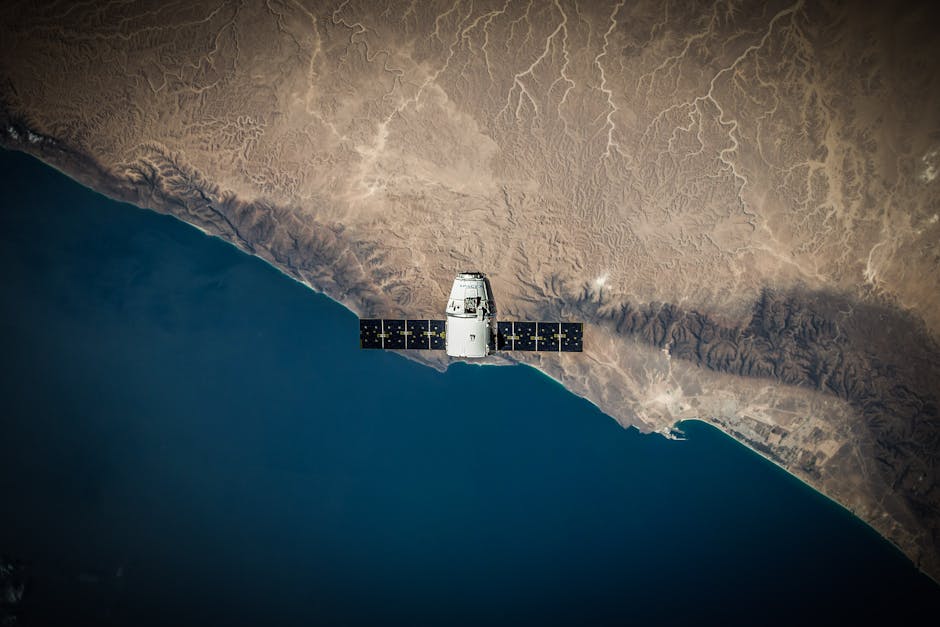
The core technical challenge addressed by the GeoVille-led project is the “last-mile” delivery bottleneck for vast EO datasets. Copernicus satellites, such as the Sentinel series, generate terabytes of raw data daily. Traditional delivery relies on ground station networks and terrestrial fiber or cloud links, which can be slow, congested, or non-existent in disaster zones or remote areas.
The project’s architecture introduces a streamlined, three-part data chain. First, GeoVille’s cloud-based platform performs intelligent data processing and compression at the edge of the ground segment, extracting only the actionable information—such as flood extents or fire perimeters—from the raw satellite feeds. Second, this processed data is uplinked to Eutelsat’s OneWeb LEO constellation. Critically, OneWeb’s network of over 600 satellites provides low-latency (sub-100ms) backhaul, acting as a space-based data pipeline. Finally, the data is downlinked via small, portable user terminals directly to field operators, bypassing compromised ground infrastructure entirely.
This is not a simple broadcast. The platform supports three distinct, interactive services that define its utility: SatAlert provides automated, near-real-time alerts for wildfires, floods, and droughts by fusing multiple forecast models with live satellite imagery. The EO Streaming Service allows users to interactively explore multi-year geospatial archives via a web browser, even on low-bandwidth connections, using advanced compression and streaming protocols. The Archive Builder Service enables users to pre-compile custom historical datasets for specific regions, which are then cached and made available for instant access via the LEO link when needed. This technical stack, developed under ESA’s Sunrise Partnership Project within the Advanced Research in Telecommunications Systems (ARTES) program, effectively creates a managed, satellite-powered content delivery network (CDN) for geospatial intelligence.
Industry Impact: Redefining Network Resilience and Service Provider Roles

For telecom operators and infrastructure providers, this demonstration validates LEO backhaul as a critical component of national resilience and emergency communications (EM-COM) strategies. Mobile Network Operators (MNOs) have traditionally relied on microwave, fiber rings, and satellite Very Small Aperture Terminals (VSAT) using Geostationary (GEO) satellites for backup. GEO satellites, however, suffer from high latency (~600ms) and limited throughput, making them unsuitable for transferring large EO data files or supporting real-time interactive services.
The integration of LEO constellations like OneWeb changes the calculus. It provides a high-throughput, low-latency alternative that can keep core network functions and critical data services online when terrestrial networks fail. For operators, this means:
New Backup-as-a-Service (BaaS) Models: Infrastructure players can offer guaranteed data-pipe services to government agencies, utility companies, and NGOs, ensuring their operational data (not just voice) flows during crises.
Convergence of Connectivity and Content: The project blurs the line between a connectivity provider (Eutelsat) and a content/application provider (GeoVille). This points to a future where satellite operators and telcos move up the value chain, offering vertical-specific, data-enabled services rather than mere bit-pipes. Partnerships between MNOs, satellite operators, and analytics firms will become a key competitive differentiator.
Infrastructure Hardening: The ability to receive critical situational awareness data directly via a portable terminal empowers network restoration teams. They can assess damage, plan fiber repairs, and deploy temporary cellsites more efficiently, drastically reducing Mean Time To Repair (MTTR) after catastrophic events.
Strategic Implications for Africa, MENA, and Global Telecom Markets

The implications are particularly acute for regions with challenging geography or underdeveloped terrestrial infrastructure, such as Africa and the Middle East and North Africa (MENA). These regions are highly vulnerable to climate-related disasters (droughts, floods) and often have vast, unconnected territories. The GeoVille-Eutelsat model offers a blueprint for leapfrogging traditional infrastructure limitations.
In Africa, where fiber penetration is low and terrestrial backhaul costs are high, LEO constellations are already being integrated by operators like Paratus Group and Liquid Intelligent Technologies. The addition of a ready-to-consume EO data stream creates a powerful tool for national governments. It enables real-time monitoring of agricultural conditions, water resources, and border security without investing in massive ground station networks. For telecom regulators, this underscores the urgency of streamlining satellite service licensing and allocating spectrum for Earth Exploration-Satellite Service (EESS) data downlinks to facilitate such hybrid networks.
Globally, this project accelerates the trend toward Non-Terrestrial Networks (NTN) as a seamless component of 5G-Advanced and 6G ecosystems. 3GPP standards already include provisions for satellite connectivity. Demonstrations like this prove the use case for data-intensive NTN applications beyond basic IoT or SMS. It pressures terrestrial telcos to develop clear NTN integration roadmaps or risk being disintermediated by satellite-native service providers in critical verticals like public safety, maritime, and resource management.
Forward-Looking Analysis: The Integrated Space-Based Data Ecosystem

The OneWeb Copernicus Data Hub is a precursor to a more deeply integrated space-based data economy. The next evolution will see direct satellite-to-satellite (S2S) links between EO constellations and communications constellations, such as those planned between Airbus’s Pleiades Neo and SpaceX’s Starlink, eliminating the ground station hop entirely and further reducing latency. For telecom, this means the potential for real-time, global sensor networks where data is processed in orbit and delivered directly to edge devices.
Operators must view LEO and MEO constellations not just as backup, but as primary data transport layers for specific enterprise and government service-level agreements (SLAs). The business case will shift from pure connectivity to guaranteed information delivery. We anticipate a surge in partnerships similar to the ESA-Eutelsat-GeoVille model, involving cloud hyperscalers (AWS, Microsoft Azure), analytics AI firms, and telcos to create turn-key “Disaster Intelligence as a Service” offerings.
In conclusion, this project moves the concept of satellite integration from theory to operational reality. It demonstrates that the future of resilient, global telecom lies not in choosing between terrestrial and satellite networks, but in orchestrating them intelligently to deliver specific, high-value data streams. For network planners and CTOs, the mandate is clear: develop a holistic NTN strategy now, or be prepared for competitors—and emergencies—to define it for you.
About the Author