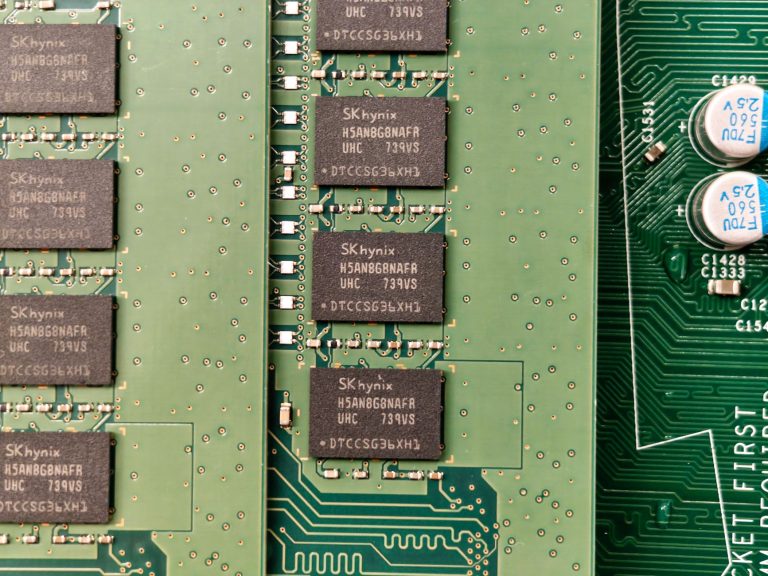
Source: ETTelecom. Lenovo Group reported a stronger-than-expected fiscal fourth-quarter revenue of $15.8 billion, beating analyst estimates, propelled by resilient PC sales despite ongoing memory chip shortages and component cost pressures. For telecom operators and network infrastructure providers, this performance signals sustained enterprise and consumer demand for connected devices, a critical driver for mobile data, fixed-line broadband, and managed IT services. The company’s 7.8% year-on-year revenue growth and a 118% surge in net profit to $337 million underscore the strategic importance of a diversified device portfolio in an era of hybrid work and digital transformation.
Financial Performance and Core Business Drivers

Lenovo’s Q4 2026 results reveal a robust financial position anchored by its Intelligent Devices Group (IDG), primarily PCs. Revenue reached $15.8 billion, surpassing the $15.4 billion average analyst estimate compiled by LSEG. Net profit attributable to shareholders skyrocketed 118% to $337 million. For the full fiscal year, revenue hit $61.5 billion with a net profit of $1.6 billion. The core insight for the telecom sector is the resilience of the PC market, which remains a primary endpoint for connectivity services. The company successfully navigated a “severe” memory chip shortage by implementing strategic price increases, passing on component cost inflation to the market. This pricing power indicates strong underlying demand from both commercial and consumer segments, which telecom operators serve with connectivity bundles, 5G mobile broadband plans, and fiber-to-the-premises (FTTP) packages.
Strategic Implications for Telecom Operators and MVNOs

Lenovo’s performance has direct ramifications for Mobile Network Operators (MNOs), Mobile Virtual Network Operators (MVNOs), and telecom service providers. Strong PC sales correlate directly with increased demand for high-bandwidth, low-latency connectivity. Every new enterprise laptop or hybrid work setup is a potential subscription for business-grade fiber, SD-WAN, or 5G Fixed Wireless Access (FWA). Operators with device-subsidy or financing programs must factor in Lenovo’s pricing strategy and component supply constraints when structuring bundle offers. Furthermore, Lenovo’s growth in premium segments suggests enterprises are investing in high-performance devices capable of leveraging advanced UCaaS, cloud communications, and real-time collaboration tools—services often bundled or resold by telecom providers. The chip shortage, while a constraint, also forces operators to be more strategic in device inventory management for their own retail channels and enterprise clients.
Infrastructure & Solutions Group: The Network Edge Play

Beyond devices, Lenovo’s Infrastructure Solutions Group (ISG), which includes servers, storage, and cloud infrastructure, reported a return to profitability. This segment is of paramount interest to telecom infrastructure players. As operators densify networks for 5G, deploy edge computing nodes, and modernize data centers, vendors like Lenovo are key partners. The profitability of ISG indicates healthy demand from cloud service providers and enterprises for on-prem and hybrid infrastructure—a market telecoms are increasingly entering through colocation, network-as-a-service (NaaS), and private 5G offerings. Lenovo’s server business competes directly with Dell, HPE, and Supermicro, and its success provides telecoms with a viable, competitive supply option for their own core and edge data center builds.
Global and Regional Telecom Market Impact

The global nature of Lenovo’s supply chain and sales—spanning China, Asia-Pacific, EMEA, and the Americas—means these dynamics affect telecom markets worldwide. In regions like Africa and MENA, where digital adoption is accelerating, strong global PC sales can strain already tight device supply, impacting operator-led digital inclusion programs. Conversely, it creates opportunities for local device assembly and distribution partnerships. Lenovo’s performance also serves as a barometer for broader IT spending, which funds the network upgrades and digital transformations that drive telecom capital expenditure (CapEx). Regions witnessing strong commercial PC refresh cycles will likely see parallel investments in enterprise network upgrades, SD-WAN deployments, and unified communications, presenting cross-selling opportunities for agile operators.
Forward-Looking Analysis: Connectivity Demands and Supply Chain Strategy

Looking ahead, Lenovo’s guidance and market posture offer critical signals for telecom strategy. The persistent memory chip shortage, while abating in some areas, necessitates closer collaboration between device OEMs and telecom operators on supply chain forecasting. Operators must integrate device lifecycle trends into their network planning: a surge in AI-capable PCs, for instance, will drive demand for edge computing and high-performance backhaul. Furthermore, Lenovo’s focus on solutions beyond hardware, including managed services and software, aligns with the telecom industry’s pivot towards becoming techcos and service integrators. Partnerships between device manufacturers and network operators will become more strategic, focusing on seamless device-onboarding, zero-touch provisioning, and integrated security—key differentiators in a competitive market. The telecom sector must view strong device ecosystem health not just as a driver of SIM sales, but as a foundational element for next-generation service revenue.
About the Author