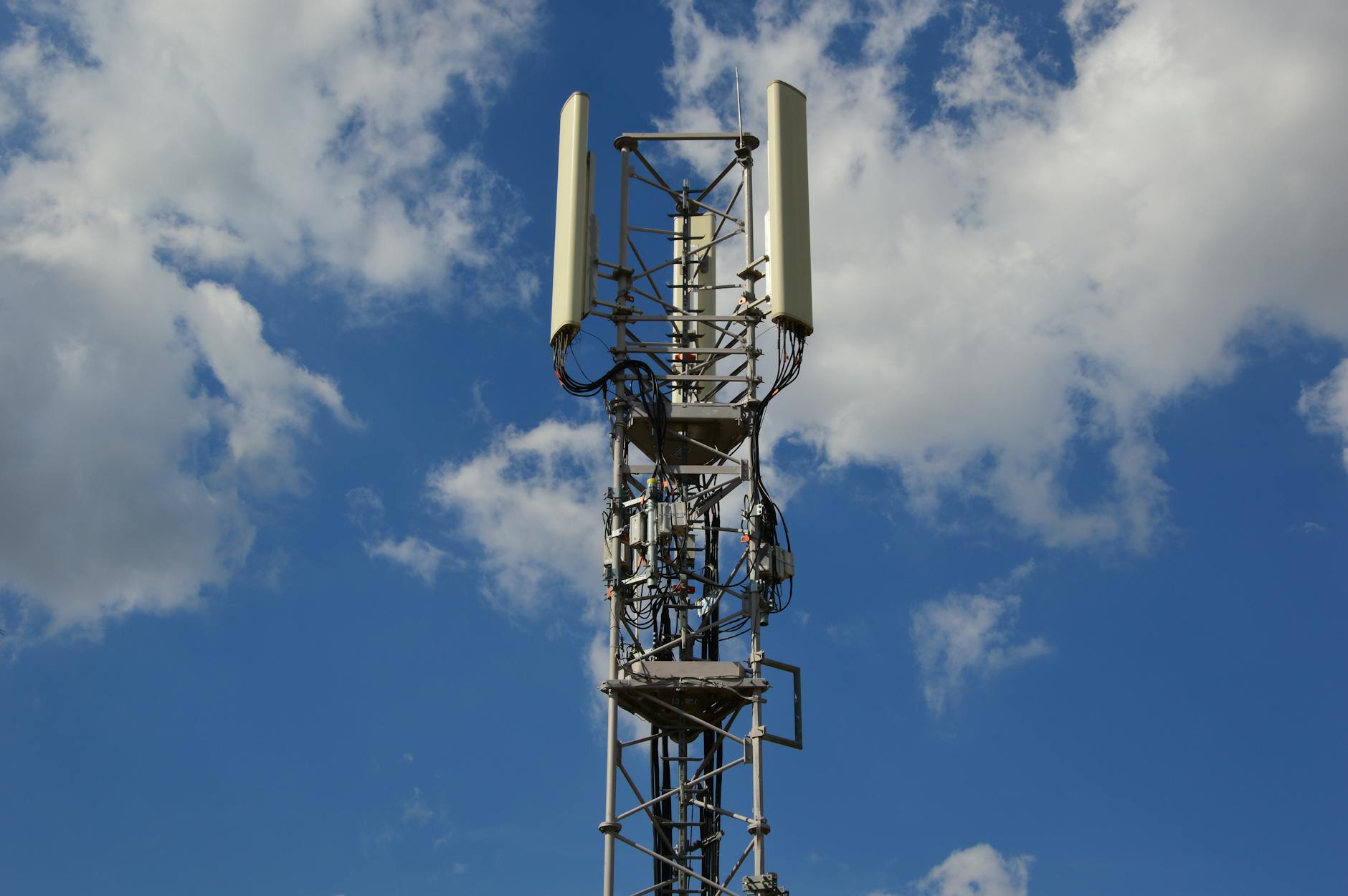
Source: The Federal Communications Commission (FCC) has officially adopted a Report and Order establishing a $9 billion 5G Fund for Rural America, a critical initiative to bridge the digital divide by subsidizing the deployment of advanced mobile broadband in unserved rural areas. The fund, a successor to the Mobility Fund Phase II, will be disbursed through a multi-phase reverse auction mechanism, with a mandated priority on Tribal lands. This decision, announced on May 14, 2026, represents a major policy and financial commitment to extending 5G coverage to the most challenging and costly-to-serve geographies in the United States, fundamentally reshaping the business case for rural network builds.
Technical and Auction Mechanics of the $9 Billion 5G Fund

The FCC’s 5G Fund is structured as a two-phase, decade-long support mechanism. The $9 billion in universal service support will be allocated via competitive reverse auctions, where providers bid for the lowest level of support needed to deploy and maintain 5G networks meeting specific performance benchmarks. A key technical pivot from previous funds is the requirement for networks to deliver download speeds of at least 35 Mbps and upload speeds of at least 3 Mbps, with low latency suitable for 5G applications. This moves beyond basic 4G LTE coverage to ensure funded networks are future-proofed.
The fund is explicitly divided to address geographic and social equity. $8.42 billion is allocated for general high-cost rural areas, while a dedicated $680 million is reserved exclusively for serving Tribal lands, which historically suffer from the most severe connectivity gaps. The auction will employ a weighting system that favors bids to serve these Tribal areas. Furthermore, the FCC has mandated the use of more accurate broadband coverage maps—specifically the Broadband Data Collection (BDC) fabric—to determine eligible areas, aiming to avoid the coverage data disputes that plagued the previous Mobility Fund.
From a network architecture perspective, the fund is technology-neutral but performance-based, allowing carriers to utilize a mix of macro towers, small cells, and fixed wireless access (FWA) technologies, including leveraging new spectrum in the 2.5 GHz, 3.45 GHz, 3.5 GHz (CBRS), and C-band. This flexibility is crucial for operators to design cost-effective solutions for low-density terrains.
Impact on Mobile Network Operators and Infrastructure Providers
The establishment of the $9 billion fund creates a significant, predictable revenue stream for Mobile Network Operators (MNOs) and competitive carriers willing to tackle rural deployment. For Tier 2 and regional carriers like U.S. Cellular, C Spire, and Viaero Communications, this fund could be transformative, providing the capital subsidy needed to justify 5G expansions in their existing rural footprints. For national carriers like AT&T, T-Mobile, and Verizon, the fund mitigates the financial risk of extending their 5G networks into the most remote portions of their licensed territories, particularly in mountainous and sparsely populated regions.
The ripple effect on the telecommunications infrastructure ecosystem will be substantial. Tower companies (American Tower, Crown Castle, SBA Communications) will see a new wave of build-to-suit and colocation demand in rural counties. Fiber backhaul providers will experience increased demand for middle-mile and transport links to these new cell sites. Equipment vendors like Ericsson, Nokia, and Samsung will benefit from sales of 5G RAN equipment, while specialists in solar/hybrid power solutions and satellite backhaul will find a growing market for off-grid sites.
The reverse auction format, however, introduces competitive pressure. It will favor operators with the most efficient deployment models and existing operational scale in adjacent markets. This could accelerate consolidation among smaller rural operators or lead to new public-private partnership models between carriers, local governments, and electric cooperatives.
Strategic Implications for Global Rural Connectivity and Policy

The FCC’s 5G Fund serves as a high-profile blueprint for other nations grappling with rural digital divides. By explicitly prioritizing Tribal lands and tying funding to modern performance standards, the U.S. is setting a regulatory precedent that combines infrastructure policy with social equity. Other regulators in markets like Canada, Australia, and the European Union will closely monitor the auction outcomes and network performance data.
For the global telecom sector, this move reinforces the strategic necessity of universal service funds (USF) in the 5G era. As network capital intensity rises with mid-band and millimeter wave deployments, purely commercial returns in rural areas become untenable. The FCC’s action validates a model where public subsidy catalyzes private investment, ensuring that 5G’s economic benefits—from precision agriculture to telemedicine—are not confined to urban corridors.
Furthermore, the fund interacts with other major U.S. initiatives, notably the $42.45 billion Broadband Equity, Access, and Deployment (BEAD) Program. While BEAD focuses on fiber-to-the-premises (FTTP), the 5G Fund ensures complementary mobile coverage. This dual-wireline-wireless strategy is critical for comprehensive connectivity, as mobile networks provide coverage for mobility, IoT sensors, and serve as a competitive alternative in areas where fiber deployment is prohibitively expensive.
Forward-Looking Analysis: The Road to 2027 Auctions and Beyond

The FCC has outlined an ambitious timeline, targeting the first auction phase for the $8.42 billion general fund in 2027. The success of this endeavor hinges on the accuracy of the new coverage maps and the commission’s ability to design auction rules that prevent gaming while ensuring robust participation. Key challenges ahead include defining precise build-out milestones, enforcing performance obligations, and managing the potential for market distortion if support is too concentrated or too diffuse.
Looking beyond the 10-year support period, this fund is a down payment on future 6G readiness in rural America. The deployed infrastructure—towers, fiber, power—will form the foundational layer for next-generation upgrades. For telecom executives and investors, the fund de-risks a significant portion of the U.S. landmass for digital infrastructure investment. It signals a long-term regulatory commitment to rural connectivity, making strategic investments in related supply chains, spectrum holdings, and operational capabilities for high-cost areas a more calculated and attractive proposition. The $9 billion 5G Fund is not merely a subsidy program; it is a market-shaping instrument that will define the geographic competitiveness of U.S. mobile networks for the next decade.
About the Author