
India’s $200 Billion Semiconductor Demand Forecast Reshapes Telecom Infrastructure Supply Chain
📰Original Source: ETTelecomNITI Aayog Projects India’s Chip Demand to Exceed $200 Billion by FY35, Driving Strategic Shift for Telecom InfrastructurePhoto by Sergei Starostin A new report from India’s NITI Aayog, the government’s premier policy think tank, forecasts the country’s semiconductor demand will grow at a…
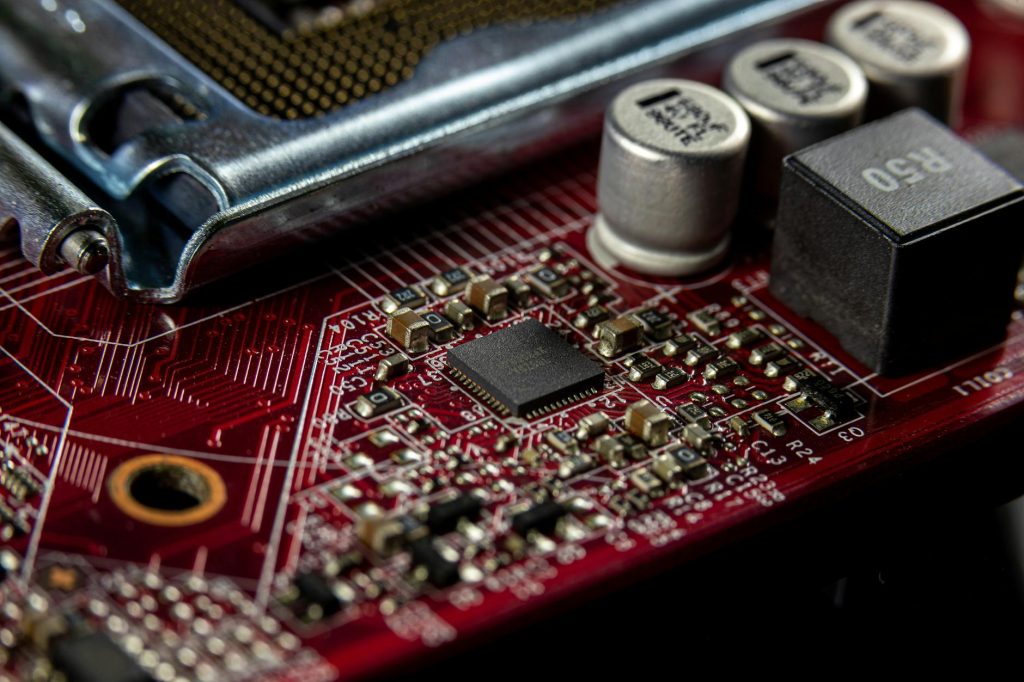
NITI Aayog Projects India’s Chip Demand to Exceed $200 Billion by FY35, Driving Strategic Shift for Telecom Infrastructure
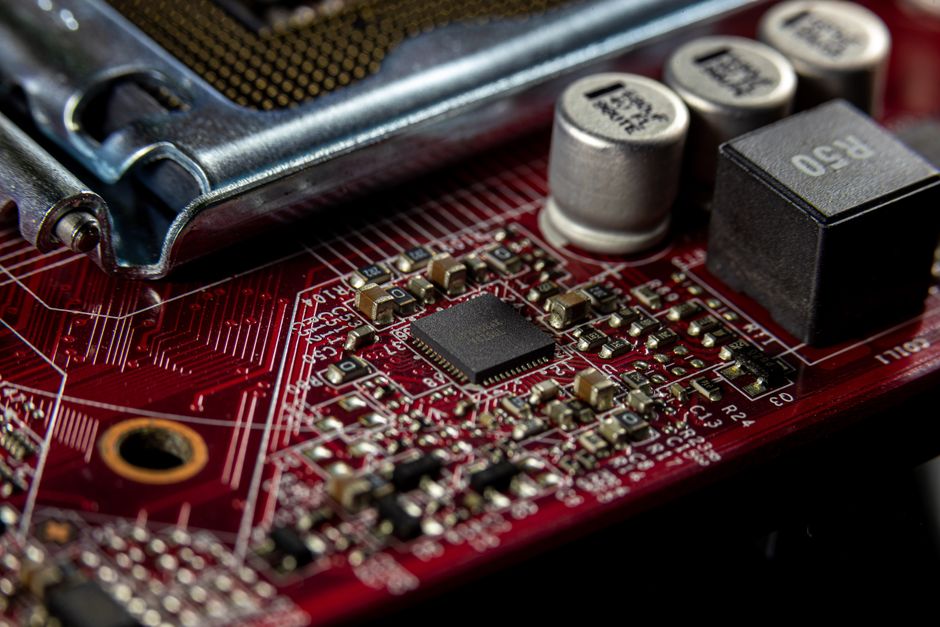
A new report from India’s NITI Aayog, the government’s premier policy think tank, forecasts the country’s semiconductor demand will grow at a 19% CAGR, reaching approximately $90 billion by FY2030 and potentially surpassing $200 billion by FY2035. This explosive growth, detailed in a report analyzing India’s position in the global semiconductor race, signals a fundamental shift in the supply chain dynamics for telecommunications infrastructure worldwide. For network operators, equipment vendors, and infrastructure investors, India’s emergence as a major semiconductor consumer and potential manufacturer represents both a critical vulnerability and a strategic opportunity in securing essential components for 5G, fiber, and next-generation networks.
The report, titled “India’s Semiconductor Ambition: A Strategic Roadmap,” identifies telecommunications as a primary demand driver, alongside automotive, consumer electronics, and industrial applications. This projected demand, from a current base of roughly $30 billion, underscores the intense pressure on global chip supply chains as India’s massive 5G rollout, fiber-to-the-home (FTTH) expansion, and data center build-out accelerate. For telecom executives, the implications are clear: reliance on traditional supply hubs like Taiwan, South Korea, and China will face increasing competition and geopolitical risk, necessitating a diversified sourcing strategy centered on India’s nascent but rapidly developing semiconductor ecosystem.
Technical Deep Dive: Telecom’s Share of India’s Semiconductor Consumption

The NITI Aayog analysis segments semiconductor demand across key verticals, with telecom infrastructure and devices representing a significant and growing portion. The report highlights several critical telecom-specific chip categories driving this demand:
- Network Processors & ASICs: The core of 5G Radio Access Network (RAN) equipment, core routers, and switches. India’s target of over 200,000 5G base stations by 2025 requires millions of these high-performance chips, currently sourced almost entirely from international vendors like Qualcomm, Broadcom, and Marvell.
- Optical Transceivers & DSPs: Essential for fiber optic networks and data center interconnects. India’s National Broadband Mission and private FTTH deployments (led by Jio, Airtel, and others) are creating unprecedented demand for these components.
- RF Front-End Modules & Power Amplifiers: Critical for smartphone and CPE (Customer Premises Equipment) proliferation. With over 1.2 billion mobile connections and growing smartphone penetration, India is one of the world’s largest markets for these chips.
- IoT & Edge Computing Chips: For smart meters, industrial IoT, and private 5G networks. India’s push for smart cities and digital industrialization is fueling demand for low-power, specialized semiconductors.
The report emphasizes that India’s domestic consumption is currently met through imports, creating a strategic trade deficit and supply chain vulnerability. The 19% CAGR is predicated on continued digital infrastructure investment, suggesting that telecom operators’ capital expenditure plans are directly linked to semiconductor availability and pricing. This creates a powerful incentive for both the Indian government and private telecom players to invest in domestic semiconductor design and fabrication capabilities.
Industry Impact: Reshaping the Global Telecom Equipment Landscape

India’s semiconductor ambition is not merely a consumption story; it’s a potential disruption to the global telecom equipment manufacturing hierarchy. The NITI Aayog report explicitly discusses “leapfrogging” opportunities in mature and specialized nodes (28nm to 65nm), which are precisely the workhorse technologies for a vast array of telecom infrastructure components, including power management, analog/RF, and certain network processors.
This has immediate implications for:
- Global OEMs (Nokia, Ericsson, Samsung, Huawei): These vendors face a dual imperative. First, they must secure a stable supply of chips for the Indian market, which is among their largest growth regions. Second, they may need to establish design partnerships or even joint manufacturing ventures with emerging Indian semiconductor companies to gain favor under potential local procurement mandates or incentive schemes.
- Indian Telecom Operators (Reliance Jio, Bharti Airtel, Vodafone Idea): For these operators, a domestic semiconductor supply chain offers potential cost savings, reduced import duties, and greater control over equipment roadmaps. Jio’s parent company, Reliance Industries, has already expressed interest in the semiconductor sector, viewing it as a natural extension of its vertical integration strategy from fiber and towers to silicon.
- Infrastructure Investors & Tower Companies: The availability of locally sourced, cost-effective chips could lower the total cost of ownership for active network equipment deployed across hundreds of thousands of tower sites. This improves the return on investment for network densification projects.
- Testing & Packaging Ecosystem: The report identifies chip packaging, assembly, and testing as areas where India can achieve scale quickly. A robust local ATMP (Assembly, Testing, Marking, and Packaging) industry would allow global chip designers to have their products finished and tested in India for the regional market, reducing logistics lead times for telecom equipment manufacturers.
The Indian government’s Production Linked Incentive (PLI) scheme for telecom and networking products, which has already attracted commitments from companies like Foxconn, Flex, and Sanmina, will be further supercharged by parallel semiconductor incentives. This creates a powerful “ecosystem effect” where final product assembly and chip manufacturing reinforce each other.
Strategic Implications for Africa, MENA, and Global Telecom Dynamics

India’s semiconductor push has significant ripple effects beyond its borders, particularly for telecom markets in Africa and the Middle East and North Africa (MENA) region. These regions share similar challenges: price sensitivity, rapid digital adoption, and a desire for technological sovereignty.
Should India succeed in establishing a competitive foundry and design ecosystem for mature-node semiconductors, it could become the preferred supplier for cost-sensitive telecom infrastructure across the Global South. This would:
- Challenge Chinese Dominance in Entry-Level Gear: Chinese vendors like Huawei and ZTE have leveraged domestic semiconductor capabilities to offer competitive pricing in Africa and MENA. A viable Indian alternative could provide operators in these regions with greater supplier diversity and geopolitical hedging options.
- Enable Localized Product Development: African and MENA operators often require network equipment tailored to specific environmental conditions or use cases. Closer collaboration with Indian design houses could facilitate the development of specialized chips for tropical climates, low-density rural networks, or solar-powered base stations.
- Influence Global Standards: As a major consumer market with growing indigenous capabilities, India’s preferences for certain chip architectures or power profiles could influence global standards for 6G and Open RAN, shaping the technology roadmap for all emerging markets.
- Create a New “Silicon-to-Site” Corridor: A potential supply chain corridor linking Indian semiconductor fabs to telecom infrastructure projects in Africa and the Middle East could emerge, reducing dependency on East Asian shipping routes and offering faster deployment cycles.
For regulators in Africa and MENA, India’s model of coupling semiconductor policy with digital infrastructure goals provides a potential blueprint. It demonstrates how strategic government investment in foundational technologies can attract private capital and accelerate national digital transformation.
Forward-Looking Analysis: The Telecom Sector’s Silicon Imperative

The NITI Aayog report is a clarion call for the global telecom industry. The era of treating semiconductors as a commoditized, purely procurement-driven component is over. Silicon is now a core strategic asset, and its supply chain is a critical national security and commercial concern.
Looking ahead, telecom operators and equipment vendors must develop sophisticated semiconductor strategies that include:
- Diversified Sourcing: Engaging with multiple chip suppliers across different geographies, including nascent hubs in India, to mitigate concentration risk.
- Vertical Integration: Larger operators and consortiums may explore direct investments in chip design firms or foundries to secure capacity and influence product roadmaps, following the models of cloud hyperscalers like Google and Amazon.
- Collaborative R&D: Partnering with academic institutions and government-backed research initiatives in India (like the Indian Semiconductor Mission) on next-generation telecom-specific silicon, such as Open RAN-optimized chips or AI-native network processors.
- Inventory & Logistics Overhaul: Building more resilient inventory buffers and regional warehousing for critical components, anticipating longer and more complex supply chains as manufacturing disperses.
India’s projected $200 billion semiconductor demand by FY2035 is not just a statistic; it is a market signal that will redirect billions in global telecom infrastructure investment. For savvy telecom leaders, the time to engage with India’s semiconductor ecosystem—through partnerships, investments, and strategic dialogue—is now. The future resilience and competitiveness of their networks may depend on it.