
Lam Research’s AI-Driven Chipmaking Expansion to Reshape Telecom Hardware Supply Chain
📰Original Source: ETTelecomLam Research CEO Tim Archer has outlined a strategic pivot to deeply integrate artificial intelligence (AI) and advanced sensing into the company’s semiconductor manufacturing equipment, according to an interview with ETTelecom. This move, coupled with a major physical expansion in Phoenix, Arizona, and…
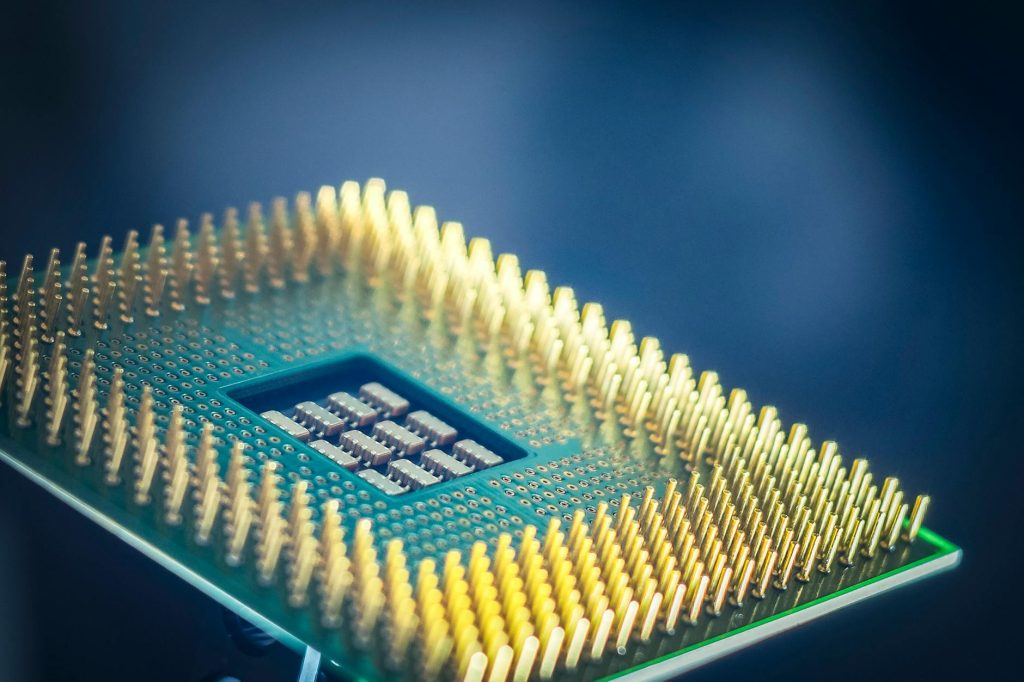
Lam Research CEO Tim Archer has outlined a strategic pivot to deeply integrate artificial intelligence (AI) and advanced sensing into the company’s semiconductor manufacturing equipment, according to an interview with ETTelecom. This move, coupled with a major physical expansion in Phoenix, Arizona, and California, signals a foundational shift in the supply chain for the advanced silicon that powers next-generation telecom networks, AI-driven data centers, and edge computing infrastructure. The company’s focus on improving yield, precision, and predictive maintenance through AI directly targets the production bottlenecks for the high-performance chips required for 5G-Advanced, 6G RAN, optical transceivers, and network switching ASICs.
Technical Deep Dive: AI and Sensing in Fab Tooling

Lam Research’s technology roadmap centers on embedding AI and machine learning (ML) directly into its core deposition and etch tools. The strategy involves two primary vectors: real-time process control and predictive analytics. By integrating sophisticated sensors and data collection points within the fabrication chamber, Lam’s tools can generate terabytes of process data per wafer. AI algorithms analyze this data in real-time to make micro-adjustments to parameters like gas flow, plasma density, and temperature, compensating for nanoscale variations that traditionally lead to defects or yield loss. This is critical for manufacturing the complex 3D-NAND and advanced DRAM used in data center servers and the high-bandwidth memory (HBM) stacks essential for AI accelerators in telecom core networks.
Furthermore, Lam is deploying AI for predictive maintenance and “virtual metrology.” Instead of relying solely on periodic physical measurements that halt production, AI models can predict key device parameters and tool health based on sensor data. This reduces wafer scrap, increases tool uptime, and accelerates the overall production cycle. For telecom equipment vendors like Nokia, Ericsson, Huawei, and Cisco, which depend on a steady supply of custom SoCs and networking chips, these advancements translate to more reliable component supply, potentially lower costs due to improved yields, and faster time-to-market for new hardware featuring cutting-edge silicon nodes (e.g., 3nm, 2nm).
Industry Impact on Telecom Operators and Infrastructure Players

The ramifications for telecom network operators (MNOs) and infrastructure providers are profound, albeit indirect. The entire telecom hardware stack—from massive MIMO antennas and cloud RAN servers to core routers and optical transport gear—is becoming increasingly silicon-defined. Lam Research’s advancements promise to increase the volume and quality of the advanced semiconductors feeding this ecosystem.
For Mobile Network Operators (MNOs) investing in 5G-Advanced and planning for 6G, a more robust and innovative silicon supply chain means accelerated deployment of energy-efficient, high-capacity basebands and radios. AI-optimized chipmaking can produce more powerful and efficient ASICs for beamforming and signal processing, directly impacting network performance and OPEX. For hyperscale cloud providers building global telecom cloud infrastructure (e.g., AWS Wavelength, Microsoft Azure for Operators), Lam’s expansion supports the production of the AI training and inference chips (GPUs, TPUs) that underpin their network automation and service platforms.
However, this concentration of advanced manufacturing tooling and expansion within the United States, spurred by the CHIPS and Science Act, also introduces strategic considerations. It reinforces a geopolitical trend toward regionalized semiconductor supply chains. Telecom operators and vendors must now factor supply chain resilience and potential export controls into their long-term hardware procurement strategies, balancing cost with the security of supply for critical network components.
Strategic Implications for Global Telecom and the Africa/MENA Context

Globally, the race for AI-capable silicon is creating a tiered market. Regions with access to the latest fabrication technologies, predominantly in the US, Taiwan, South Korea, and increasingly Europe and Japan, will lead in deploying AI-enhanced network services. Regions reliant on older technology nodes or facing procurement challenges may experience a widening “silicon divide,” impacting their ability to roll out cost-effective, advanced networks.
This dynamic is particularly relevant for telecom markets in Africa and the Middle East and North Africa (MENA). While these regions are not direct consumers of Lam’s fab tools, they are end-markets for the equipment built with the resulting chips. A more efficient global supply chain could lower barriers to acquiring advanced network hardware over time. Conversely, if geopolitical tensions redirect advanced semiconductor output, African and MENA operators could face longer lead times or higher costs for flagship 5G and fiber equipment. This underscores the importance for these markets to develop strategic partnerships with global vendors and diversify supply sources. It also highlights the critical role of Open RAN and software-defined architectures, which can, to a degree, decouple network innovation from proprietary hardware and specific silicon roadmaps, offering a potential path to greater supply chain independence.
Forward-Looking Analysis: The Silicon-Enabled Telecom Future

Lam Research’s AI-driven expansion is a bellwether for the deepening symbiosis between semiconductor innovation and telecommunications. The future telecom network will be a distributed AI inference engine, requiring a constant, scalable supply of specialized silicon. Lam’s focus on improving the economics and output of cutting-edge chip manufacturing is therefore a critical enabler for the industry’s next decade.
We anticipate several key trends: First, telecom equipment vendors will increasingly co-design chips with foundries, leveraging AI-optimized fab tools to create domain-specific accelerators for Open RAN, network security, and AI/ML workloads. Second, the valuation and strategic importance of companies that master the intersection of AI and manufacturing—like Lam, Applied Materials, and ASML—will continue to rise, influencing investment flows in the broader tech-infrastructure sector. Finally, national telecom strategies will increasingly incorporate semiconductor supply chain policies, recognizing that network sovereignty and technological leadership are inextricably linked to access to advanced silicon. For telecom executives and investors, monitoring the capital expenditure and R&D direction of key semiconductor capital equipment firms is no longer a niche concern but a core component of understanding the future capacity, capability, and cost structure of global communications networks.