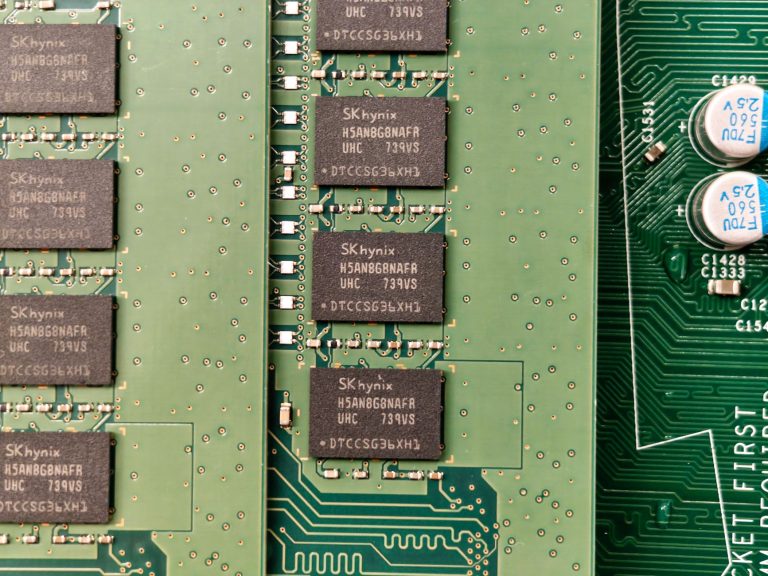
Source: ETTelecom, July 1, 2026. Chinese electronics manufacturing giant and Apple supplier Luxshare Precision Industry has filed for a secondary listing on the Hong Kong Stock Exchange, joining a concerted wave of domestic technology firms leveraging the city’s capital markets to fund national strategic goals, including advanced telecom infrastructure and supply chain independence.
This move, reported by ETTelecom, is far more than a financial event for a consumer device assembler. For telecom network operators, infrastructure vendors, and global policymakers, Luxshare’s Hong Kong IPO represents a critical capital infusion into a company that is rapidly expanding its footprint in high-precision optical and connectivity components, 5G infrastructure, and automotive connectivity—sectors at the heart of next-generation digital economies. The listing underscores Beijing’s strategic use of offshore capital markets to finance its “Made in China 2025” and digital sovereignty ambitions, directly impacting the global balance in telecom hardware manufacturing and R&D.
From Connectors to Core Networks: Luxshare’s Deepening Telecom Portfolio

While publicly known as a primary assembler for Apple’s iPhones and AirPods, Luxshare Precision (SZSE: 002475) has systematically diversified into high-value, technology-intensive sectors critical to telecommunications. Its product portfolio now extends far beyond consumer electronics into several core telecom infrastructure domains:
- Optical Components & Modules: Luxshare manufactures transceivers, active optical cables (AOCs), and fiber optic connectors. It is a growing supplier for data center interconnect (DCI) and 5G fronthaul/backhaul networks, competing with established players like Finisar (now II-VI), Lumentum, and domestic rival HG Genuine.
- 5G Antenna & RF Systems: The company has developed significant capabilities in antenna-in-package (AiP) technology, millimeter-wave antennas, and complete antenna systems for 5G base stations and customer premises equipment (CPE).
- Automotive Connectivity: A major growth vector is supplying high-speed connectors and cabling for electric and connected vehicles, including Ethernet backbones and sensor systems, positioning it at the intersection of telecom and automotive IoT.
- Cloud & Data Center Infrastructure: Luxshare produces thermal management systems, power solutions, and precision enclosures for hyperscale data centers, a market intrinsically linked to cloud communications and network function virtualization (NFV).
The capital raised from the Hong Kong IPO—estimated to be in the multi-billion-dollar range—is earmarked for expanding production capacity for these precise components, funding R&D in next-gen areas like 6G RF front-ends and silicon photonics, and potentially financing strategic acquisitions. This financial firepower allows Luxshare to vertically integrate further, moving from a contract manufacturer to a full-spectrum technology solutions provider for network operators and OEMs.
Industry Impact: Reshuffling the Global Telecom Supply Chain

For global telecom operators (OpCos) and network equipment manufacturers (NEMs), Luxshare’s strengthened position has immediate and long-term implications for supply chain strategy, cost structures, and technological competition.
1. Diversification vs. Dependency: Western NEMs like Ericsson, Nokia, and Cisco, along with hyperscalers building global networks, have been actively diversifying their supply chains away from single-source dependencies, particularly from China. Luxshare’s rise presents a paradox. It offers a capable, scale-driven alternative for optical and RF components, potentially reducing reliance on other concentrated suppliers. However, it also deepens ties to the Chinese manufacturing ecosystem, which may raise geopolitical risk profiles for operators in allied nations. Procurement teams must now weigh cost and capability benefits against evolving trade and security regulations.
2. Cost Pressure on Incumbents: Luxshare’s legendary operational efficiency and scale, honed in the consumer electronics arena, will bring intense cost competition to the telecom component market. This could accelerate price erosion in markets like optical transceivers and antenna systems, benefiting OpCo capex budgets for network expansion (FTTx, 5G densification). However, it may also squeeze margins for Western and other Asian component suppliers, potentially triggering industry consolidation.
3. Technology Roadmap Influence: With increased R&D capital, Luxshare will have greater influence on the development and standardization of future telecom technologies, particularly in areas where China seeks leadership, such as 6G, integrated sensing and communication (ISAC), and advanced packaging for heterogeneous integration. This could shift the center of gravity for certain hardware innovations eastward.
4. Domestic Substitution Acceleration: Within China, Luxshare is a key pillar in the “xinchuang” (IT application innovation) initiative, which mandates the replacement of foreign-sourced technology with domestic alternatives in critical infrastructure. A well-funded Luxshare will accelerate the availability of locally-made, high-performance optical and RF components for China’s three state-owned operators—China Mobile, China Telecom, and China Unicom—further insulating the domestic network build-out from external disruptions.
Strategic & Regional Implications: A Template for Tech-Finance Alignment
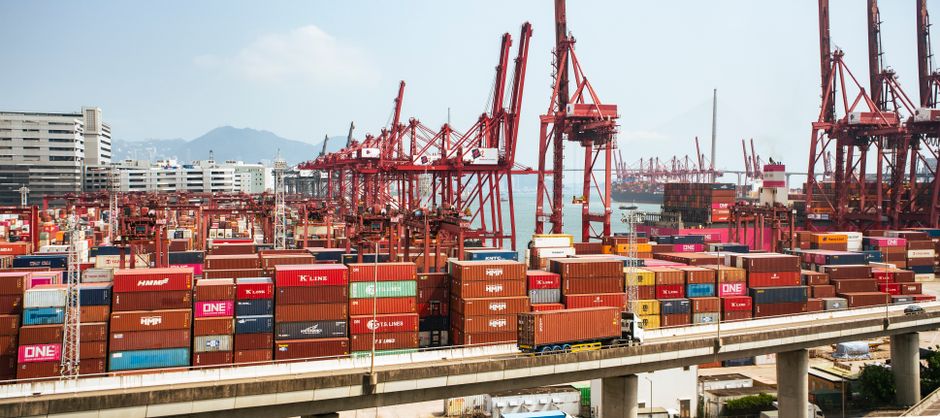
The Luxshare IPO is not an isolated event. It is part of a deliberate pattern where Chinese tech firms with strategic importance are funneled toward Hong Kong listings. This serves multiple state objectives:
- Accessing International Capital: Hong Kong offers a conduit for U.S. dollar and other foreign institutional investment, providing the hard currency needed to import advanced semiconductor manufacturing equipment (ASML lithography machines) and raw materials (specialty gases, crystals) essential for high-end component production.
- Mitigating U.S. Delisting Risks: With many Chinese firms facing scrutiny and potential delisting from U.S. exchanges, Hong Kong provides a stable, internationally-recognized alternative that maintains global investor access while aligning with national security oversight.
- Financing Global Expansion: Capital raised in Hong Kong can be more easily deployed for overseas investments, such as building manufacturing plants in Southeast Asia, Europe, or Latin America. This supports China’s “dual circulation” strategy by localizing production closer to end markets, potentially bypassing tariffs and reducing logistics risks for global OpCos.
For regions like Africa and the Middle East (MENA), which are heavily reliant on Chinese telecom infrastructure from Huawei and ZTE, the rise of a well-capitalized component supplier like Luxshare has mixed effects. On one hand, it could lead to more competitive pricing for complete network solutions from the Chinese ecosystem, aiding rapid, cost-effective network deployment. On the other hand, it deepens technological and supply chain integration with China, potentially limiting the diversity of technology sources available to regional operators and regulators seeking vendor diversification for security and redundancy.
Forward Look: Capital Markets as a Telecom Battleground

The Luxshare Hong Kong listing is a clear signal that the competition for telecom technology supremacy will be fought as much on factory floors and in R&D labs as it is on capital markets. The alignment of state policy, corporate strategy, and international finance creates a powerful engine for Chinese tech advancement.
Going forward, telecom industry stakeholders should monitor several key developments:
- IPO Proceeds Allocation: Tracking exactly which Luxshare business units—optical, automotive, 5G RF—receive the bulk of investment will reveal China’s prioritized sectors within the broader telecom-tech landscape.
- M&A Activity: A cash-rich Luxshare may pursue acquisitions of niche technology firms in Europe, Japan, or the U.S. to acquire patents and talent, subject to heightened regulatory scrutiny.
- Western Policy Response: How the U.S., EU, and other allies respond through investment screening (CFIUS), export controls (e.g., on advanced packaging tools), and subsidies for their own component industries (like the CHIPS Act) will define the contours of the decoupled or diversified supply chains of the future.
- Operator Procurement Shifts: Major global operators, from Vodafone to Bharti Airtel to América Móvil, will need to continuously reassess their vendor lists and component sourcing strategies, balancing performance, cost, geopolitical risk, and regulatory compliance in an increasingly bifurcated world.
In conclusion, Luxshare’s move to list in Hong Kong is a strategic financing maneuver with profound ramifications for the global telecom equipment ecosystem. It provides the fuel for China to advance its indigenous capabilities in critical network technologies, ensuring that its operators and global customers have a competitive, vertically-integrated supply chain alternative. For the rest of the world, it underscores the urgent need for parallel innovation and strategic investment in the foundational hardware that powers our connected societies.
About the Author