Malaysia’s $13M AI Chip Seizure Signals New Front in Telecom Supply Chain Security
📰Original Source: ETTelecomMalaysia’s $13M AI Chip Seizure Signals New Front in Telecom Supply Chain Security Malaysian customs officials at Kuala Lumpur International Airport (KLIA) seized 396 units of advanced AI chips worth an estimated $13 million in late June 2026, according to a report from…

Malaysia’s $13M AI Chip Seizure Signals New Front in Telecom Supply Chain Security
Malaysian customs officials at Kuala Lumpur International Airport (KLIA) seized 396 units of advanced AI chips worth an estimated $13 million in late June 2026, according to a report from ETTelecom. The interception, involving chips suspected to be U.S.-manufactured NVIDIA H100 or A100 GPUs destined for China, highlights a critical and escalating challenge for global telecom operators and network equipment vendors: securing the specialized silicon required for next-generation AI-driven network functions, from RAN Intelligent Controllers (RIC) to AI-optimized core networks and cloud-native infrastructure.
The seizure underscores the intensifying geopolitical friction over semiconductor technology, directly impacting telecom infrastructure buildouts. As operators globally race to deploy AI-enhanced 5G-Advanced and 6G networks, cloud RAN, and sophisticated network analytics platforms, access to high-performance computing (HPC) and AI accelerators has become a strategic bottleneck. This incident reveals how export controls are creating a shadow market, complicating supply chain logistics, inflating costs, and forcing telecom CTOs to reassess hardware procurement and network architecture roadmaps.
Technical Deep Dive: The Chips at the Heart of Modern Telecom
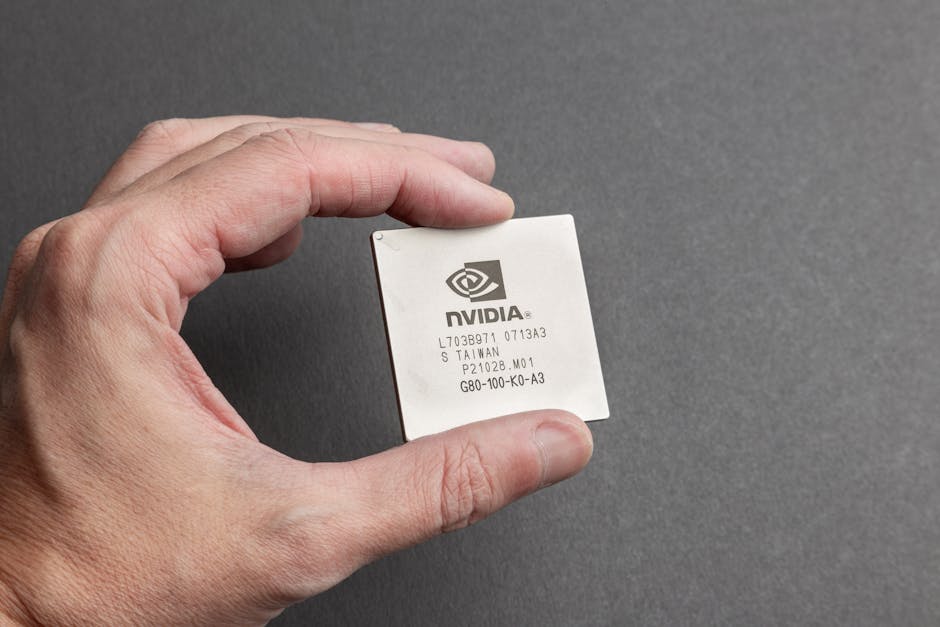
The 396 seized chips, with an estimated street value of $13 million, point to high-end data center-grade GPUs. While Malaysian authorities have not officially confirmed the model, industry analysts and the reported value strongly suggest units from NVIDIA’s restricted H100 (Hopper) or A100 (Ampere) series. These are not consumer graphics cards; they are foundational components for AI training and inference.
For the telecom sector, these specific chips are critical for several core functions:
- AI/ML Network Optimization: Running real-time algorithms for traffic prediction, beamforming optimization in Massive MIMO, and dynamic spectrum sharing.
- vRAN and Cloud RAN Acceleration: Providing the necessary processing horsepower for Layer 1 (PHY) processing in virtualized radio access networks, a key cost and performance challenge for Open RAN deployments.
- Network Core Intelligence: Powering AI-driven security (e.g., fraud detection, anomaly detection), customer experience management (CEM) platforms, and intent-based networking systems within the 5G core.
- Telco Cloud and Edge Computing: Serving as the compute backbone for multi-access edge computing (MEC) platforms that deliver low-latency services like autonomous vehicles, industrial IoT, and AR/VR.
The attempted smuggling route—via a major Southeast Asian air cargo hub—indicates sophisticated logistics. The chips were likely transshipped through Malaysia to obscure their final destination, a common tactic to circumvent U.S. export controls that restrict direct sales of advanced AI semiconductors to certain Chinese entities. This diversion adds layers of opacity and risk to the global tech supply chain, upon which telecom network builders are acutely dependent.
Industry Impact: Procurement, Costs, and Network Deployment Timelines

For telecom operators (MNOs) and equipment manufacturers (NEMs), this seizure is not a peripheral law enforcement story; it is a direct threat to network rollout schedules and capital expenditure (CapEx) planning.
1. Supply Chain Volatility and Increased Costs: Legitimate channels for acquiring these chips are already constrained by high demand from cloud hyperscalers and AI companies. The emergence of a black market, evidenced by this seizure, further distorts the market. It can lead to counterfeit components entering the supply chain, posing severe reliability risks for mission-critical network infrastructure. Furthermore, the scarcity drives up prices. Telecom operators planning large-scale AI or vRAN deployments may face unexpected budget overruns or be forced to redesign architectures around less powerful, more readily available silicon.
2. Strategic Sourcing and Vendor Diversification: This event will accelerate the industry’s push for vendor and silicon diversification. Operators are likely to increase pressure on traditional vendors like Ericsson, Nokia, and Huawei, as well as Open RAN specialists like Mavenir and Rakuten Symphony, to clarify their chip sourcing strategies and provide guarantees against supply disruptions. We expect increased investment in and procurement of alternative AI accelerators from companies like AMD (MI300 series), Intel (Gaudi), or specialized telecom-focused silicon from Marvell, Broadcom, and Qualcomm.
3. Compliance and Regulatory Scrutiny: Telecom operators, especially those with multinational footprints, must now navigate a more complex web of export compliance regulations. Procuring equipment that contains controlled U.S.-origin technology, even if assembled by a third-party vendor, carries heightened legal and reputational risk. Network procurement teams will need enhanced due diligence processes to ensure their supply chains are transparent and compliant with evolving U.S., EU, and national regulations.
Regional Implications: Southeast Asia’s Role in the Global Telecom Tech Supply Chain

Malaysia’s proactive interception places Southeast Asia at the center of the global semiconductor security landscape. The region is not just a potential transit route; it is a major manufacturing and packaging hub for the semiconductor industry. Malaysia itself accounts for approximately 13% of global semiconductor packaging, testing, and assembly.
1. Risk to Regional Manufacturing Hubs: Increased scrutiny on shipments passing through Singapore, Malaysia, Vietnam, and Thailand could slow legitimate trade, adding friction to the just-in-time logistics that modern telecom manufacturing relies on. This could impact the production timelines for everything from 5G baseband units to optical transceivers and network switches that incorporate advanced chips.
2. Opportunity for “China +1” Strategies: The seizure reinforces the logic behind the “China +1” supply chain diversification strategy pursued by many Western telecom firms. Countries like Malaysia, Vietnam, and India are actively positioning themselves as alternative manufacturing bases for telecom equipment. This incident may accelerate foreign direct investment into semiconductor and electronics manufacturing in these countries, potentially creating more resilient regional supply chains for the telecom sector in the long term.
3. Diplomatic and Regulatory Ripples: Malaysia’s enforcement action demonstrates its alignment with U.S.-led export control regimes. Other ASEAN nations may face pressure to similarly strengthen customs enforcement. For telecom operators in Africa and the Middle East (MENA) who often source equipment from or through Asia, this adds a new layer of geopolitical consideration to their procurement strategies, potentially favoring suppliers with clear, auditable supply chains outside of high-risk jurisdictions.
Forward-Looking Analysis: The Telecom Sector’s Path Forward
The Kuala Lumpur seizure is a stark warning. The era of frictionless global trade in critical network technology is over. Telecom leaders must adapt their strategies along three key axes:
1. Architecture Resilience: Network architects will prioritize designs that are less dependent on single-source, embargoed components. This means greater investment in software-defined, disaggregated networks (like Open RAN) where hardware can be more easily swapped, and a stronger push towards cloud-native principles that can abstract underlying hardware dependencies. Research into novel AI algorithms that are less computationally intensive (efficient AI) will gain funding.
2. Collaborative Security: Operators, vendors, and industry bodies (like the GSMA, O-RAN Alliance, and TIP) will need to develop shared frameworks for supply chain security certification. This could involve blockchain-based component tracking, standardized audits, and clearer guidelines on “country of origin” for critical technology.
3. Investment in Alternative Silicon: The long-term solution is a more diversified and geographically distributed semiconductor ecosystem. Telecom operators, through their procurement power and strategic partnerships, can catalyze investment in fabless chip designers focused on telecom-specific workloads (e.g., DSPs for RAN, NPUs for packet processing). Sovereign wealth funds in regions like the Middle East may also invest in semiconductor manufacturing as a national security imperative for their digital infrastructure.
The $13 million chip seizure in Malaysia is far more than a customs bust. It is a signal flare illuminating the new battleground for technological supremacy—a battleground that runs directly through the heart of the world’s telecommunications networks. Operators who treat this as a strategic supply chain and security issue, rather than a mere procurement challenge, will be best positioned to build the resilient, intelligent networks of the future.