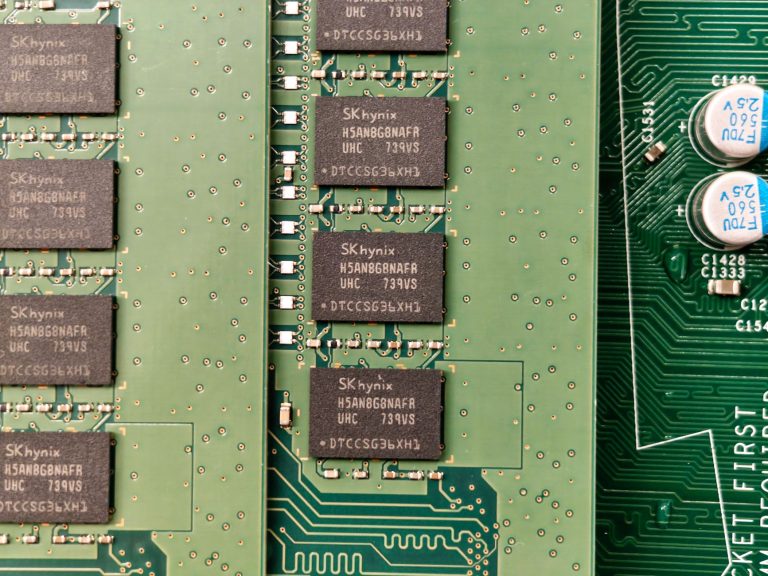
Source: ETTelecom – Samsung Electronics and SK Hynix are committing a staggering 3,200 trillion won (approximately $2.3 trillion) to expand South Korea’s semiconductor production capacity, a strategic gamble directly fueled by the explosive demand for AI infrastructure. This unprecedented capital expenditure, supported by President Lee Jae Myong, will have profound implications for the global telecom and data center equipment supply chain, dictating the availability and cost of critical components for 5G, edge computing, and hyperscale networks.
The Scale and Technical Focus of the Korean Semiconductor Gamble

The 3,200 trillion won investment announced by the two South Korean memory chip titans represents one of the largest private-sector industrial commitments in history. This is not a general-purpose expansion but a targeted surge aimed squarely at the high-bandwidth memory (HBM) and advanced DRAM chips that form the backbone of AI accelerators like NVIDIA’s GPUs and custom AI silicon from cloud giants (AWS, Google, Microsoft). For telecom operators and infrastructure providers, this signals a critical shift in semiconductor priorities that will influence everything from server procurement timelines to the architecture of next-generation core networks.
Samsung and SK Hynix dominate the global DRAM and NAND flash memory markets, holding a combined share exceeding 70%. Their new investments will focus on pushing the boundaries of chip stacking technology (TSV – Through-Silicon Via) to produce next-generation HBM4 and beyond, which offer exponentially higher bandwidth essential for training large language models. Concurrently, they are ramping production of advanced process nodes for logic chips, including foundry services for custom AI ASICs and networking processors. This dual-track approach—memory and logic—aims to capture the entire AI hardware value chain. For telecom equipment manufacturers (Ericsson, Nokia, Huawei, Cisco) and hyperscalers building AI-ready data centers, securing a stable supply of these components is becoming a top-tier strategic concern, potentially leading to longer-term partnership agreements and co-investment in capacity.
Impact on Telecom Operators and Network Infrastructure Build-Out

The massive Korean chip investment has direct and indirect consequences for telecom operators globally. First, it aims to alleviate the severe supply constraints for AI-capable data center hardware. Operators like AT&T, Verizon, Deutsche Telekom, and Jio are aggressively deploying AI/ML workloads for network optimization, predictive maintenance, and new enterprise services. Their ability to procure the necessary GPU servers and AI accelerators hinges on the availability of HBM and advanced packaging. This investment wave should, over the medium term, increase supply and moderate price inflation for critical infrastructure.
Second, the focus on high-performance memory directly enables the evolution of the telecom network itself. The rollout of 5G-Advanced and the early planning for 6G require massive increases in compute at the edge (MEC – Multi-access Edge Computing) and in the core. These distributed compute nodes require dense, power-efficient memory to handle real-time AI inference for applications like autonomous network slicing, ultra-reliable low-latency communication (URLLC), and massive IoT analytics. The technological advancements funded by this $2.3 trillion will trickle down into specialized telecom server blades and routers.
However, the investment carries a significant risk of cyclical oversupply. The semiconductor industry is notorious for boom-bust cycles. If AI demand growth plateaus or if alternative architectures emerge, the market could face a glut of advanced memory by the end of the decade. For telecom CFOs, this presents a pricing dilemma: lock in long-term supply agreements now at potentially higher prices or gamble on future oversupply and lower costs. This dynamic will directly affect the capital expenditure (CapEx) planning for network transformation projects.
Strategic Implications for Africa, MENA, and Global Telecom Dynamics

The geographic concentration of this investment in South Korea reinforces the strategic importance of a resilient and diversified semiconductor supply chain—a key lesson from the post-pandemic chip shortage. For regions like Africa and the Middle East (MENA), which are heavily reliant on imported network equipment, this creates both a challenge and an opportunity. The challenge is continued exposure to global supply shocks and pricing volatility. The opportunity lies in leveraging potential future oversupply to negotiate favorable terms for the digital infrastructure needed for national broadband plans and smart city initiatives.
Nations like Saudi Arabia, the UAE, and Egypt, with sovereign wealth funds and ambitious tech agendas (e.g., Saudi’s Vision 2030), may see this as a catalyst to deepen strategic partnerships with Samsung and SK Hynix. This could extend beyond chip procurement to include joint ventures in local assembly of network equipment or investments in specialized data centers optimized for the latest AI silicon. For African mobile network operators (MNOs) like MTN, Safaricom, and Vodacom, the downstream effect will be felt in the cost and capability of the 5G core and edge equipment they deploy from their primary vendors. A more stable supply chain could accelerate 5G SA (Standalone) deployments, which are crucial for unlocking advanced enterprise and AI services.
Globally, this move intensifies the geopolitical contest for technological supremacy. It solidifies South Korea’s position as the indispensable nation for AI hardware, counterbalancing efforts by the US (via the CHIPS Act), Taiwan (TSMC), and China to achieve self-sufficiency. Telecom regulators and policymakers must now factor semiconductor supply security into national telecoms resilience strategies, potentially influencing vendor selection criteria for critical national infrastructure.
Forward-Looking Analysis: The Telecom Sector in an AI-Driven Silicon Era

The Samsung-SK Hynix bet is a definitive signal that the AI infrastructure build-out is entering a massive, capital-intensive phase. For the telecom sector, this means the underlying economics of network upgrades are now inextricably linked to the silicon cycle. We anticipate three key trends:
- Vertical Integration Pressure: Large telecom groups and hyperscalers may pursue deeper vertical integration, following the lead of companies like Google (TPU) and Amazon (Graviton), to secure supply and optimize performance for their specific workloads, including telecom network functions.
- Rise of AI-Native Network Equipment: The next generation of routers, switches, and baseband units will be designed from the ground up with dedicated AI accelerators and high-bandwidth memory, moving beyond software-defined networking to hardware-accelerated AI.
- New Partnership Models: Expect to see more joint announcements between chipmakers (Samsung Foundry, SK Hynix) and telecom equipment vendors to co-develop chipsets for Open RAN, edge servers, and core network appliances, reducing reliance on generic merchant silicon.
In conclusion, the 3,200 trillion won investment is far more than a corporate expansion plan; it is a foundational bet on the future shape of digital infrastructure. Telecom operators must closely monitor this silicon roadmap, as it will determine the pace, cost, and ultimate capability of the intelligent networks they will build and operate over the next decade. The era of AI is being forged in semiconductor fabs, and the telecom industry is a primary customer.
About the Author