SK Hynix’s $28.6B Buyback Signals Volatility in AI Memory Market, Telecom Infrastructure Implications
Source: ETTelecom, reporting on August 19, 2026.
SK Hynix, the world’s second-largest memory chipmaker and a critical supplier of High Bandwidth Memory (HBM) for artificial intelligence accelerators, has announced a staggering $28.6 billion share buyback program. The move, detailed in a regulatory filing, is a direct response to a significant decline in the company’s stock price, which has fallen approximately 20% from its peak earlier this year. This massive capital return underscores growing investor concerns about the durability of the AI-driven semiconductor boom and has profound implications for the telecom and datacenter infrastructure sector, which is heavily reliant on the stability and supply of advanced memory for AI-powered network functions, 5G core networks, and edge computing deployments.
Technical & Market Deep Dive: The AI Memory Bottleneck and Investor Skepticism

SK Hynix’s strategic position is inextricably linked to the AI infrastructure buildout. The company is a dominant force in the production of High Bandwidth Memory (HBM), particularly HBM3 and the next-generation HBM3E, which are essential components in graphics processing units (GPUs) from NVIDIA, AMD, and custom silicon from cloud hyperscalers. These chips are the workhorses for AI model training and inference, forming the backbone of AI-as-a-Service platforms and intelligent network operations centers (NOCs). The proposed $28.6 billion buyback, equivalent to roughly 20% of its market capitalization at the time of announcement, is one of the largest in global corporate history and signals management’s belief that the market is undervaluing its future cash flows from the AI segment.
However, the stock price decline that prompted this action reflects a critical debate among telecom infrastructure investors and tech analysts. Key concerns include:
- Capital Expenditure Cyclicality: Fears that hyperscaler spending on AI datacenters—a primary driver for HBM demand—may be reaching a near-term peak or could become more volatile.
- Supply Chain Concentration Risk: The telecom industry’s push towards Open RAN and virtualized network functions (VNFs) relies on standardized, high-performance hardware. A supply shock or price volatility in critical components like HBM could delay deployments and increase total cost of ownership for network operators.
- Competitive Dynamics: Rival Samsung Electronics is aggressively ramping its own HBM production, and Micron Technology is a formidable player. A potential price war or oversupply scenario could compress margins for all suppliers, impacting their R&D budgets for next-generation memory technologies crucial for 6G and quantum-safe networking.
The buyback is a defensive financial maneuver aimed at boosting earnings per share and shareholder returns during a period of perceived market pessimism. For telecom operators and infrastructure providers, it highlights the financial fragility within a supply chain they depend on for network modernization.
Industry Impact: Procurement, Pricing, and Network Hardware Strategy
The financial health and strategic focus of memory suppliers like SK Hynix have direct operational and financial consequences for telecom network operators (MNOs), tower companies, and datacenter operators.
1. Procurement & Supply Assurance: A company committing $28.6 billion to share repurchases is signaling strong current cash generation. For telecom equipment manufacturers (TEMs) like Ericsson, Nokia, and Huawei, as well as white-box hardware vendors, this suggests SK Hynix has confidence in near-term order books. However, it also raises questions about long-term capital allocation. Will massive buybacks come at the expense of capacity expansion needed to meet the exploding demand for AI at the edge? Network operators planning large-scale AI inference deployments for network optimization, customer experience management, and security must factor in potential component scarcity and extended lead times for servers equipped with high-end HBM.
2. Pricing Pressure on Network Infrastructure: Memory is a significant cost component in servers used for core network virtualization (vEPC, vIMS), Open RAN distributed units (DUs), and centralized units (CUs). Volatility in DRAM and NAND prices directly impacts the bill of materials for telecom infrastructure. SK Hynix’s move to support its stock price could be a precursor to a period of disciplined supply management to maintain pricing power. For MNOs, this translates to potentially higher costs for upgrading their datacenters and edge sites to handle AI workloads, squeezing margins in an already capital-intensive industry.
3. Strategic Partnerships and Vertical Integration: The uncertainty may accelerate trends towards strategic partnerships or vertical integration. Large cloud providers (AWS, Google, Microsoft Azure) have already designed custom AI chips (e.g., TPUs, Trainium, Inferentia) and may seek deeper ties with memory suppliers. Similarly, major telecom operators or alliances (e.g., the Telecom Infra Project) could explore consortium-based procurement or funding for dedicated memory supply lines to ensure stability for critical national infrastructure needs, especially for 5G SA cores and impending 6G R&D platforms.
Global & Regional Implications: Africa, MENA, and the AI Divide
The financial strategies of global semiconductor leaders have asymmetric impacts on different telecom markets. For developing regions like Africa and the Middle East and North Africa (MENA), the implications are particularly acute.
AI Readiness and Cost Barriers: African and MENA operators are in varying stages of 4G expansion and 5G rollout. The integration of AI for network efficiency (predictive maintenance, dynamic spectrum sharing) and new services is a strategic goal. However, the high cost and potential scarcity of AI-optimized hardware, fueled by supply-side financial maneuvers in the core memory industry, could widen the “AI divide.” Operators in these regions may face higher barriers to entry for deploying advanced, AI-native networks, potentially lagging behind operators in North America and Asia in service sophistication and operational efficiency.
Infrastructure Investment Priorities: The capital intensity of memory buybacks highlights the immense profitability funneling towards a few key component suppliers in the AI value chain. This contrasts with the thin margins often seen in African mobile markets. It underscores the need for regional operators to be highly strategic in their AI investments, potentially favoring cloud-based AI services (via partnerships with hyperscalers) over large upfront investments in on-premise AI hardware that may have rapidly depreciating components. It also strengthens the business case for network sharing and regional consortiums to aggregate purchasing power for advanced infrastructure.
Geopolitical Supply Chain Considerations: SK Hynix is a South Korean company, and the global memory market is concentrated in South Korea, the United States, and Taiwan. This announcement reminds telecom regulators and operators in Africa and MENA of the geopolitical sensitivities in high-tech supply chains. Diversifying suppliers and fostering local assembly or R&D partnerships, even if not at the leading-edge semiconductor level, becomes a more pressing aspect of national digital infrastructure strategy to ensure resilience.
Forward-Looking Analysis: Telecom Sector Preparedness
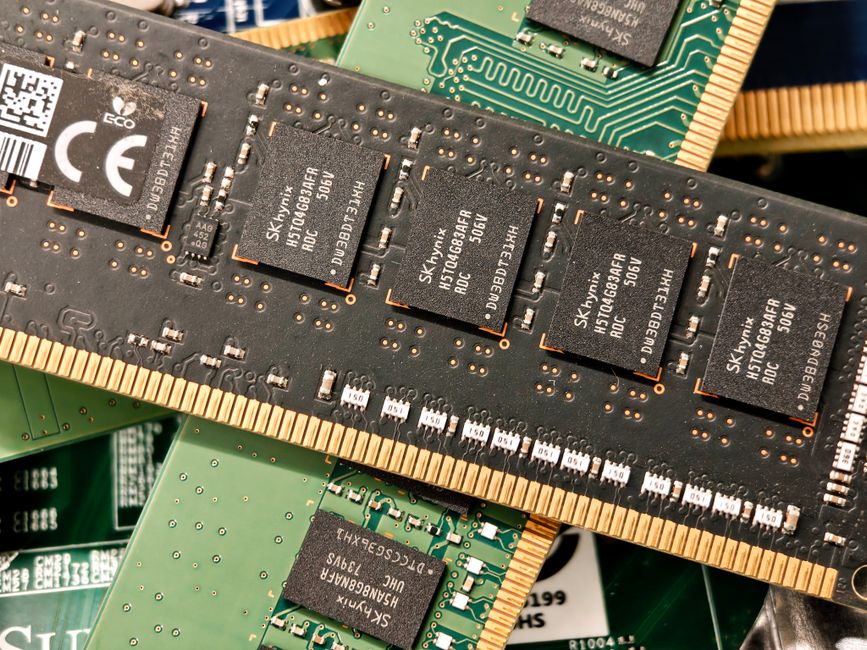
SK Hynix’s $28.6 billion buyback is a watershed moment, reflecting the maturation and inherent volatility of the AI infrastructure gold rush. For the telecom sector, it is a clear signal to move beyond viewing AI as a mere application layer and to recognize it as a fundamental driver of hardware supply chain economics.
Going forward, sophisticated telecom operators and infrastructure investors must:
- Enhance Supply Chain Intelligence: Develop deeper insights into semiconductor cycles, engaging directly with component suppliers and TEMs on technology roadmaps and capacity planning.
- Adopt Flexible Architectures: Prioritize network architectures that are hardware-agnostic and software-defined, allowing for component substitution and reducing lock-in to specific memory technologies during periods of shortage or price spikes.
- Factor in Total Lifecycle Cost: Financial modeling for new network deployments (e.g., 5G SA core, edge AI nodes) must include scenarios for component price volatility, not just initial purchase price.
- Advocate for Policy Support: Industry groups should engage with regulators on the strategic importance of a resilient and diverse high-tech supply chain for national communications infrastructure, potentially influencing trade and industrial policies.
The era of cheap, abundant compute and memory for networking is over. The AI-driven demand from hyperscalers is reshaping the entire technology stack. SK Hynix’s defensive financial move is a stark reminder that the telecom industry’s digital transformation is built on a foundation of globally traded, cyclical, and geopolitically sensitive components. Strategic agility and supply chain mastery are now as critical as spectrum strategy and fiber deployment.
About the Author