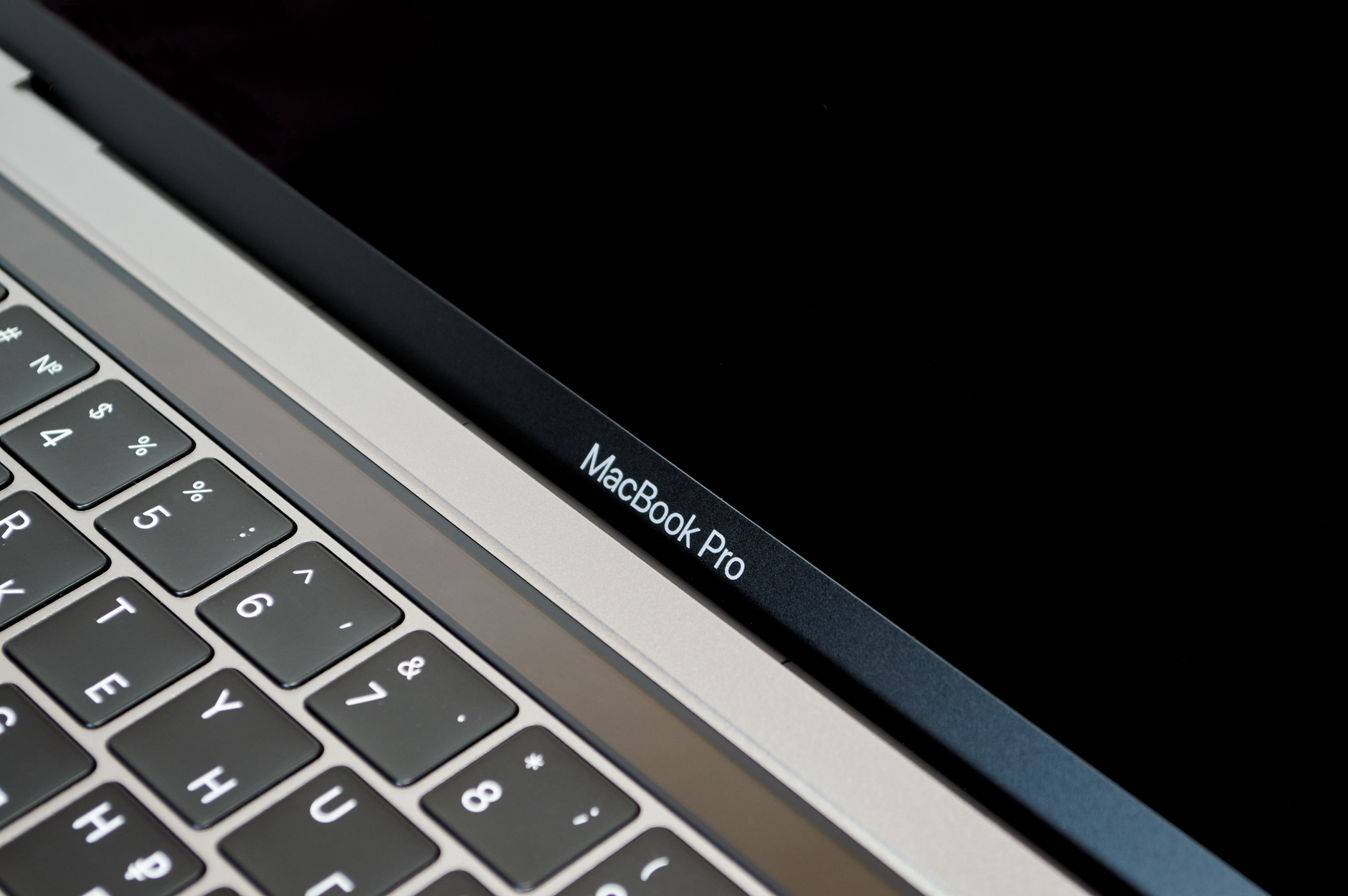
Source: ETTelecom, reporting on August 26, 2026, that Apple has launched new Mac mini and Mac Studio devices featuring the next-generation M6 and M5 Pro chips, positioning them as powerful platforms for artificial intelligence workloads. This move by the world’s most valuable technology company signals a critical acceleration in the commoditization of high-performance, energy-efficient silicon for on-premise and edge-based AI processing—a trend with profound implications for telecom network architecture, data center strategy, and the competitive landscape for cloud and edge services.
Technical Deep Dive: M6 & M5 Pro Silicon and the Edge AI Performance Benchmark
Apple’s latest silicon iteration, the M6 chip for the Mac mini and the M5 Pro for the Mac Studio, represents a calculated escalation in the arms race for AI-optimized compute. While full architectural disclosures from Apple are limited, the launch context and historical progression from the M1 through M4 series point to significant leaps in Neural Engine core count, memory bandwidth, and unified memory architecture (UMA). The M5 Pro, as a higher-tier variant, likely features an expanded GPU core count and a more powerful Neural Engine tailored for sustained, professional-grade AI model inference and lighter training tasks. For telecom operators, the critical specifications are not just raw TOPS (Tera Operations Per Second) but the power efficiency (TOPS per watt) and the integrated memory subsystem that eliminates data movement bottlenecks between CPU, GPU, and Neural Engine—a key advantage for latency-sensitive edge applications.
The Mac Studio, with its thermal design power (TDP) headroom, is positioned as a compact, fan-cooled workstation capable of replacing rack-mounted servers for specific functions. The Mac mini, with its sub-150-watt power envelope and diminutive form factor, is engineered for silent, dense deployment. These attributes make them compelling candidates for distributed network functions. Telecom engineers should evaluate these systems against traditional x86 servers and ARM-based server chips from Ampere, NVIDIA, and Qualcomm for workloads like: real-time video analytics for network security and quality of experience (QoE) monitoring; AI-driven radio access network (RAN) optimization; localized natural language processing for customer service bots at central offices; and edge-based IoT data aggregation and filtering before transmission to core cloud.
Industry Impact: Reshaping Telecom Edge Infrastructure and Cloud Competition

Apple’s push into high-performance AI silicon directly challenges the hegemony of NVIDIA in accelerated computing and alters the calculus for telecom operators building out their edge compute portfolios. The arrival of performant, commercially supported Apple Silicon in a server-like form factor creates a new tier in the edge infrastructure stack. Mobile Network Operators (MNOs) and telecom infrastructure providers must now consider a tripartite silicon strategy for edge nodes: traditional x86 for general-purpose workloads, GPU-accelerated servers (NVIDIA, AMD) for heavy AI training and intensive inference, and Apple Silicon-based systems for power- and space-constrained edge locations requiring efficient AI inference.
This development intensifies competition in the Telecom-Edge-Cloud continuum. Hyperscalers like AWS (with Graviton), Google (with TPUs), and Microsoft (with Azure Maia) are already vertically integrating silicon for their clouds. Apple’s hardware, combined with its growing suite of developer frameworks (Core ML, MLX), presents an alternative on-premise and edge stack that could reduce operator reliance on specific public cloud AI services. For Network Equipment Providers (NEPs) like Ericsson and Nokia, and Open RAN software vendors, the M6/M5 Pro ecosystem could become a reference platform for testing and deploying AI-powered RAN Intelligent Controllers (RICs) and other virtualized network functions (VNFs). The power efficiency also aligns with global telecom sustainability mandates, offering a path to reduce Scope 2 emissions from network edge sites.
Strategic Implications for Africa, MENA, and Emerging Telecom Markets
In Africa and the MENA region, where network edge deployment is often constrained by unreliable grid power, high energy costs, and limited physical space at cell sites, the energy profile of Apple’s new silicon is particularly relevant. The Mac mini, capable of delivering substantial AI inference in a sub-150W package, could enable advanced services like mobile money fraud detection, agricultural IoT analysis, or localized language AI in markets where deploying a full GPU server rack is economically or technically unfeasible. This lowers the barrier to entry for AI-powered services, allowing operators like MTN, Safaricom, Vodacom, STC, and e& to differentiate beyond connectivity.
Furthermore, the unified architecture reduces system complexity and potential points of failure—a significant advantage in regions with fewer skilled IT personnel for on-site maintenance. The compact form factor also facilitates deployment in secure, environmentally controlled enclosures at tower sites or in micro-data centers. For governments and regulators in these regions pushing digital transformation and local data processing laws, on-premise Apple Silicon solutions offer a viable, enterprise-grade alternative to sending all data to international hyperscale clouds, aiding data sovereignty initiatives. The move could also spur local software ecosystems to develop telecom-specific AI applications optimized for the macOS/iOS developer environment, creating new partnership opportunities between operators and regional ISVs.
Forward-Looking Analysis: Silicon Diversification and the AI-Native Network

Apple’s entry into the high-stakes AI infrastructure arena with the M6 and M5 Pro is more than a product refresh; it is a catalyst for silicon diversification at the network edge. The telecom industry’s journey towards AI-native networks—where intelligence is pervasive from the core to the radio unit—requires a heterogeneous mix of processing power. Apple Silicon now claims a seat at that table, emphasizing efficiency and integration over raw floating-point throughput.
Looking ahead, we anticipate increased experimentation by forward-leaning operators with Apple hardware for non-mission-critical edge workloads in 2026-2027. Success will hinge on software maturation: the availability of containerized telecom workloads (e.g., via Docker/Kubernetes) that run seamlessly on macOS Server or related architectures, and robust management tools for fleet deployment. If Apple engages directly with the telecom sector through tailored developer programs or partnerships with system integrators like HPE, Dell, and Lenovo, adoption could accelerate. Ultimately, this launch reinforces a central truth for telecom strategists: the future network infrastructure bill of materials (BOM) will be as much about the choice of AI silicon as it is about radios and fiber. Diversifying the silicon supply chain and mastering hybrid AI architectures will be key competitive differentiators in the coming decade.
About the Author