Global Smartphone Shipments Plunge 13.9% in Q1 2026, Signaling Network Capex and 5G Adoption Headwinds
📰Original Source: ETTelecomGlobal smartphone shipments plunged by a record 13.9% year-over-year in Q1 2026, according to IDC data cited by ETTelecom, falling to 268.5 million units. The report, published June 1, 2026, attributes the historic decline to a persistent and worsening memory chip shortage that…

Global smartphone shipments plunged by a record 13.9% year-over-year in Q1 2026, according to IDC data cited by ETTelecom, falling to 268.5 million units. The report, published June 1, 2026, attributes the historic decline to a persistent and worsening memory chip shortage that is disproportionately crippling production of lower-end devices. For telecom network operators (MNOs) and infrastructure providers, this sharp contraction in the device ecosystem signals immediate pressure on subscriber growth, average revenue per user (ARPU), and the pace of 5G network monetization, as consumer replacement cycles extend and demand for data-intensive applications may stall.
Technical and Market Analysis: A Deepening Supply Crunch and Bifurcated Demand

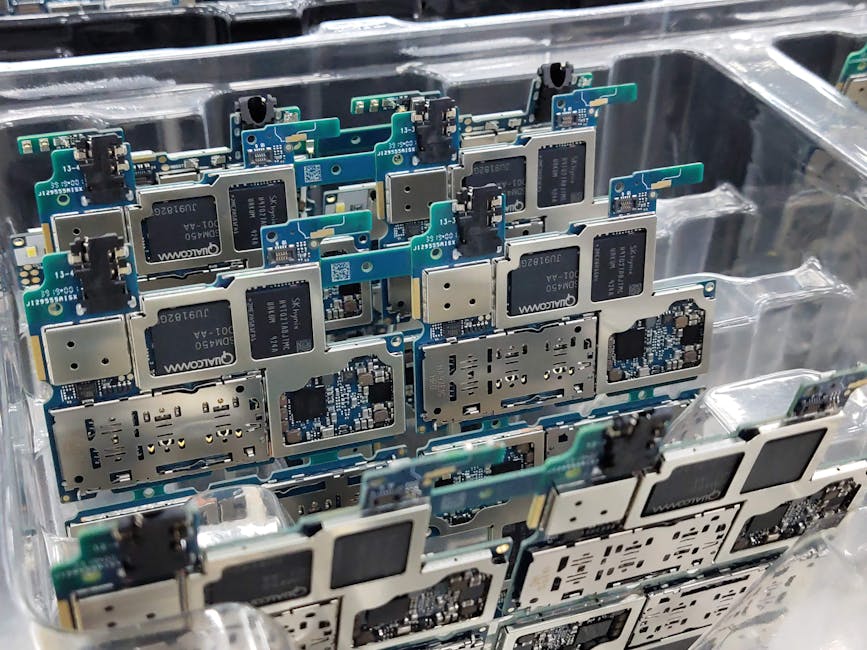
The Q1 2026 figures represent the steepest quarterly decline in smartphone shipment history, surpassing previous downturns during the pandemic. The core technical driver is a severe shortage of NAND and DRAM memory chips, components critical across all device tiers but which manufacturers are prioritizing for higher-margin premium models. This has created a pronounced market bifurcation. While the overall market contracted, premium segments ($800+ wholesale) showed relative resilience, with Apple maintaining a 20.1% market share. In contrast, vendors like Xiaomi and Honor, heavily reliant on the volume-driven mid-to-low tier, experienced significant shipment declines of 22.1% and 17.1%, respectively.
IDC’s forecast underscores a protracted recovery, revising its full-year 2026 outlook downward to a 3.5% decline, with shipments expected to reach just 1.21 billion units. This persistent shortfall is not merely a supply chain hiccup but a structural realignment. Component manufacturers, facing rising costs for raw materials like silicon wafers and rare earth metals, are rationalizing production lines toward more profitable automotive and industrial IoT sectors, leaving smartphone OEMs with higher prices and lower allocation. The average selling price (ASP) for smartphones is projected to rise by 6.3% in 2026, further dampening volume demand in price-sensitive growth markets like Africa, Southeast Asia, and parts of Latin America.
Impact on Telecom Operators and Network Strategy
For mobile network operators (MNOs), this device shortage translates directly into operational and financial headwinds. First, subscriber acquisition costs will rise as device subsidies on mid-range phones—a key tool for luring postpaid customers—become more expensive or unsustainable. Operators may be forced to shift promotions toward bring-your-own-device (BYOD) plans or lengthen device financing terms from 24 to 36 months, locking in customers but delaying upgrade cycles.
Second, and most critically, the slowdown in affordable 5G handset availability threatens the ROI on massive 5G network capex. Network utilization rates for new 5G Standalone (SA) cores and mmWave spectrum will grow more slowly if consumers hold onto 4G devices for an extra 6-12 months. This delays the traffic offload from congested 4G networks and postpones the launch of premium 5G services like network slicing for enterprise or enhanced mobile broadband (eMBB) applications. Operators in markets like India, which are in the midst of aggressive 5G rollouts, may see a disconnect between network availability and device penetration, leading to suboptimal spectrum efficiency.
Third, MVNOs (Mobile Virtual Network Operators) that compete on cheap bundled handsets will face severe margin compression or inventory shortages, potentially triggering market consolidation. Infrastructure vendors like Ericsson and Nokia may see a knock-on effect as MNOs, facing delayed 5G monetization, become more cautious with subsequent phases of radio access network (RAN) deployment and core network upgrades.
Regional Implications: Africa, MENA, and Asia-Pacific Bear the Brunt

The regional impact of this smartphone shipment crisis is profoundly uneven. Markets with high dependency on sub-$250 devices for digital inclusion will experience the sharpest contractions.
- Africa: With smartphone penetration still below 50% in many nations, the shortage of affordable 3G and 4G devices directly impedes digital inclusion goals and operators’ data revenue growth. Countries reliant on Chinese OEMs like Transsion (Tecno, Infinix, Itel) will see device prices inflate, slowing the migration from 2G feature phones to internet-capable smartphones. This, in turn, pressures MNOs to maintain legacy 2G/3G networks for longer, increasing opex and delaying spectrum refarming for 4G/5G.
- MENA: While Gulf Cooperation Council (GCC) markets with high premium device uptake will be more insulated, North African markets like Egypt and Morocco will face similar challenges to Sub-Saharan Africa. The device shortage could exacerbate the digital divide within the region.
- Asia-Pacific: India and Southeast Asia, the world’s largest volume markets, are epicenters of the crisis. Indian operators Reliance Jio and Bharti Airtel have banked on ultra-low-cost 4G and 5G devices to drive subscriptions. A protracted shortage could force a strategic pivot towards deeper partnerships with OEMs for exclusive, subsidized model runs or accelerate the development of domestic chip assembly and packaging capabilities under government production-linked incentive (PLI) schemes.
This regional divergence will force global telecom groups with footprints in both developed and emerging markets to adopt segmented device strategies, potentially diverting device inventory to regions with higher ARPU potential at the expense of growth markets.
Forward-Looking Analysis: Strategic Shifts for the Telecom Sector

The record smartphone shipment decline is more than a cyclical downturn; it is a stress test for the entire mobile ecosystem. In response, telecom operators and infrastructure players must initiate strategic pivots. Expect increased vertical integration, with major MNOs and tower companies forming procurement consortia to secure component supply directly from foundries. Network equipment vendors will likely intensify the development of “device-agnostic” network features and software-defined cores that can deliver improved experiences even on older handsets, mitigating the 5G device gap.
Furthermore, the crisis accelerates existing trends: the rise of refurbished and certified pre-owned device markets, supported by operators offering guaranteed buy-back programs; a stronger push for eSIM adoption to decouple hardware from connectivity; and increased investment in device financing arms within telcos. Regulators in affected regions may be compelled to temporarily reduce import duties on mobile phones or components to alleviate consumer price pressure and support digital inclusion targets.
The ultimate telecom sector takeaway is that device availability is a critical, non-negotiable component of network monetization. The Q1 2026 shipment collapse serves as a stark reminder that the health of the semiconductor supply chain is now inextricably linked to the ROI of global 5G and fiber investments. Strategic planning must now incorporate device ecosystem resilience as a core pillar of network rollout and service launch roadmaps.